




01. Edit your aquatic rescue sequence online
Type text, add images, blackout confidential details, add comments, highlights and more.

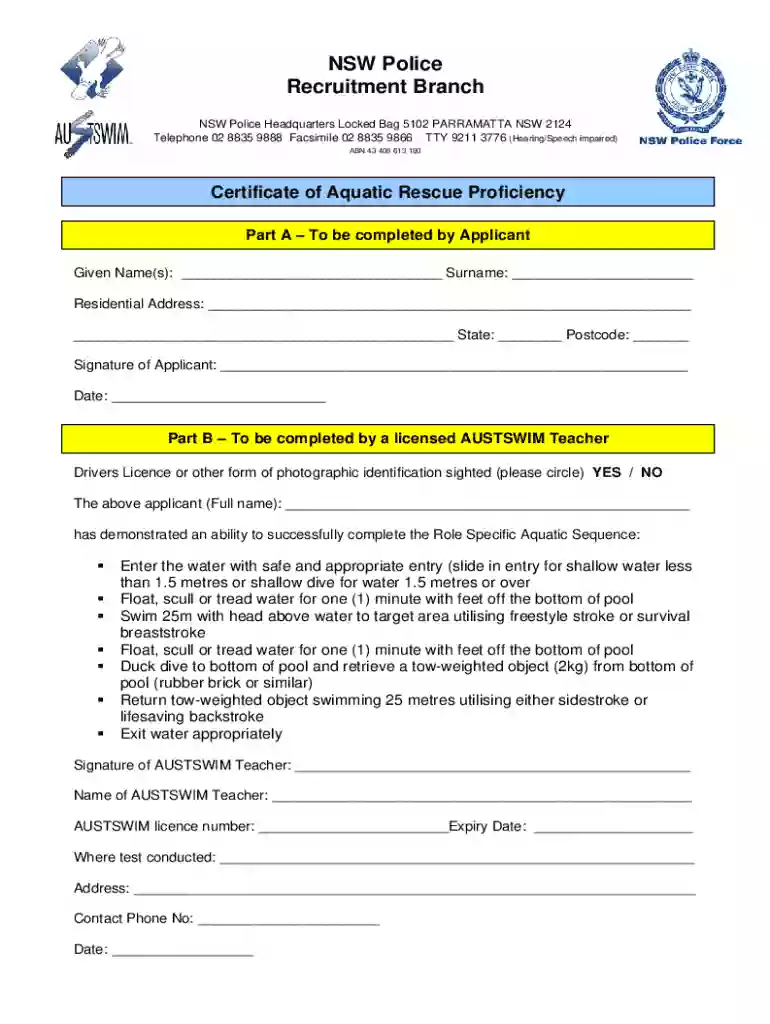
Type text, add images, blackout confidential details, add comments, highlights and more.

Draw your signature, type it, upload its image, or use your mobile device as a signature pad.

Send nsw police aquatic rescue sequence via email, link, or fax. You can also download it, export it or print it out.
The NSW Police Aquatic Rescue Sequence is a crucial assessment process designed to evaluate the aquatic rescue skills of applicants aspiring to join the New South Wales Police Force. This sequence consists of a series of practical evaluations that simulate real-life rescue scenarios in water, requiring candidates to demonstrate proficiency in rescue techniques, water safety, and emergency response tactics. Understanding this sequence is essential for candidates, as success in these evaluations is a prerequisite for further consideration in the admission process to the NSW Police Force.
The Aquatic Rescue Sequence aims to ensure that prospective officers possess the necessary skills to respond effectively in aquatic emergencies, protecting themselves and the public. Each candidate is assessed based on their ability to perform specific rescue tasks, which may include swimming long distances, performing artificial respiration, and utilizing various rescue equipment. Recognizing the sequence's structure and significance aids candidates in preparing thoroughly and improving their chances of passing.
Completing the NSW Police Aquatic Rescue Sequence involves several key steps that candidates must follow meticulously.
Obtain Information: Candidates should first download the detailed instruction document regarding the Aquatic Rescue Sequence test. This document provides essential insights about the assessment process, requirements, and tips for success.
Book an Assessment: Schedule an assessment at an AUSTSWIM accredited center. It is advisable to book the assessment well in advance to secure a spot.
Prepare Necessary Documentation: Candidates must bring valid identification to the assessment. This includes a driver's license or another form of photo ID that confirms their identity.
Dress Appropriately: Wearing suitable clothing for the aquatic environment is crucial. Candidates should wear swimwear, ideally, which allows for unrestricted movement during the test.
Complete Payment: Be prepared to pay any applicable fees associated with the test. This information should also be available in the instruction document.
Undergo the Assessment: On the day of the assessment, candidates will take part in the Aquatic Rescue Sequence, demonstrating their skills in designated tasks as outlined in the guidelines.
Await Results: After successfully completing the test, candidates will receive feedback or results, which are essential for determining their next steps in the application process for the NSW Police Force.
The NSW Police Aquatic Rescue Sequence comprises several key components that candidates must master to demonstrate their readiness for policing duties that involve aquatic situations.
Swimming Proficiency: Candidates should exhibit strong swimming skills, including the ability to swim continuously over distances, integrating various strokes like freestyle and backstroke.
Rescue Techniques: Essential techniques include the ability to perform rescues using buoyancy aids, reaching assists, and methods for safely entering and exiting the water in various conditions.
Emergency Response Skills: Understanding how to conduct rescue breathing and administering first aid are critical components. Candidates must be familiar with CPR protocols and how to apply them promptly.
Safety Procedures: Knowledge of safety protocols in aquatic settings, including risk assessment and hazard identification, is necessary for safe operation in emergency situations.
Understanding these elements not only prepares candidates for the test but also ingrains vital skills that they will use in the line of duty.
Familiarity with essential terminology related to the NSW Police Aquatic Rescue Sequence can aid candidates in understanding the concepts and competencies needed for success in the assessment.
AUSTSWIM: This organization accredits training and assessment centers that conduct aquatic rescue training and certification.
Rescue Breathing: This refers to the technique of providing artificial respiration to a drowning victim, which is a core skill evaluated in the sequence.
Buoyancy Aid: A device used to assist in flotation and rescue in aquatic environments. Candidates may need to demonstrate the effective use of such devices during the test.
Swimming Continuity: The ability to swim without stopping over a specified distance; an important aspect of demonstrating endurance.
CPR (Cardiopulmonary Resuscitation): A life-saving technique used in emergencies when someone's breathing or heartbeat has stopped, crucial for candidates to master.
By integrating this terminology into their study and practice, candidates can improve their comprehension and performance during the Aquatic Rescue Sequence assessments.
The NSW Police Aquatic Rescue Sequence is intended primarily for individuals who aspire to join the New South Wales Police Force. Candidates must successfully complete the sequence to demonstrate their capabilities in aquatic rescue situations.
Aspiring Police Officers: Individuals pursuing a career in policing that requires proficiency in water-related rescue operations.
Current Police Officers: Officers who require ongoing training or certification updates in aquatic rescue to maintain operational readiness.
Community Lifeguards: While not specific to police, individuals in community lifeguarding roles may take similar assessments to ensure their skills are aligned with current standards in aquatic safety and rescue.
Understanding the varied users of the NSW Police Aquatic Rescue Sequence helps contextualize its relevance and application within both law enforcement and broader community safety initiatives.


The NSW Police Aquatic Rescue Sequence must adhere to local regulations and standards established by governing bodies responsible for public safety.
Regulatory Compliance: All assessments must comply with state regulations regarding water safety and rescue protocols to ensure the legitimacy and reliability of the testing process.
Certification Validity: Candidates who successfully complete the Aquatic Rescue Sequence may receive a certification recognized by the NSW Police Force and potentially other organizations involved in aquatic safety.
Liabilities and Insurance: Individuals conducting rescue operations are encouraged to understand the legal implications of their actions, including liability concerns in the event of an emergency response.
Awareness of legal aspects surrounding the Aquatic Rescue Sequence equips candidates with knowledge that enhances their awareness of responsibilities and standards required in their roles as public safety responders.
Each of the sections above provides comprehensive insights into the NSW Police Aquatic Rescue Sequence, detailing procedures, key components, and associated legal factors crucial for aspiring police officers and individuals involved in aquatic safety.
We've got more versions of the aquatic rescue sequence form. Select the right aquatic rescue sequence version from the list and start editing it straight away!
At DocHub, your data security is our priority. We follow HIPAA, SOC2, GDPR, and other standards, so you can work on your documents with confidence.






,building clinical information spaces on the world wide web p wehr proceedings ・ nsw reliability plan ・ and information presentation on individual decision
by EJ Armstrong 2018 Cited by 158 Animal drowning experiments and case series reports of human drownings have augmented our understanding of the sequence of events and physiological effects.Read more


