




01. Edit your maryland plates transfer online
Type text, add images, blackout confidential details, add comments, highlights and more.

Type text, add images, blackout confidential details, add comments, highlights and more.

Draw your signature, type it, upload its image, or use your mobile device as a signature pad.

Send md application transfer via email, link, or fax. You can also download it, export it or print it out.
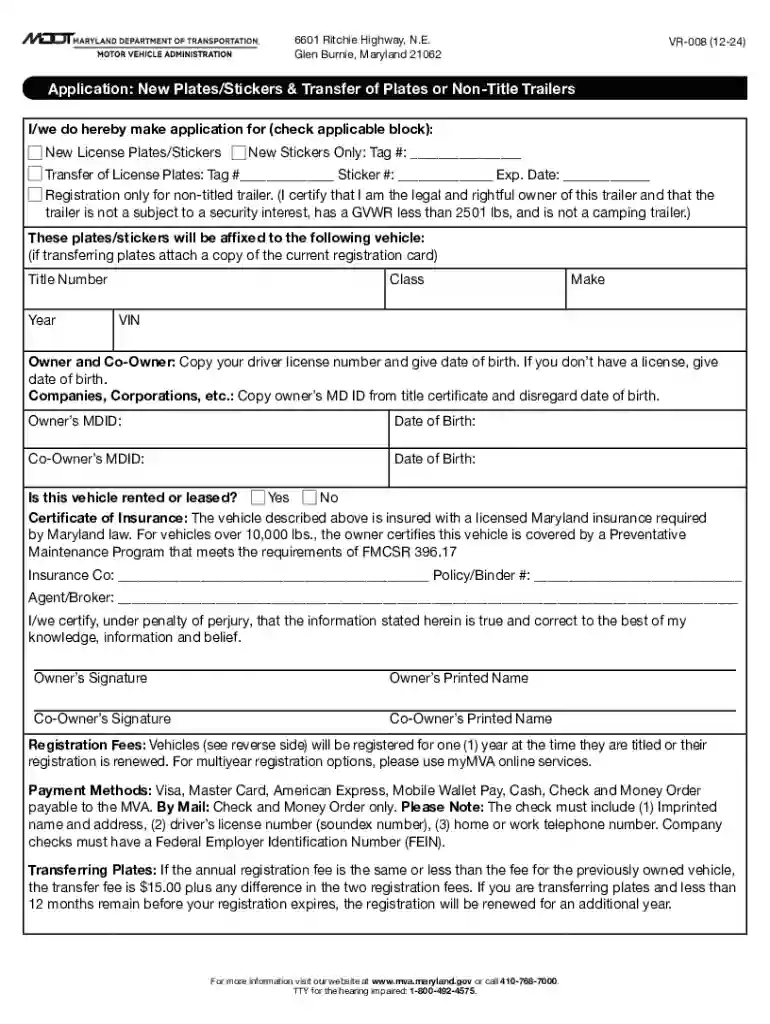
The Maryland plates transfer process allows vehicle owners in Maryland to transfer their existing license plates from one vehicle to another or to a non-title trailer. This process ensures that the vehicle registration and associated license plates remain valid and up-to-date as ownership or vehicle status changes. The process supports the registration continuity of vehicles and helps maintain compliance with Maryland’s vehicle registration laws.
Transferring plates is common when purchasing a new vehicle or when changing ownership of a vehicle within family members. It prevents the need for purchasing new plates, thereby saving costs and reducing waste. It is essential for maintaining the documentation necessary for legal driving in the state. For example, someone purchasing a new car can transfer their existing plates to avoid the additional expense of acquiring new ones.
To use the Maryland plates transfer, vehicle owners must complete the necessary application form for plate transfer. This form typically requires detailed vehicle information, including the Vehicle Identification Number (VIN) and details about the existing license plates. Owners must submit this form alongside any required documentation, such as proof of insurance and title transfer documents.
The application process often requires a visit to the Maryland Department of Transportation Motor Vehicle Administration (MDOT MVA) or can be completed through the MDOT MVA’s online services if eligible. Online submissions require the user to have an MDOT MVA account and follow the prescribed submission procedure.
The Maryland plates transfer form is available from the Maryland Department of Transportation Motor Vehicle Administration (MDOT MVA) offices or their official website. You can pick up a physical copy at any local branch or download a digital version for convenience. The MDOT MVA website provides extensive resources on how to fill out and submit the form.
For convenience, you may download the form, complete it digitally, and print it out for submission in person or mail. Alternatively, the entire process of obtaining, completing, and submitting the form can sometimes be conducted online if the applicant meets certain criteria. Ensuring accuracy when completing this form is vital to avoid processing delays or rejections.
Gather Required Information:
Access the Form:
Fill Out the Form:
Attach Supporting Documentation:
Submit the Application:
Pay Applicable Fees:
Await Confirmation:
Transferring Maryland plates is essential for maintaining legal and proper vehicle documentation. It helps avoid the unnecessary cost of new plates and provides a seamless transition when replacing or acquiring another vehicle. Transferring plates also ensures that vehicle registration information remains current, which is beneficial for insurance purposes and in case of any legal inquiries or road checks.
There is also an environmental benefit, as transferring existing plates rather than producing new ones conserves resources. Additionally, keeping your plates updated can prevent fines and difficulties renewing vehicle registrations.
The Maryland plates transfer service is primarily used by individuals purchasing or selling vehicles, those transferring vehicle ownership among family members, and dealers updating fleet vehicles. It is also useful for individuals moving within Maryland who want to retain their existing license plates on a new vehicle.
Businesses and dealerships might use plate transfers when updating their fleets as it allows for quick and easy reassignment of existing plates to new vehicles, enhancing operational efficiency. Families frequently utilize this service to transfer ownership within the family, such as a parent transferring a vehicle to a child.


Understanding these terms is crucial for ensuring the form is completed accurately and comprehensively. Each term plays a significant role in the transfer process and is referenced throughout the documentation.
Maryland has specific regulatory requirements governing the transfer of license plates. For instance, only the registered owner or immediate family members are eligible for plate transfers. The transfer must occur within a specific timeframe to avoid penalties.
Additionally, various vehicle classes may have distinct fee requirements. For example, transferring plates from a passenger vehicle to a truck might incur different charges based on vehicle class-specific rules. Understanding these regulations helps applicants prepare appropriately and avoid unnecessary complications.
The form for transferring Maryland plates contains several essential sections:
These key elements must be addressed accurately to ensure the successful processing of the transfer. Errors or omissions can lead to processing delays and potentially incurring additional costs.
We've got more versions of the maryland plates transfer form. Select the right maryland plates transfer version from the list and start editing it straight away!
At DocHub, your data security is our priority. We follow HIPAA, SOC2, GDPR, and other standards, so you can work on your documents with confidence.




Nov 15, 2011 Registration plates acquired by any person, for any vehicle owned by that person, may be transferred to a newly acquired vehicle provided:
In some cases, you can transfer license plates from an old vehicle to a new one. If you qualify, you may pay a lower fee than if you register with new plates.


