




01. Edit your mva 104 fl online
Type text, add images, blackout confidential details, add comments, highlights and more.

Type text, add images, blackout confidential details, add comments, highlights and more.

Draw your signature, type it, upload its image, or use your mobile device as a signature pad.

Send mva 104fl via email, link, or fax. You can also download it, export it or print it out.
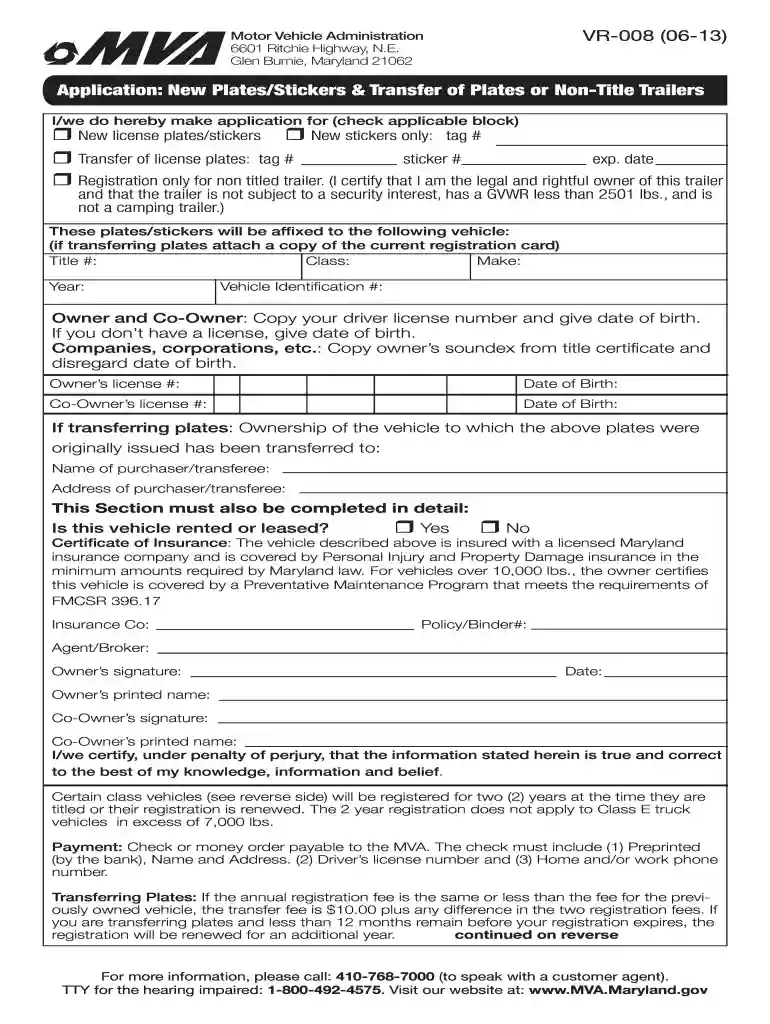
Maryland MVA forms refer to a variety of official documents provided by the Maryland Motor Vehicle Administration necessary for vehicle registration, licensing, titling, and other related functions. A well-structured understanding of these forms ensures compliance with state regulations while facilitating a smooth interaction with the MVA.
The Maryland MVA offers several types of forms that cater to various needs of vehicle owners and drivers:
To successfully navigate the completion and submission of Maryland MVA forms, you can follow these effective steps:
Certain Maryland MVA forms will necessitate supplementary documentation. Commonly required documents include:
Consider the following when dealing with Maryland MVA forms:
When filling out MVA forms, several common mistakes can lead to complications:
For further assistance concerning Maryland MVA forms, various resources are available:
This comprehensive understanding of Maryland MVA forms will facilitate a smoother experience in managing vehicle registration, licensing, and compliance with state regulations.
We've got more versions of the mva 104 fl form. Select the right mva 104 fl version from the list and start editing it straight away!
At DocHub, your data security is our priority. We follow HIPAA, SOC2, GDPR, and other standards, so you can work on your documents with confidence.
Original - MVA. Copy - Customer. For more information, please call: 1-800-638-8347 (touch tone calls only), 1-800-950-1 MVA (1682) (to speak with a customerRead more
Two types of placards are available: Temporary Placards, which are valid for a period of up to 6 months; and Permanent Parking Placards which are valid untilRead more
Application for a Certificate of Title (Form #VR-005) can be used for titling a vehicle. This form must be filled out and brought in person to your local full


