







Definition & Overview
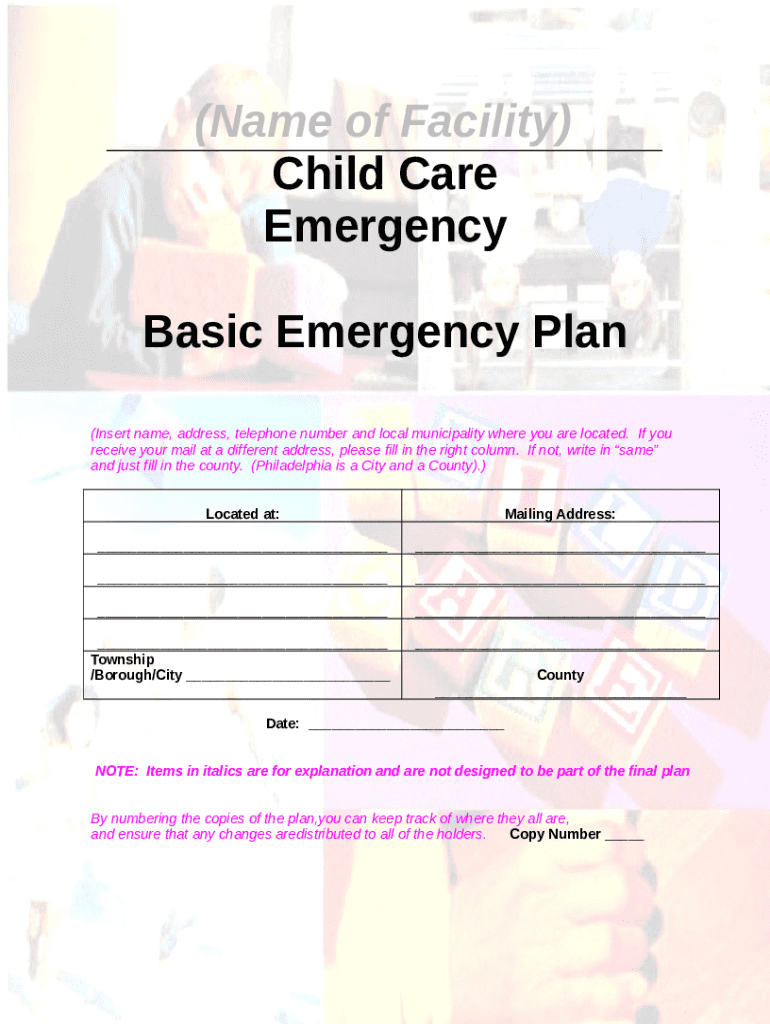
The Child-Care-Emergency-Basic-Plan doc for (Name of Facility) is a crucial document outlining the emergency procedures designed to ensure the safety and well-being of children and staff within a child care facility. This comprehensive plan addresses various emergencies and provides systematic procedures to follow in such events. Key components generally include procedures for evacuation, shelter-in-place, communication protocols, and parental notifications. Each section of the plan is meticulously tailored to meet the regulatory requirements and specific needs of the child care facility.
Key Elements of the Plan
The Child-Care-Emergency-Basic-Plan doc encompasses several critical elements to ensure effective emergency management:
- Emergency Procedures: Detailed instructions on handling specific emergencies such as fires, severe weather, or intruder scenarios.
- Communication Protocols: Methods for maintaining contact with parents, emergency services, and staff during an emergency.
- Evacuation Routes: Clearly defined paths and exits for safe evacuation of children and staff.
Communication and Coordination
- Local Emergency Services: Establishment of strong coordination with local emergency responders to ensure a rapid and efficient response.
- Parental Notification: Guidelines for timely and accurate communication with parents during any emergency incident.
Accountability Measures
- Child Tracking System: Procedures for keeping track of children during emergencies to ensure no one is left behind.
- Staff Roles and Responsibilities: Description of duties assigned to each staff member during an emergency to facilitate order and efficiency.
How to Use the Document
Users of the Child-Care-Emergency-Basic-Plan doc should familiarize themselves with the contents and procedures outlined within:
- Regular Training: Conduct regular training sessions for staff to ensure familiarity with emergency procedures.
- Routine Drills: Implement routine emergency drills to practice evacuation and other emergency responses.
- Document Updates: Regularly update the document to reflect changes in facility layout or staff roles.
Step-by-Step Utilization
- Review Each Section: Begin by thoroughly reviewing each section to understand the specific procedures for different emergency scenarios.
- Assign Roles: Clearly assign roles to each staff member and provide training based on their responsibilities within the plan.
- Establish Contact Protocols: Set up and maintain contact lists for parents and emergency services as outlined in the plan.
Steps to Complete the Document
The completion of the Child-Care-Emergency-Basic-Plan doc involves multiple stages to ensure it is tailored to the specific facility needs:
- Assessment of Risks: Conduct a risk assessment to identify potential emergencies specific to the facility’s location and environment.
- Drafting the Plan: Use the assessment outcomes to draft customized procedures for each identified emergency.
- Approval Process: Submit the draft plan to relevant authorities or boards for approval and compliance checks.
Detailed Checklist
- Facility Tour: Conduct a comprehensive tour of the facility to understand layout and identify optimal evacuation routes.
- Staff Input: Gather input from staff members to incorporate practical insights and enhance plan effectiveness.
- Parental Consultation: Engage with parents for any additional suggestions or concerns they might have regarding emergency procedures.
State-Specific Rules
Implementing a Child-Care-Emergency-Basic-Plan doc requires awareness of state-specific rules and regulations:
- Compliance Requirements: Ensure the plan complies with state child care licensing standards and safety regulations.
- Regional Variations: Take into consideration regional variations in weather patterns or natural disasters that might impact emergency readiness.
Regional Customizations
- Climate Considerations: Adapt emergency plans to include region-specific weather-related threats such as hurricanes or tornadoes.
- Local Regulations: Stay informed about any changes in local legislation that might affect child care emergency planning.
Legal Use and Compliance
The Child-Care-Emergency-Basic-Plan doc must be legally sound and compliant:
- Legal Framework: The document should be drafted with consideration of legal requirements, ensuring all procedures are in line with current child safety laws.
- Record Keeping: Maintain copies of the plan both digitally and in paper form to facilitate easy access during an emergency.
Compliance Verification
- Regular Audits: Conduct regular audits to ensure continuous compliance with legal standards.
- Documentation Review: Periodically review and update legal documentation associated with the emergency plan.
Who Typically Uses This Document
This document is typically used by various stakeholders within the child care environment:
- Facility Administrators: Responsible for ensuring the plan is effectively implemented and staff are adequately trained.
- Child Care Providers: Engage directly with children and require thorough understanding of emergency evacuation and safety protocols.
- Parents: Interested stakeholders who need assurance about their children’s safety and the facility’s readiness in emergencies.
Stakeholder Participation
- Community Involvement: Local community organizations may also engage with child care facilities to offer support or partnership in emergency preparedness activities.
Examples of Using the Document
Practical application of the Child-Care-Emergency-Basic-Plan doc demonstrates its importance through real-world scenarios:
- Fire Evacuation Drill: Staff and children practice evacuation procedures regularly to ensure swift response during actual events.
- Severe Weather Preparations: The facility implements shelter-in-place protocols during severe weather alerts, following established guidelines.
Case Studies
- Timely Parental Alerts: Utilizing planned communication protocols, a facility successfully transmitted vital information to parents during a power outage.
By selecting relevant content blocks, the document can offer maximum utility for the intended audience, ensuring safety and legal compliance.




