







Definition and Purpose of the Child Behavior Observation Chart Printable
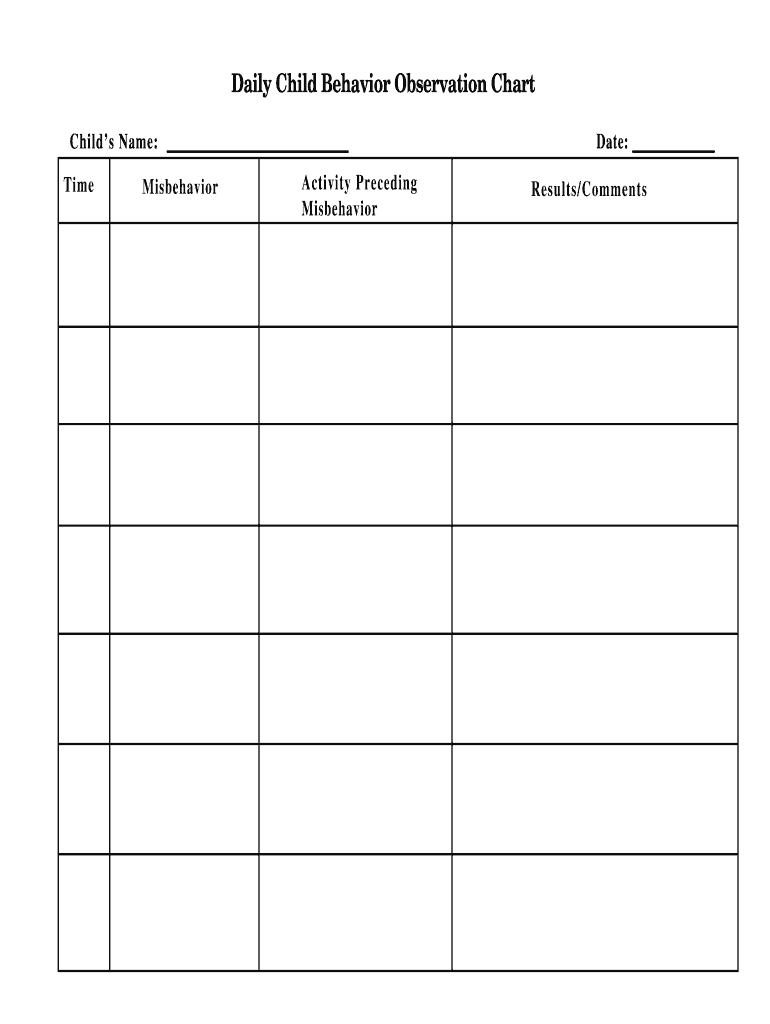
The child behavior observation chart printable is a structured tool designed for educators, parents, and caregivers to record and analyze children's behaviors in various settings. This chart typically includes fields such as the child's name, date, time of the observation, and descriptions of specific incidents or patterns of behavior.
Importance of Detailed Observations
- Behavior Tracking: The chart assists in monitoring how a child behaves during different activities or interactions, helping to identify any behavioral patterns or triggers.
- Supportive Interventions: Observations can be analyzed to develop appropriate interventions, tailored strategies, or positive reinforcement when necessary.
- Communication Tool: A behavior observation chart serves as an effective means for communicating a child's behavioral progress with other stakeholders, including teachers and therapists.
How to Use the Child Behavior Observation Chart Printable
Using a child behavior observation chart printable can be straightforward, provided users adhere to a structured format for effective data capture.
Steps for Effective Usage
- Download and Print: Obtain the chart from a reliable source that offers a free printable behavior observation form.
- Fill in Initial Information: Start by entering pertinent details, including the child's name, date, and time of observation.
- Record Observations: As incidents occur, take note of the activity preceding the behavior, the type of behavior displayed, and any comments or results.
- Review Regularly: Periodically review completed charts to identify trends over time, facilitating strategic responses to behavioral issues.
- Share Findings: Discuss the documented behaviors with other educators, parents, or specialists to formulate plans for intervention or support.
Key Elements of the Child Behavior Observation Chart Printable
Several essential components make the child behavior observation chart printable effective for accurate recording and analysis.
Fundamental Sections
- Child's Information: Basic details about the child that may include age, grade level, and any relevant background information.
- Observation Timeframe: This allows for recording the specific date and time, helping to contextualize behaviors in relation to specific activities or environments.
- Description of Behavior: This critical section enables detailed accounts of the behavior observed, including context, duration, and any apparent triggers.
- Teacher or Observer Comments: Space for notes that summarize the observer's insights, suggestions for further action, or patterns identified during the observation period.
Examples of Using the Child Behavior Observation Chart Printable
Practical scenarios can enhance understanding of how to best utilize the child behavior observation chart printable in real-world contexts.
Scenario Illustrations
- Preschool Setting: A teacher notes instances of a child hitting another during playtime. The chart captures the time, activity, and the child’s emotional state, such as frustration over shared toys. This information can lead to discussions on conflict resolution strategies.
- Home Environment: A parent uses the chart to document their child's tantrums, noting triggers like bedtime routine changes. This observation may lead to the need for a more consistent approach during transitions.
- Therapeutic Context: A therapist may track a child's responses to specific stimuli in a controlled environment, allowing for adjustments to therapeutic interventions based on observed changes over time.
Legal Use of the Child Behavior Observation Chart Printable
Understanding the legal aspects of using the child behavior observation chart printable adds another layer of professionalism and responsibility in documentation.
Legal Considerations
- Confidentiality and Privacy: Observers must ensure that the information recorded complies with privacy regulations, such as the Family Educational Rights and Privacy Act (FERPA) in the U.S.
- Consent: Obtaining necessary permissions from parents or guardians before documenting and sharing sensitive behavioral data is essential.
- Record Keeping: Maintaining accurate records can be important for behavioral assessments, particularly in educational settings or for special services, ensuring all stakeholders are informed while protecting the child's identity.
Why You Should Complete the Child Behavior Observation Chart Printable
There are significant benefits to consistently completing the child behavior observation chart printable.
Advantages of Completing the Chart
- Informed Decisions: By documenting behaviors, caregivers and educators can make informed decisions regarding interventions and support.
- Progress Monitoring: Tracking behaviors over time provides insight into the effectiveness of strategies employed, allowing for adjustments as necessary.
- Enhanced Communication: Detailed observations foster better communication between parents, teachers, and any involved specialists, aligning approaches to the child's needs.




