
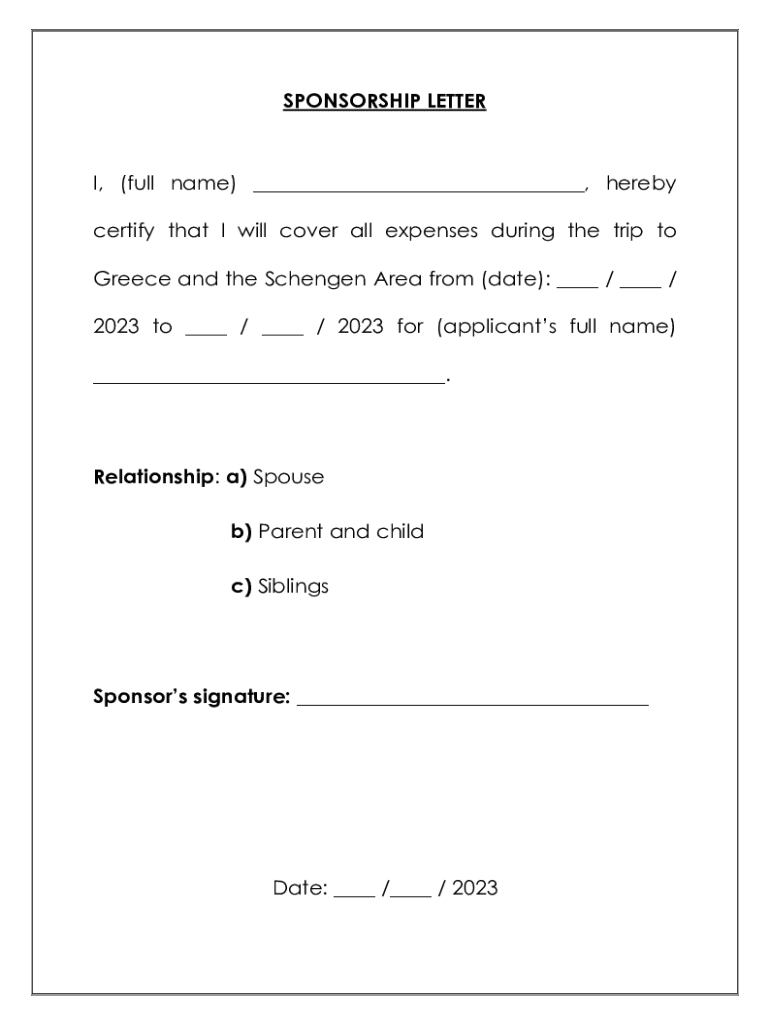







Definition and Importance of a Sponsorship Letter for Schengen Visa
A Sponsorship Letter for a Schengen Visa is a formal document in which the sponsor declares their commitment to cover the expenses of an applicant's travel to countries within the Schengen Area, including Greece. This letter serves as a crucial component of the visa application, establishing financial assurance and detailing the relationship between the sponsor and the applicant. By presenting this letter, applicants demonstrate they have the financial backing necessary to support their trip, which is essential for visa approval. The letter typically includes the sponsor's personal and financial information, the purpose of the visit, and the duration of the intended stay.
Key Elements of the Sponsorship Letter
Crafting a comprehensive Sponsorship Letter involves several critical elements to ensure its effectiveness in the visa application process:
- Sponsor Details: Include the full name, contact information, and address of the sponsor, along with a copy of their identification (passport or national ID).
- Applicant Details: Provide the full name and relationship to the sponsor.
- Financial Commitment: Explicitly state the sponsor's responsibility for covering travel, accommodation, and daily expenses.
- Purpose and Duration of Visit: Clearly define the reasons for the trip and its planned duration.
- Declaration of Truth: An assurance that the information provided is accurate, signed by the sponsor.
How to Obtain a Sponsorship Letter for Schengen Visa
Acquiring a Sponsorship Letter involves a structured process to ensure accuracy and completeness:
- Initial Communication: Contact a potential sponsor to discuss the possibility of supporting your travel.
- Gather Required Information: Collect all necessary details from both the sponsor and the applicant, including financial documents proving the sponsor's ability to support the trip.
- Draft the Letter: Compose the letter using a clear and formal tone. Ensure all required elements are included.
- Legal Review: Have the letter reviewed by a legal advisor, if possible, to ensure it meets all necessary requirements.
- Finalization: The sponsor signs the letter, which is then notarized if required by the consulate or embassy.
Steps to Complete the Sponsorship Letter
To create a well-structured Sponsorship Letter, follow these steps:
- Research Legal Requirements: Understand specific requirements for the Schengen Visa concerning sponsorship letters.
- Identify Necessary Documents: Gather documents that demonstrate the sponsor's financial capacity such as bank statements, employment letters, and tax returns.
- Draft the Letter: Use a template or example letter as a guide to ensure all necessary information is included.
- Review and Revise: Edit the letter for clarity and accuracy, ensuring all statements made are truthful and supportive of the sponsorship claim.
- Finalize and Sign: The sponsor finalizes the document with their signature, ready for submission with the visa application.
Eligibility Criteria and Applicant Scenarios
The eligibility for using a Sponsorship Letter can vary based on several factors:
- Nationality: Applicants from countries with specific bilateral agreements may have different requirements.
- Relationship with Sponsor: Typically used by family members, close friends, or business partners.
- Financial Stability: The sponsor must demonstrate financial solvency.
- Purpose of Visit: The letter must align with the stated purpose of the visit, whether for tourism, business, or family visits.
Scenarios vary depending on the applicant's status, such as students seeking study visas, retirees visiting family, or employees on business trips.


Legal Use and Considerations
A Sponsorship Letter must adhere to legal norms to be valid:
- Authenticity: Must truthfully represent details of sponsorship and relationship.
- No Misrepresentation: Providing false information could lead to application denial or legal repercussions.
- Documentation: Supporting documents such as bank statements should be up-to-date and clearly reflect the sponsor's financial capability.
Examples of Using the Sponsorship Letter
Practical scenarios highlight the varied use of Sponsorship Letters:
- Family Visits: A parent sponsoring their child's visit for a cultural exchange program.
- Tourism: Friends covering each other’s travel costs for a joint vacation.
- Business Trip: A company sponsoring an employee's participation in a conference in the Schengen Area.
Each example underscores the importance of clear communication and correct documentation within the letter.
Digital vs. Paper Version
The method of submission can depend on consular requirements:
- Digital Submission: Some consulates may accept digitally signed documents, easing the process by eliminating postal delays.
- Paper Submission: Traditional methods may still be required by certain embassies or when notarization is mandatory.
Ensuring awareness of submission preferences is critical for timely processing.
State-Specific Rules and Regulations
Though the letter is intended for Schengen Visa applications, U.S. residents must adhere to state-specific notary laws when signing and validating the document. Understanding these laws will avoid procedural errors that could compromise the letter’s legality and acceptance in the visa application process.




