
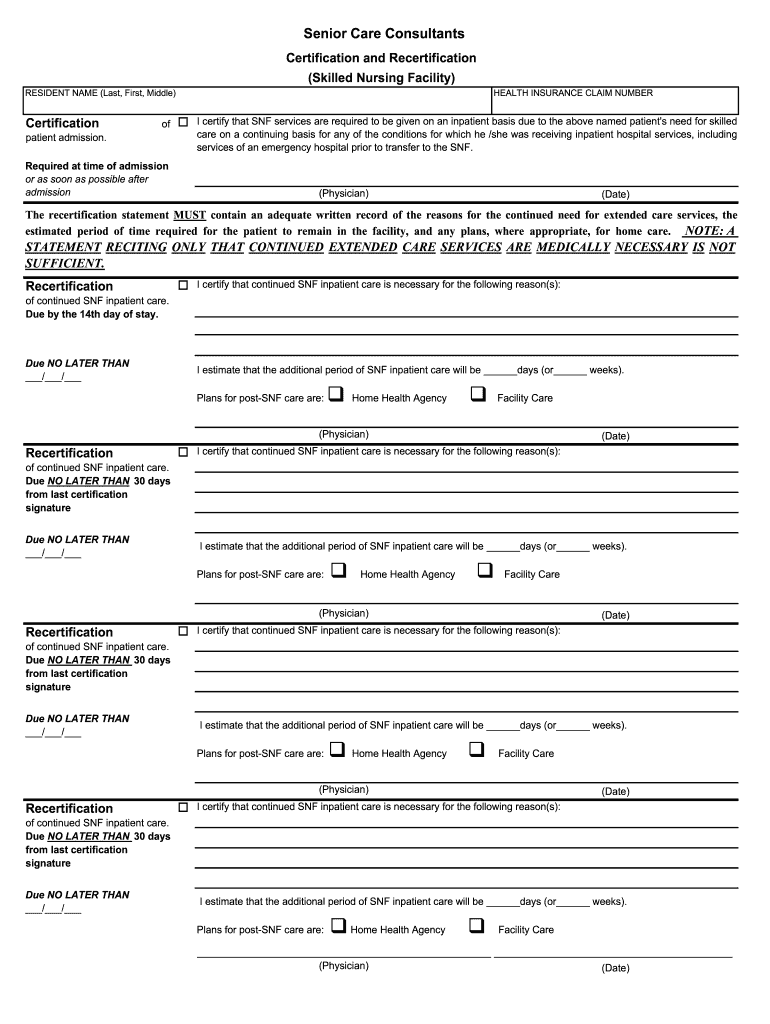







Definition and Purpose of Delayed Medicare Certification Form
The delayed Medicare certification form is a crucial document used within the healthcare sector, specifically for patients requiring skilled nursing facility (SNF) services or extended care. It is designed to certify that a physician has assessed the patient's need for ongoing inpatient care and that the necessary documentation justifying this care was not submitted in a timely manner. This form serves to protect both the patient and the healthcare provider by ensuring that all necessary certifications and justifications meet Medicare's regulatory requirements.
The delayed certification process is significant for avoiding potential reimbursement issues associated with Medicare Part A. When patients are admitted to a skilled nursing facility, providers must justify the need for this care, including details about the patient's condition and expected duration of treatment. Without proper completion of the certification and any delays from the physician's side might lead to complications in claim submissions, making this form vital for maintaining compliance with Medicare regulations.
Steps to Complete the Delayed Medicare Certification Form
Completing the delayed Medicare certification form involves several critical steps that ensure compliance and accurate information is provided:
-
Obtain the Form:
- The form can usually be accessed through healthcare provider networks, or specific Medicare websites.
-
Fill Out Patient Information:
- Include essential details such as the patient's name, Medicare number, and facility admission date.
-
Physician's Assessment:
- The physician must evaluate the patient and provide a detailed account of their medical condition, which includes:
- Current diagnosis
- Justification for ongoing care
- Estimated period of care required
- The physician must evaluate the patient and provide a detailed account of their medical condition, which includes:
-
Address Delays in Submission:
- Clearly outline the reasons for submitting the certification late. If applicable, include explanations regarding the factors that caused the delay, such as administrative errors or unforeseen circumstances.
-
Sign and Date the Form:
- The physician must sign, date, and provide their credentials on the form, confirming the assessment's validity and the necessity for continued care.
This step-by-step approach ensures a thorough and compliant submission that adheres to Medicare's regulations for skilled nursing facility services.
Key Elements of the Delayed Medicare Certification Form
Understanding the essential components of the delayed Medicare certification form is vital for accurate completion:
- Patient Details: Necessary personal and medical information.
- Certification Statement: A clear declaration by the physician verifying the need for continued care.
- Details of Delay: Context and examples that explain why the certification was not submitted on time.
- Signatory Lines: Where the physician must affirm their assessment by providing a signature and date.
- Duration of Need: Specifics on how long ongoing care is predicted to be necessary for the patient.
Each element plays a pivotal role in the fulfillment of Medicare's documentation expectations and aids in securing the appropriate financial reimbursement.
Common Scenarios Necessitating a Delayed Medicare Certification Form
There are various situations where filling out the delayed Medicare certification form becomes necessary. For example:
- Administrative Errors: Situations where the required documentation was misplaced or lost in the records system.
- Patient Readmission: If a patient is readmitted to an SNF after a brief hospitalization, the paperwork may not align correctly with Medicare guidelines.
- Changes in Medical Condition: Unforeseen changes in a patient's medical condition may lead to an urgent need for extended care that was not included in the initial certification.
These scenarios highlight the relevance of the delayed certification form in ensuring that all requirements for reimbursement are met without compromising patient care.
Legal Implications of the Delayed Certification Form
The delayed Medicare certification form carries significant legal implications for both healthcare providers and patients. Properly completing and submitting this form can protect against penalties associated with improper filing. Specific requirements must be adhered to, including:
- Compliance with Medicare Regulations: Non-compliance may lead to claim denials, resulting in financial burdens for healthcare providers.
- Potential for Audits: Inaccurate or incomplete certifications can trigger audits from Medicare, leading to further investigations and penalties.
- Patient Rights and Protections: Ensuring that the delayed certification is appropriately justified safeguards the patient's financial liabilities concerning hospital care.
Healthcare providers must be vigilant in following the established guidelines associated with the delayed Medicare certification form to maintain compliance.
Importance of Accurate Record Keeping
Accurate maintenance of medical records is imperative for the successful processing of the delayed Medicare certification form. Key practices include:
- Regular Updates: Keeping patient records current with all assessments, treatments, and any changes in condition.
- Communication with Patients: Ensuring patients understand their treatment plans helps in creating comprehensive and accurate documentation for certifications.
- Staff Training: Encouraging best practices among medical staff in record-keeping can reduce errors associated with late submissions.
By emphasizing these record-keeping principles, healthcare institutions can strengthen their eligibility for timely Medicare reimbursement and fulfill regulatory requirements effectively.




