Definition & Meaning
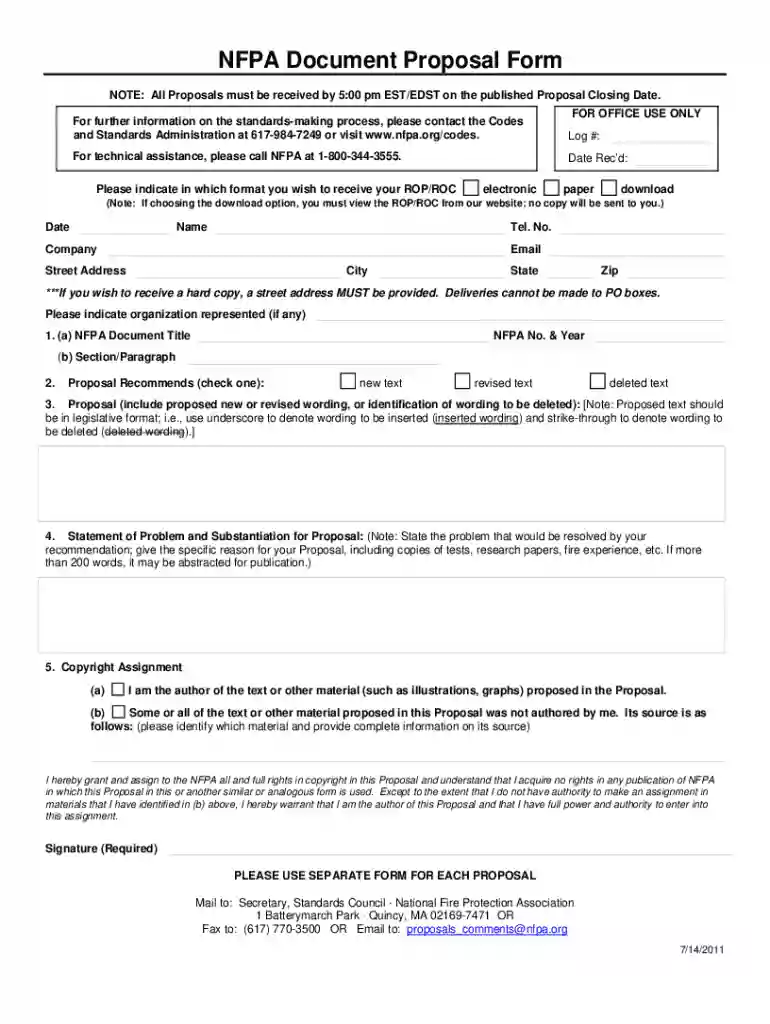
The "NFPA Technical Committee Document Proposal Form - TIA - hydrogenandfuelcellsafety" is utilized to propose amendments to the National Fire Protection Association's (NFPA) standards, specifically focusing on standards relating to hydrogen and fuel cell safety. Temporary Interim Amendments (TIAs) address urgent safety needs, technical errors, or omissions in standards. This form ensures standardized submissions that facilitate evaluation by the relevant NFPA committee.
- Urgency: TIAs are for immediate safety concerns that cannot wait for the regular revision cycle.
- Scope: Relates specifically to hydrogen and fuel cell safety.
- Purpose: Facilitates input from professionals in the field to enhance NFPA standards.
How to Use the NFPA Technical Committee Document Proposal Form - TIA - hydrogenandfuelcellsafety
Knowing how to properly use the "NFPA Technical Committee Document Proposal Form - TIA - hydrogenandfuelcellsafety" is essential to effectively communicate proposed changes.
- Identify Needs: Begin by identifying a safety issue or error in existing standards related to hydrogen and fuel cell safety.
- Complete Form Sections: Fill out personal and contact information accurately. Describe the nature of the proposal (new, revised, or deleted text).
- Problem Statement: Provide a concise statement explaining the issue addressed.
- Supporting Data: Attach any data, reports, or references that support the necessity of the change.
- Review and Submit: Double-check all entries for accuracy before submission.
Steps to Complete the NFPA Technical Committee Document Proposal Form - TIA - hydrogenandfuelcellsafety
Completing the form involves several key steps:
- Personal Info: Provide full name, contact details, and any organizational affiliations.
- Proposal Type: Indicate whether the submission is to introduce new text, revise existing text, or delete portions of the current standard.
- Rationale: Articulate why the change is needed, referencing specific sections from existing NFPA standards.
- Intended Outcome: Describe the expected result of the change, ensuring it aligns with safety imperatives.
- Attachments: Include all relevant documentation that backs up your proposal.
- Submission: Choose a method—online, mail, or email—and follow guidelines for submitting to the NFPA.
Key Elements of the NFPA Technical Committee Document Proposal Form - TIA - hydrogenandfuelcellsafety
Several core elements are critical to this form:
- Technical Justification: Explanation with technical information about why the change is needed.
- Proposed Change Text: Clear description of the text to be added, removed, or modified.
- Urgency Statement: Justify the immediate need for the amendment.
- Safety Impact: Indicate how the change will enhance safety in hydrogen and fuel cell contexts.
Who Typically Uses the NFPA Technical Committee Document Proposal Form - TIA - hydrogenandfuelcellsafety
This form is generally used by:
- Fire Safety Professionals: Experts focused on fire prevention and safety.
- Engineers: Particularly those in the hydrogen and fuel cell sectors.
- Technical Committees: Members of NFPA committees proposing technical changes.
- Safety Inspectors: Individuals tasked with compliance and safety inspections.
Legal Use of the NFPA Technical Committee Document Proposal Form - TIA - hydrogenandfuelcellsafety
The form helps in legally modifying standards that impact public safety.
- Compliance: Changes facilitated through this form ensure compliance with updated safety norms.
- Record Keeping: Serves as a formal record of proposed changes, regulatory reviews, and public comments.
Examples of Using the NFPA Technical Committee Document Proposal Form - TIA - hydrogenandfuelcellsafety
Practical scenarios where this form may be applied include:
- Correcting Errors: If an existing safety measure in the NFPA standard inadvertently increases risk.
- Technological Advances: When new technology creates gaps in current safety standards.
- Emergent Threats: Addressing sudden concerns related to hydrogen or fuel cells that arise due to industry developments.
Form Submission Methods (Online / Mail / In-Person)
Various submission methods are available:
- Online Submission: Fastest and recommended method for submission. Ensures quick processing and acknowledgment.
- Mail: Viable for those preferring physical documentation. Must adhere to mailing guidelines to ensure proper delivery.
- Email: Allows for digital submission with confirmation. Include all attachments as specified.
- Considerations: Ensure that all submissions, regardless of the method, meet NFPA’s guidelines and include every bit of required documentation.