




01. Edit your form online
Type text, add images, blackout confidential details, add comments, highlights and more.

Type text, add images, blackout confidential details, add comments, highlights and more.

Draw your signature, type it, upload its image, or use your mobile device as a signature pad.

Send it via email, link, or fax. You can also download it, export it or print it out.
Digital forms, often referred to as "form online," are electronic versions of traditional paper documents that individuals or businesses can complete, submit, and store using internet-based platforms. These forms are designed to streamline data collection and processing by eliminating the need for physical copies, thus enhancing efficiency and reducing errors. With the convenience of accessing and filling out forms from anywhere with an internet connection, users are empowered to manage their administrative tasks seamlessly.
Using an online form involves several steps to ensure successful completion and submission. First, locate the form on the relevant website or platform, such as DocHub. Next, read all instructions carefully to understand the information required. Fields may include text boxes, checkboxes, drop-down menus, or signature fields. To fill out the form:
Users may also save drafts to complete forms at a later time, providing flexibility in managing document workflows.
Completing an online form can be broken down into straightforward steps, ensuring a smooth process. Here's a step-by-step guide:
These steps help ensure the form serves its purpose without delays or errors.
Understanding the key components of an online form enhances usability and efficiency. Elements typically include:
These elements streamline data collection, ensuring clarity and reducing user error.
Online forms offer multiple submission methods to cater to different needs. While the most common is digital submission through the platform itself, some scenarios may require alternative methods:
Choosing the right method depends on guidelines set by the issuing entity and the user's specific requirements.
Forms completed online hold the same legal weight as their paper counterparts, provided they meet certain criteria. Legal considerations include:
Online forms serve as legitimate, binding documents in various legal contexts when these conditions are met.
Familiarity with key terminology enhances users' experience with online forms. Important terms include:
These terms facilitate better comprehension and utilization of online forms, aiding smoother operations.
Real-world scenarios showcase the versatility of online forms:
These examples highlight the adaptability of online forms across various sectors, demonstrating their practical utility.
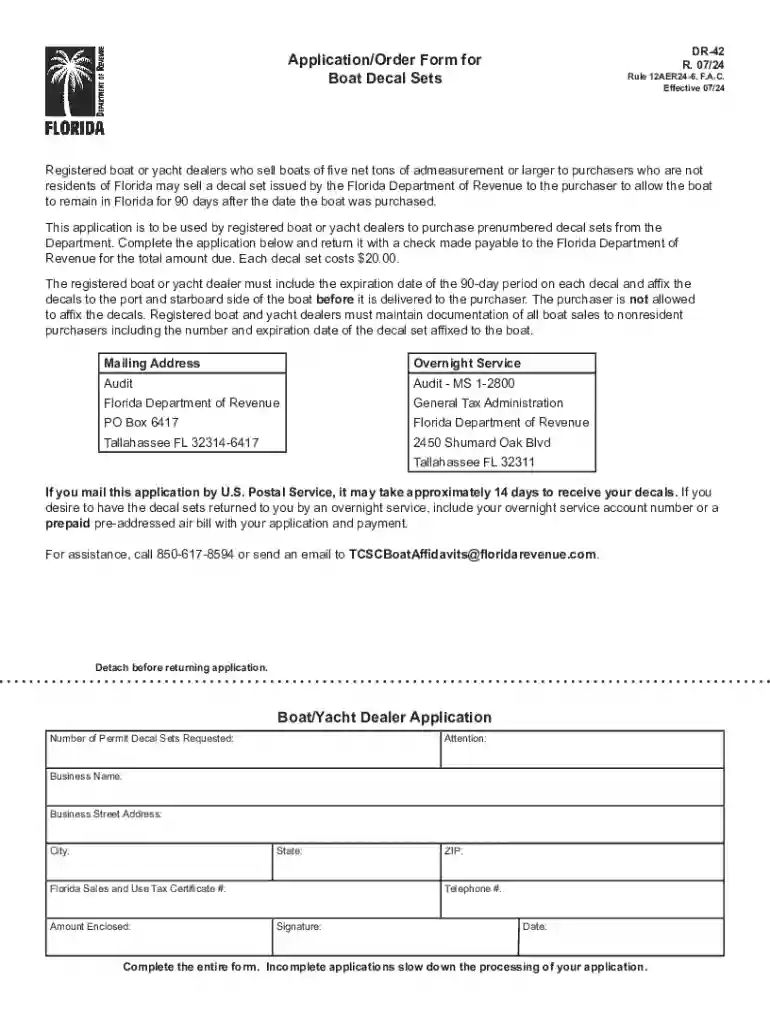
We've got more versions of the Florida Boat Decal Application Form form. Select the right Florida Boat Decal Application Form version from the list and start editing it straight away!
At DocHub, your data security is our priority. We follow HIPAA, SOC2, GDPR, and other standards, so you can work on your documents with confidence.


Applications for titles and registrations must be filed at a county. An initial application for the title and registration of a homemade vessel is filed at the
Boat dealers registered with the Department may purchase decal sets by submitting an Application/Order Form for Boat Decal Sets (Form DR-42, payment of $20 per


