






Understanding Tuberculosis Forms
Definition and Significance of Tuberculosis Forms
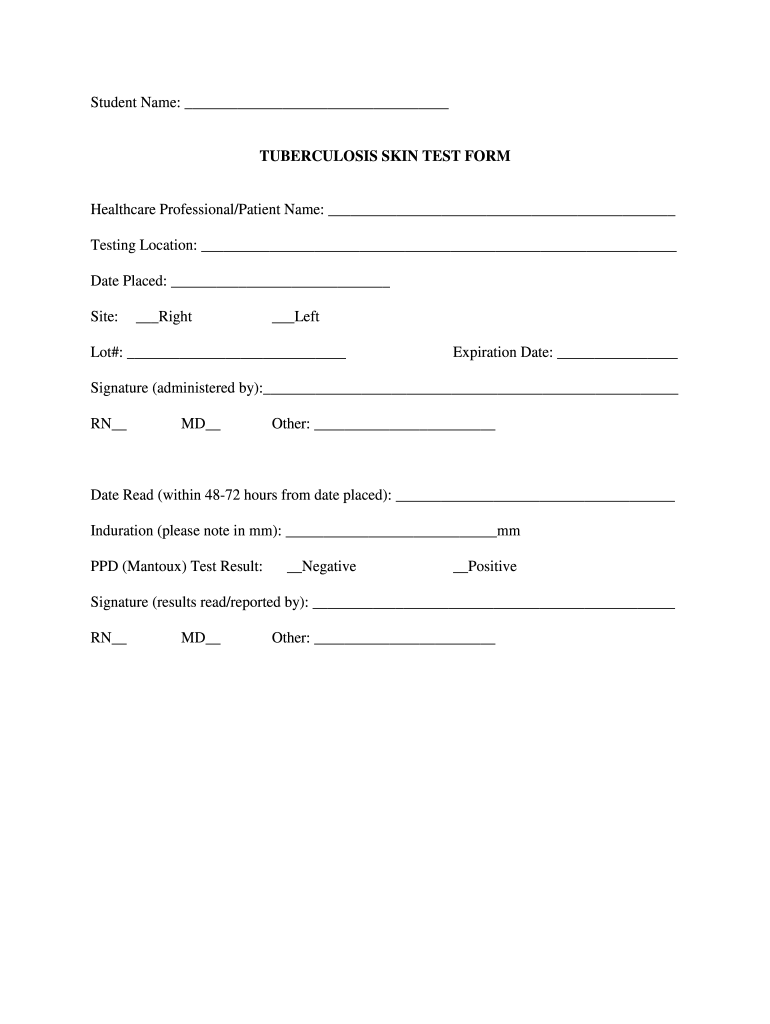
Tuberculosis (TB) forms are essential documents used to record critical information regarding TB testing, treatment, and management. These forms serve various functions throughout the healthcare continuum, including screening, diagnosis, and monitoring of TB cases. Their significance lies in ensuring patient safety, compliance with public health guidelines, and facilitating efficient data collection for ongoing TB prevention efforts. The most commonly used types are the skin test forms, which help to determine exposure to the TB bacterium.
Types of Tuberculosis Forms
There are several specific types of tuberculosis forms, each designed for particular purposes:
- TB Skin Test Form: Utilized for recording details of the tuberculin skin test (TST), including test placement and reading results.
- TB Testing Form: A general form to capture information related to any TB testing performed, such as blood tests or radiographic evaluations.
- TB Patient Record: Used for the ongoing management of patients diagnosed with tuberculosis, containing comprehensive medical history and treatment data.
- TB Reporting Form: Facilitates the communication of TB cases to public health authorities to support disease tracking and control initiatives.
Key Elements of Tuberculosis Forms
Each form typically includes several critical elements to ensure completeness and accuracy:
- Patient Information: Basic details such as name, date of birth, and contact information.
- Test Provider Details: Information regarding the healthcare professional or entity administering the test.
- Test Dates: Dates relevant to test administration and interpretation.
- Test Results: Clear documentation of the results, such as induration measurement for skin tests.
- Healthcare Provider Signatures: Signatures of qualified healthcare providers to verify the test's authenticity and results.
The Role of Tuberculosis Forms in Patient Care
Utilizing tuberculosis forms effectively enhances patient care management. These forms facilitate:
- Accurate Record-Keeping: Ensuring that all interactions regarding TB are documented, aiding healthcare providers in tracking treatment progress.
- Compliance with Laws and Regulations: Helping healthcare facilities adhere to local, state, and federal health reporting requirements.
- Data Collection for Epidemiology: Aggregated data from these forms is vital for understanding TB trends and outbreaks in specific regions.
Steps to Complete a Tuberculosis Form
Completing a tuberculosis form involves methodical steps to ensure accuracy and completeness:
- Gather Patient Information: Collect necessary personal and medical details.
- Document Testing Details: Include specifics such as the type of test performed, location of the test (e.g., left forearm), and dates of placement and reading.
- Record Results: Clearly indicate the results and any positive findings, ensuring measurements are noted accurately.
- Obtain Signatures: Ensure the form is signed by a qualified healthcare professional to authenticate the results.
- Submit the Form: Follow appropriate channels to submit the form to relevant health authorities or institutions.
Compliance and Legal Considerations
Compliance with legal requirements regarding tuberculosis forms is crucial for healthcare providers. Key considerations include:
- Adhering to Reporting Timelines: Many states require TB cases to be reported within specific time frames after diagnosis or testing.
- Privacy Concerns: Protecting patient confidentiality in line with HIPAA regulations is essential when handling and sharing TB forms.
- Document Retention Policies: Healthcare providers should maintain records of tuberculosis forms as part of medical documentation practices for mandated periods.
The Importance of Accessible Tuberculosis Forms
Access to tuberculosis forms in various formats, including printable PDFs and online submissions, enhances usability. Facilities should ensure:
- Easy Availability: Providing patients and healthcare workers access to forms online or via printed materials simplifies the testing process.
- User-Friendly Templates: Offering templates that guide users in completing the forms efficiently minimizes errors and omissions.
- Training and Support: Providing training for staff on the correct use and handling of tuberculosis forms plays a critical role in public health management efforts.
In conclusion, understanding and effectively using tuberculosis forms is vital for successfully managing TB testing and treatment, ensuring adherence to legal annotations, and contributing positively to public health initiatives.