







Definition and Purpose
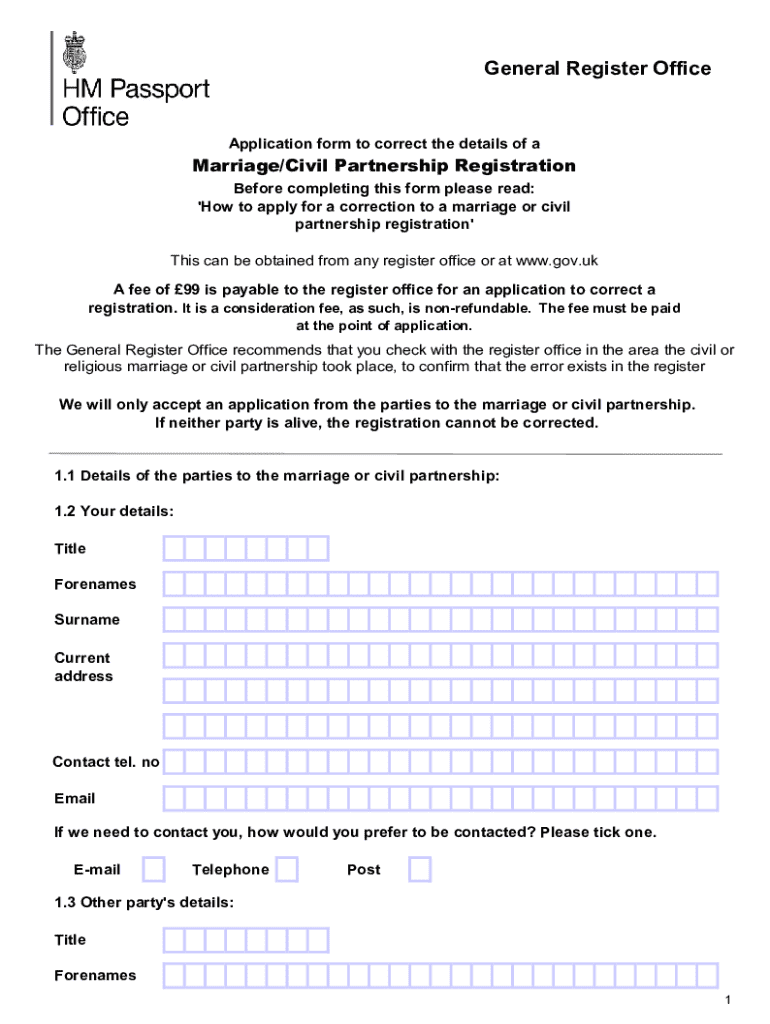
The "Correct the Details of a Marriage or Civil Partnership Registration" form is a specialized application designed for individuals who need to amend errors in the official records of a marriage or civil partnership. These errors can include incorrect names, dates, locations, or other essential information recorded during the registration process. Correcting these details ensures that the legal documentation accurately reflects the true status and details of the individuals involved.
Importance of Correcting Registration Details
Making sure that your marriage or civil partnership registration details are accurate is crucial for legal and personal reasons. Errors in registration records can affect legal rights, inheritance, visa applications, and other administrative processes. Correcting these details helps avoid potential legal complications and ensures that all records are up to date, reflecting the correct personal circumstances of the parties involved.
Required Documents for Submission
When submitting the application to correct registration details, several key documents must be provided:
- The original or certified copy of the marriage or civil partnership certificate.
- Documentary evidence proving the error, such as birth certificates or previous change certificates.
- Identification documents for both parties involved in the registration, like a passport or driver’s license.
Having these documents ready helps streamline the process and reduces the chances of delays or rejections.
Steps to Complete the Application
- Gather all necessary documentation, including ID and proof of error.
- Complete the application form with the correct details and supporting information.
- Include the required fee, typically £99, for processing the application.
- Submit the application to the appropriate registry office according to their guidelines.
Ensuring each step is followed carefully helps in avoiding any procedural errors that could complicate or delay the correction process.
Who Typically Uses This Form
This form is typically used by individuals who have discovered errors in their marriage or civil partnership registration. It can be relevant for those who were married or entered into a partnership in the United States and later noticed inaccuracies in their official records. The application must be submitted by the parties involved in the registration; if neither is alive, corrections cannot be made.
State-Specific Rules and Considerations
Each U.S. state may have specific rules regarding the correction of marriage and civil partnership registrations. It's essential to verify the particular requirements of the jurisdiction where the marriage or partnership was registered. Differences may include the cost of correction, acceptable documentation, and avenues for submission.
Legal Implications of Corrected Registrations
Correcting registration details is a legally significant act, as these records hold substantial weight in various legal contexts. Once corrected, the new details are used in place of the previous ones and affect all future references and legal acknowledgments of the marriage or civil partnership. Legal advisement may be beneficial if the corrections involve complex identity or citizenship issues.
Examples and Scenarios
There are various practical instances when correcting a registration may be necessary:
- A name misspelled on the marriage certificate leading to discrepancies in documentation like passports.
- A wrong date of marriage or civil partnership causing issues in legal documentation.
- An incorrect location of the marriage or civil partnership potentially affecting jurisdictional matters, such as property rights.
Understanding these scenarios can help applicants foresee potential errors in their own records and take action accordingly.
Form Submission Methods
Individuals can typically submit the form and accompanying documents either online, by mail, or in person, depending on the state's regulations. Each method has its own requirements and processing times, so it is crucial to choose the most convenient and efficient option available. Online submission often offers faster processing and more straightforward tracking of application status.




