Definition and Meaning
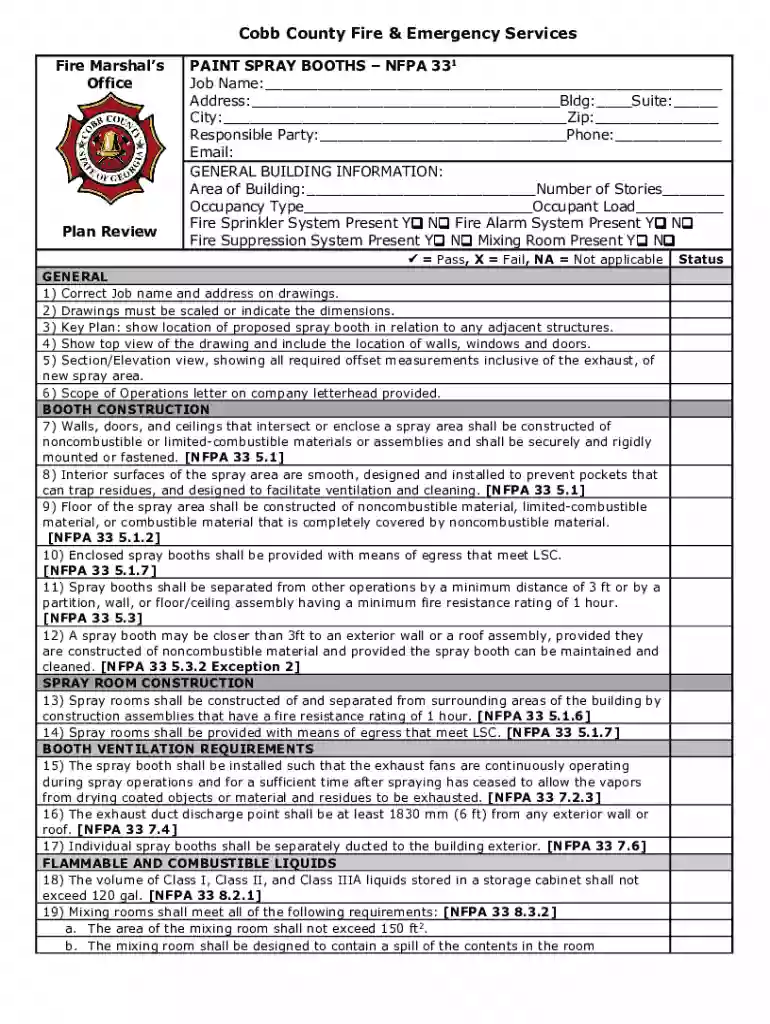
The NFPA 33 checklist is a structured document designed to ensure compliance with the National Fire Protection Association's Standard for Spray Application Using Flammable or Combustible Materials. This checklist aids businesses in maintaining safety and regulatory standards within spray environments, focusing on proper installation, operation, and safety measures in paint spray booths.
- Purpose: To guide users in implementing fire safety practices, reducing risk, and ensuring regulatory compliance.
- Application: Commonly used in industries involving spray painting, automotive refinishing, and manufacturing processes.
How to Use the NFPA 33 Checklist
The checklist serves as a step-by-step guide for identifying and implementing key safety measures in spray environments.
- Initial Assessment: Review the checklist to identify applicable safety measures for your specific operation.
- Audit for Compliance: Conduct a thorough inspection of your facilities against each point in the checklist.
- Implementation: Address any deficiencies found during the audit by implementing the necessary corrective actions.
- Regular Reviews: Reassess at regular intervals, ensuring ongoing compliance with NFPA 33 standards.
Common Usage Scenarios
- New Installations: Guides setup and initial compliance assessments for new paint spray booths.
- Routine Inspections: Assists in periodic checks to maintain ongoing compliance and safety.
- Incident Investigations: Used as a tool for reviewing safety protocols post-incident.
How to Obtain the NFPA 33 Checklist
Acquiring the checklist is straightforward and can be done through several channels.
- NFPA Website: Directly available for download or purchase from the National Fire Protection Association’s official site.
- Industry Organizations: Some industry-specific organizations provide access to compliance resources, including the checklist.
- Government Safety Departments: Local or state fire safety departments may offer copies as part of regulatory guidance.
Steps to Complete the NFPA 33 Checklist
Completing the checklist effectively involves a structured approach.
- Preparation: Gather existing safety documents, facility plans, and previous inspection reports.
- Checklist Review: Go through each item on the checklist, marking areas as compliant or needing improvement.
- Assign Tasks: Delegate responsibilities to appropriate personnel for addressing and rectifying non-compliant areas.
- Documentation: Maintain records of actions taken and compliance status for future reference and inspections.
Relevant Industries
- Automotive: Repair shops and manufacturing plants with spray booths.
- Manufacturing: Facilities involved in coating and finishing products.
- Furniture: Operations involving the application of flammable varnishes and paints.
Key Elements of the NFPA 33 Checklist
The checklist covers several critical aspects of safety.
- Ventilation Requirements: Ensures proper air circulation to minimize explosive atmospheres.
- Building and Booth Construction: Addresses fire-resistant materials and structural integrity.
- Fire Protection Systems: Mandates the installation of appropriate fire suppression mechanisms.
- Handling of Flammable Liquids: Guidelines on storage and use to prevent accidents.
Safety Protocol Details
- Static Electricity Control: Measures to prevent ignition sources from static discharge.
- Emergency Procedures: Protocols for efficient evacuation and fire response.
Legal Use of the NFPA 33 Checklist
The checklist serves as a legal document ensuring that businesses meet federal and state fire safety regulations.
- Compliance Verification: Regularly updating and maintaining the checklist can serve as evidence of compliance during inspections.
- Liability Mitigation: By adhering to NFPA 33, businesses can reduce liability in the event of a fire-related incident.
Legal Considerations
- Documentation: Keep detailed records of compliance activities for legal protection.
- State Regulations: Be aware of any additional state-specific requirements that go beyond federal standards.
Examples of Using the NFPA 33 Checklist
Real-world applications of the checklist highlight its benefits.
- Case Study: A manufacturing plant in Texas improved its safety record by implementing NFPA 33 guidelines, resulting in fewer workplace incidents and lower insurance premiums.
- Scenario: A large automotive facility regularly uses the checklist to train new employees on safety standards and compliance practices.
By using the NFPA 33 checklist, facilities improve their safety protocols, ensuring that both employees and the environment are protected from the risks of flammable and combustible materials.