




01. Edit your form online
Type text, add images, blackout confidential details, add comments, highlights and more.

Type text, add images, blackout confidential details, add comments, highlights and more.

Draw your signature, type it, upload its image, or use your mobile device as a signature pad.

Send it via email, link, or fax. You can also download it, export it or print it out.
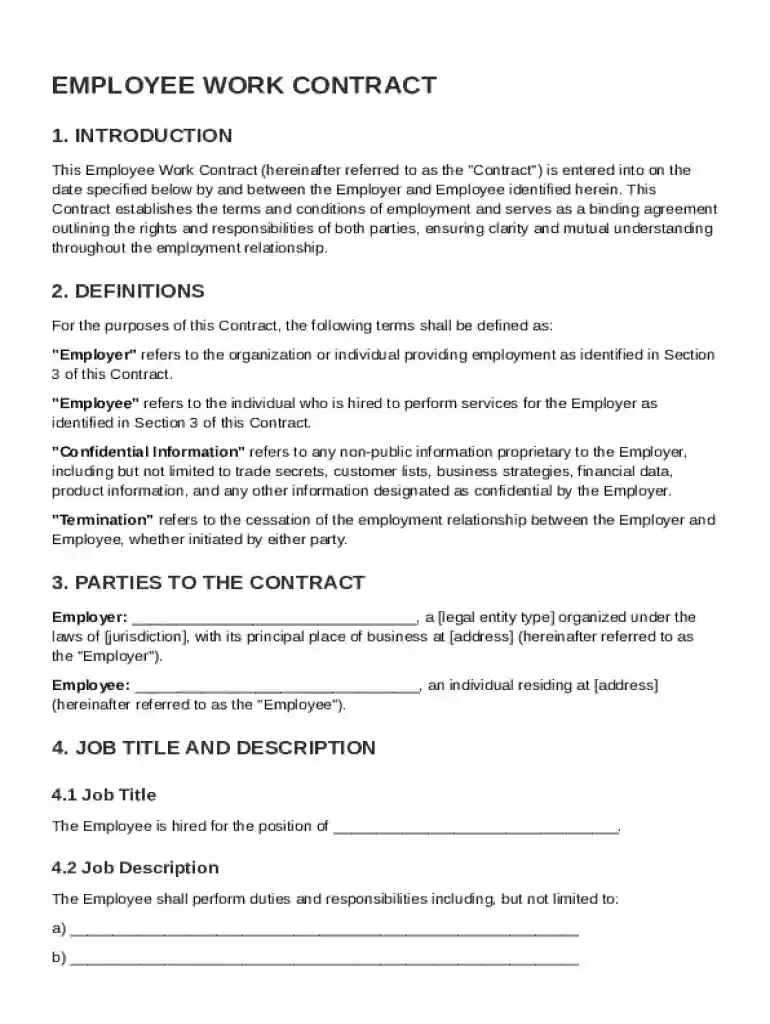
The Employee Work Contract Template serves as a detailed framework outlining the employment terms between an employer and an employee. It acts as a legally binding document that details job responsibilities, compensation structures, and other critical employment terms. By providing clear definitions and conditions, the contract helps prevent misunderstandings and disputes by ensuring both parties have a mutual understanding. This document typically covers various aspects, such as work hours, job title, and description, among others, to facilitate a smooth working relationship.
The template includes several fundamental components designed to clearly outline the responsibilities and expectations of both the employer and employee. Some of the key elements include:
Following a systematic process is essential when completing the Employee Work Contract Template to ensure accuracy and compliance:
A legally compliant contract must adhere to applicable federal and state labor laws. The Employee Work Contract Template should be reviewed for compliance with regulations such as the Fair Labor Standards Act (FLSA) that dictate minimum wage and overtime standards. Additionally, clauses like non-compete agreements or intellectual property rights need to be crafted to align with local legal norms. It is advisable to have the contract reviewed by legal counsel to ensure enforceability and compliance with jurisdictional requirements.
Employment laws can vary significantly from state to state, which makes it crucial to account for local regulations when drafting a work contract:
Several terms commonly appear within an Employee Work Contract and are vital for precise interpretation:
This template is a versatile tool utilized by a wide range of organizations of varying sizes. It is indispensable for HR departments within:


Providing practical examples helps illustrate the application of the Employee Work Contract Template:
These scenarios demonstrate how the template can be adapted to various contexts to meet the specific needs and legal requirements of different employment situations.
At DocHub, your data security is our priority. We follow HIPAA, SOC2, GDPR, and other standards, so you can work on your documents with confidence.
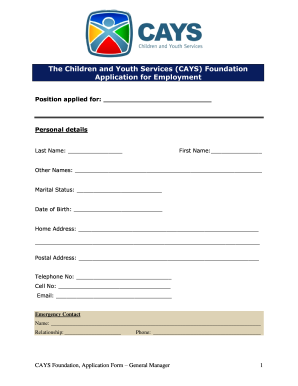
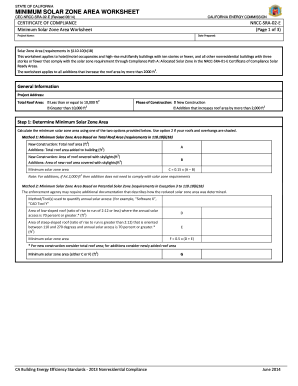



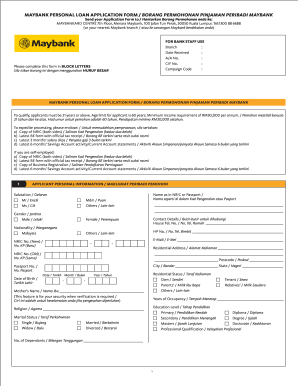

Examples of contract templates include Temporary Labour Contract, Permanent Labour Contract, Commercial Contracts, Terms Conditions or SLAs with customers
This agreement sets forth the terms and conditions of your employment in the position of , job code in . A.
Download Word Format (docx) [83 KB] Download a model contract for domestic workers to use with their employers. Learn more


