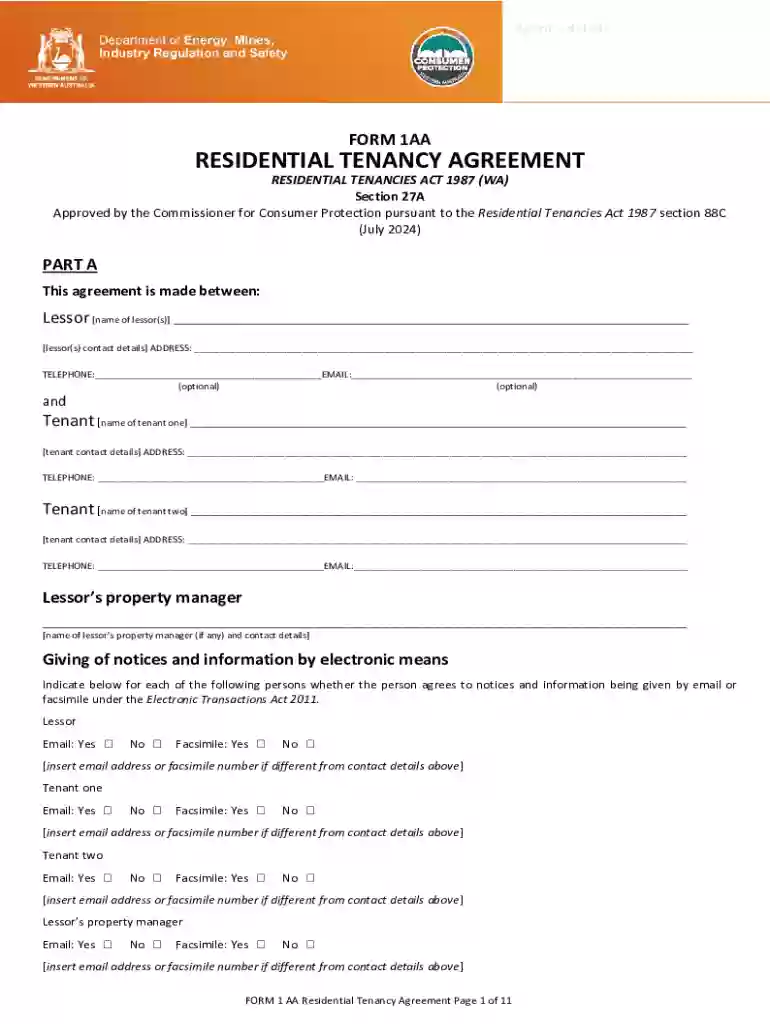
FORM 1 AA Residential Tenancy Agreement 2026

Get Form
FORM 1 AA Residential Tenancy Agreement Preview on Page 1

Here's how it works

01. Edit your form online
Type text, add images, blackout confidential details, add comments, highlights and more.

02. Sign it in a few clicks
Draw your signature, type it, upload its image, or use your mobile device as a signature pad.

03. Share your form with others
Send it via email, link, or fax. You can also download it, export it or print it out.

Definition and Meaning

The Form 1AA Residential Tenancy Agreement is a crucial document in the context of leasing residential properties in Western Australia. Governed by the Residential Tenancies Act 1987 (WA), this agreement outlines the essential terms and conditions agreed upon by the lessor and the tenant. It serves as a legal framework that defines the responsibilities, rights, and obligations of both parties in the rental transaction. The form includes various sections that cover key aspects such as rental obligations, maintenance expectations, and procedural guidelines for both tenancy management and dispute resolution. It ensures compliance with legal standards and provides clarity to prevent conflicts during the tenancy.

Key Elements of the FORM 1AA Residential Tenancy Agreement

Understanding the key components within the Form 1AA Residential Tenancy Agreement is vital for both tenants and landlords. Some of the primary elements include:

  • Parties Involved: Clear identification of the lessor, tenant, and any property management entity.
  • Rental Terms: Detailed information about the rental period, payment amount, and frequency.
  • Security Bond: Specifications regarding any bond payable, its amount, and the process of lodging and refunding.
  • Property Maintenance: Obligations of both parties regarding property upkeep, reporting damages, and addressing repairs.
  • Utilities and Services: Clarification on which utilities are included in the rent and which require separate payment.
  • Communication Guidelines: Framework for how parties must communicate, including preferred methods and urgency categorization.

These elements ensure the agreement is comprehensive and legally sound, addressing the typical scenarios and obligations encountered during a tenancy.

Steps to Complete the FORM 1AA Residential Tenancy Agreement

Completing the Form 1AA Residential Tenancy Agreement involves several steps to ensure all necessary areas are appropriately addressed:

  1. Identification of the Parties: Clearly document the names and contact information of all parties involved in the tenancy.
  2. Detailing the Property: Provide a full description of the rental property including the address and any included furnishings.
  3. Outline the Rental Terms: Specify the lease duration, rent amount, payment schedule, and methods accepted.
  4. List Any Additional Terms: Include any negotiated clauses that are not standard to the agreement but have been mutually accepted.
  5. Review by Both Parties: Both tenant and landlord should thoroughly review the agreement, ensuring understanding and agreement.
  6. Signatures and Dates: Obtain signatures from all parties involved, along with the date of signing, to execute the agreement legally.

Ensuring these steps are followed meticulously contributes to a legally-binding and fair tenancy agreement.

Important Terms Related to FORM 1AA Residential Tenancy Agreement

Familiarizing oneself with the terms frequently used in the Form 1AA Residential Tenancy Agreement can aid in better comprehension:

  • Lessor: The property owner or an authorized agent who leases out the property.
  • Tenant: The individual or group renting the property for residential use.
  • Lease Term: The period during which the tenant is authorized to occupy the property.
  • Security Deposit: A monetary deposit that serves as financial security for fulfilling the terms of the lease.
  • Rent Arrears: Overdue rent payments that the tenant is obliged to pay.

These terms are crucial in navigating the agreement and ensuring all legal responsibilities are met.

Legal Use of the FORM 1AA Residential Tenancy Agreement

The legal application of the Form 1AA Residential Tenancy Agreement is entrenched in the Residential Tenancies Act 1987 (WA). It is designed to protect both parties' rights and provide a legal structure for the leasing process. Key legal aspects include:

  • Enforceability: The agreement is legally binding once signed by both parties and complies with statutory requirements.
  • Dispute Resolution: Procedures are outlined within the agreement to handle any disputes, often requiring mediation before escalation.
  • Compliance with Legislation: The agreement mandates adherence to all relevant local, state, and national real estate laws.

Understanding the legal framework ensures that both landlords and tenants are protected under the law.

State-Specific Rules for the FORM 1AA Residential Tenancy Agreement

While the Form 1AA is specific to Western Australia, understanding state-specific rules is essential. Rules may vary based on local governance concerning:

  • Bond Lodgement: Specific procedures for lodging the bond with the state's relevant authority.
  • Notice Periods: Different required notice periods for ending a lease or altering terms.
  • Property Inspection Standards: Defined standards for conducting and reporting on property inspections.

Being aware of these rules helps both parties align with state regulations and prevent legal complications.

Examples of Using the FORM 1AA Residential Tenancy Agreement

Real-world examples illustrate the practical application of the Form 1AA:

  • Property Leasing: A new tenant enters a rental in Perth, utilizing the Form 1AA to outline rent, duration, and special terms like pet allowances.
  • Lease Renewal: As the end of a lease approaches, both parties agree to renew using a modified agreement reflecting updated terms.
  • Dispute Resolution: A tenant disputes maintenance claims; the resolution process follows the steps outlined in the agreement, involving mediation.

These examples demonstrate the form's flexibility in real-life scenarios and its role in facilitating smooth rental transactions.

Who Typically Uses the FORM 1AA Residential Tenancy Agreement

The Form 1AA is used by various stakeholders involved in property rental processes:

  • Landlords/Property Owners: To detail rental terms and rights while leasing out property.
  • Tenants: Individuals or families seeking legal documentation of their rental arrangement.
  • Property Managers: Professionals handling leases on behalf of property owners use this form to ensure consistent management practices.

Recognizing who employs this agreement underscores its importance in property leasing within Western Australia.


decoration image ratings of Dochub
be ready to get more

Complete this form in 5 minutes or less

Get form

Got questions?

We have answers to the most popular questions from our customers. If you can't find an answer to your question, please contact us.
Contact us
The 2 biggest signs are not keeping up with basic maintenance. And asking for illegal terms in the lease agreement.
You might think that without a written agreement a tenant doesnt have any rights. However, under the Protection from Eviction Act 1971, a tenant is protected from eviction even without a written tenancy agreement.
The NRLA has produced a number of tenancy agreements for you to either use, or use as guidance for creating your own. These documents cover the various types of tenancy agreement that you are likely to use for a residential tenancy in the private rented sector.
Share With Friends: Using the tenancy agreement generator, you can create free contracts and download templates easily. Lendlord provides tenancy agreement forms, assured shorthold tenancy agreements samples, and downloadable rolling tenancy agreement templates for free!
What to include in a house rental agreement. Location of the rental property. Start date of occupancy. Names of all tenants. Term of the tenancy, usually monthly. Amount of the security deposit. Amount of time for each pay period of the rental, usually monthly. Amount of each months rent. Preferred way to make rent payments.

Security and compliance

At DocHub, your data security is our priority. We follow HIPAA, SOC2, GDPR, and other standards, so you can work on your documents with confidence.

Learn more
ccpa2
pci-dss
gdpr-compliance
hipaa
soc-compliance

People also ask

Visit the DLD official website. Navigate to the homepage and click on the Download Ejari Certificate option under the services menu. Enter your Ejari Contract Number and DEWA Premise Number (or Dubai Municipality Number). These details are typically listed under the Leased Unit section of your tenancy contract.

Related links