




01. Edit your bc tenancy agreement pdf online
Type text, add images, blackout confidential details, add comments, highlights and more.

Type text, add images, blackout confidential details, add comments, highlights and more.

Draw your signature, type it, upload its image, or use your mobile device as a signature pad.

Send tenancy agreement samples via email, link, or fax. You can also download it, export it or print it out.
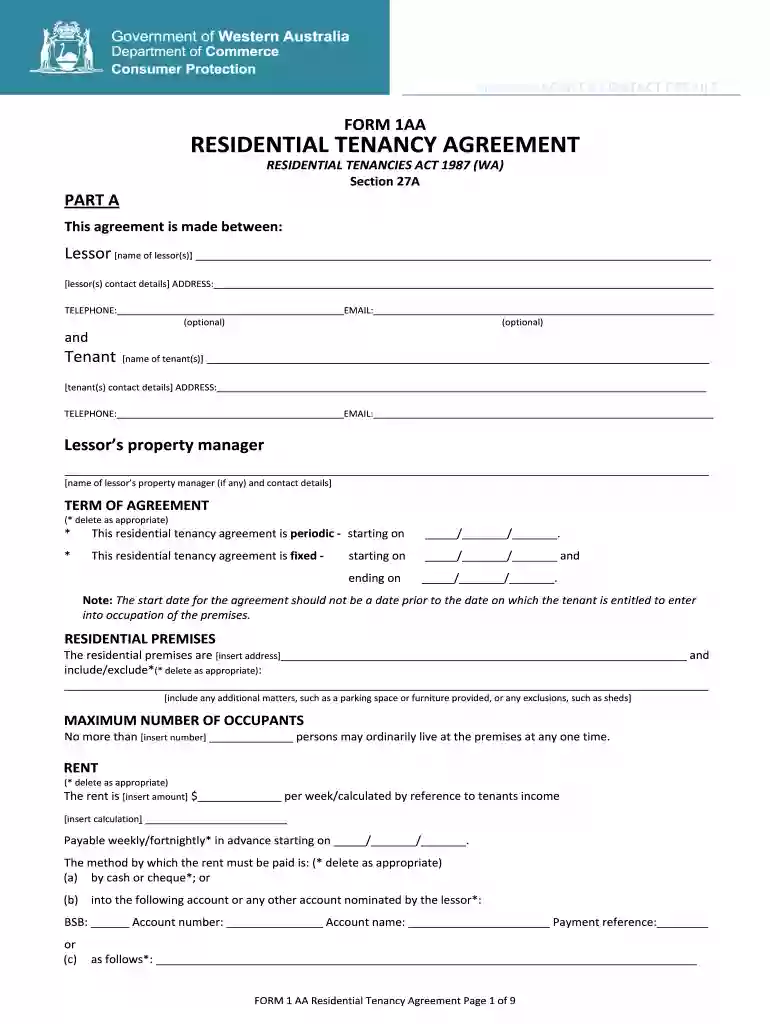
The residential tenancy agreement form 1AA is a legally binding document used in Western Australia, specifically under the Residential Tenancies Act 1987. This form outlines the terms and conditions that govern the relationship between a lessor (landlord) and a tenant. It provides the framework for residential property rentals, ensuring both parties understand their rights and obligations. The agreement includes critical information like rental amounts, lease duration, contact details of the involved parties, and other essential terms.
Using the residential tenancy agreement form 1AA involves several steps that both the tenant and landlord need to follow to ensure compliance with local property laws. Initially, the landlord must provide potential tenants with the agreement form for review. The tenant should carefully read through the terms, noting specific clauses related to rent, bond, maintenance responsibilities, and other lease conditions.
This process is essential for establishing legally recognized tenancy terms.
The residential tenancy agreement form 1AA can be acquired through several channels. Tenants or landlords may obtain a hard copy from real estate agencies or property management offices. For those preferring a digital format, the form is available for download from the official Western Australian government websites. Alternatively, many legal or real estate service providers offer access to this form through their online platforms, allowing users to fill out and save a copy for their records.
Completing the residential tenancy agreement form 1AA involves several detailed steps to ensure all parties are protected legally. Here is a structured process to fill out the form:
Each step requires careful attention to detail to avoid legal disputes.
The residential tenancy agreement form 1AA contains several key elements crucial for both the tenant and landlord. These include:
These elements ensure clarity and fairness, minimizing misunderstandings during the tenancy.
The form 1AA is governed by the Residential Tenancies Act 1987 (WA), making it legally binding and enforceable. This means that both parties—the landlord and tenant—are subject to the terms outlined in the agreement and must comply accordingly. Failure to do so could result in legal penalties. It is designed to protect both parties' rights, offering a legal framework to resolve disputes that might arise during the term of the lease.
Understanding important terms within the agreement helps prevent misunderstandings:
Recognizing these terms is critical to fully grasp the contract's implications.
This form is specific to Western Australia and adheres strictly to its legislation. Certain provisions, such as prescribed rent increases and bond handling, are mandated by state law and must be included. Additionally, landlords must ensure that the property complies with local safety standards, including smoke detectors and security measures, as defined by regional requirements. Understanding these regulations ensures that all agreements are valid and enforceable under state law, providing legal protection to both the tenant and the landlord.
We've got more versions of the bc tenancy agreement pdf form. Select the right bc tenancy agreement pdf version from the list and start editing it straight away!
Sure, and it’s really straightforward! DocHub is a web-based PDF editor with advanced document processing features that allow you rapidly modify your forms, complete empty fields and add new ones for other people to fill out, and create eSignatures in several ways. Upload your tenant agreement form, provide information as requested, and choose how you want to eSign your document - by typing your name, drawing your signature, uploading its image, or utilizing a QR code.
You may complete and sign your 1aa form on the internet, even on a tight deadline. All you need to access high quality editing tools on any device is a DocHub profile, that you can register in just a couple of moments. Once you register, add your file or find what you are searching for in our catalog, complete it using the editing tools you need, and put your electronic signature on it at the end.
At DocHub, your data security is our priority. We follow HIPAA, SOC2, GDPR, and other standards, so you can work on your documents with confidence.




In Pennsylvania, a landlord must accept the tenants early termination in order for the tenant to be free of her obligations, such as the obligation to pay rentRead more
An ADU may be rented via a standard residential lease. Short-term rentals under 30 days are restricted: visit orlando.gov/homeshare for full rules. MaximumRead more
IMPORTANT INFORMATION. Pride and workmanship go into every product to provide our customers with quality products. It is possible, however, that during.Read more


