




01. Edit your residential tenancy agreement wa online
Type text, add images, blackout confidential details, add comments, highlights and more.

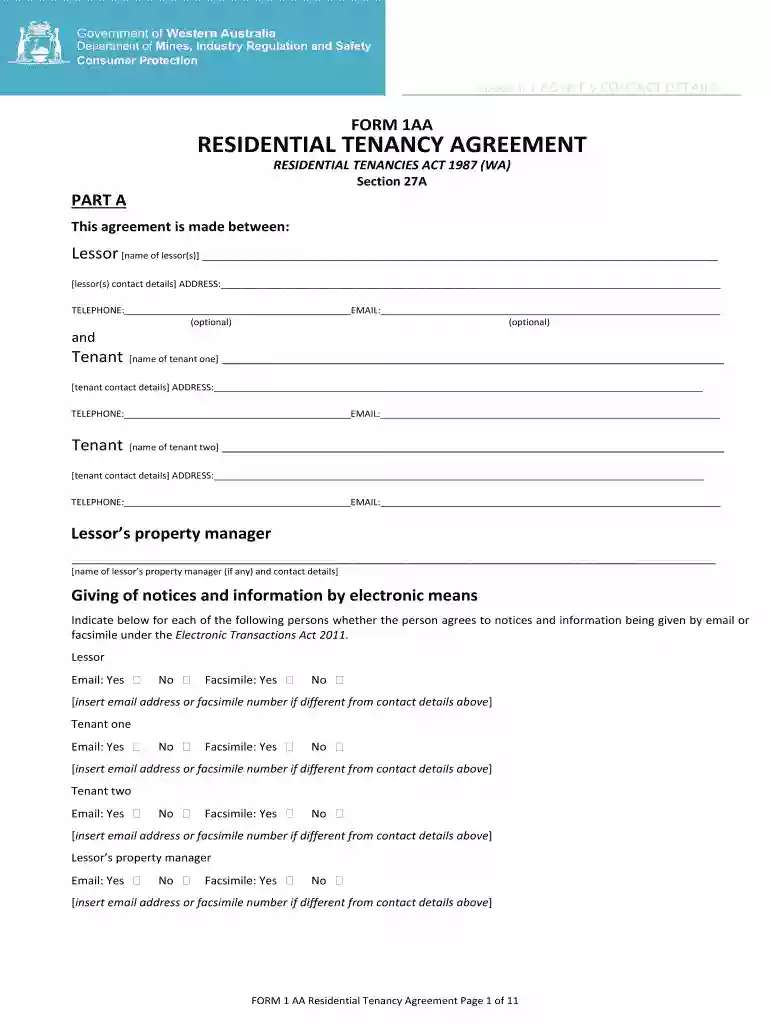
Type text, add images, blackout confidential details, add comments, highlights and more.

Draw your signature, type it, upload its image, or use your mobile device as a signature pad.

Send rental agreement wa via email, link, or fax. You can also download it, export it or print it out.
The Form 1AA Residential Tenancy Agreement is a legally binding document that outlines the terms and conditions of a rental agreement in Western Australia. It serves as a framework for the relationship between lessors (landlords) and tenants, detailing rights and responsibilities under the Residential Tenancies Act 1987. The agreement includes critical aspects such as property details, rental amounts, and specific obligations for both parties.
Key components of the Form 1AA include:
Understanding the meaning and implications of the Form 1AA is fundamental for both landlords and tenants to ensure compliance with local laws and avoid potential disputes.
The Form 1AA comprises various sections that serve different functions in the overall agreement. Highlighting these key elements ensures that all necessary legal aspects are covered and parties are aware of their obligations.
These components are essential for preventing misunderstandings and fostering a positive rental experience.
Filling out the Form 1AA accurately is crucial for both landlords and tenants. This section outlines the steps necessary to properly complete the agreement.
Each of these steps ensures that the essential information is included, minimizing the likelihood of disputes later on.
Understanding key terminology associated with the Form 1AA can enhance comprehension of the agreement and improve communication between landlords and tenants.
A grasp of these terms helps in navigating the agreement effectively, aiding both parties in upholding their rights and responsibilities.
The Form 1AA must adhere to the legal framework established by the Residential Tenancies Act 1987 to be enforceable in Western Australia. This provides a foundation for rental transactions, ensuring both parties' rights are respected.
Awareness of these legal dimensions is essential for ensuring that the Form 1AA Residential Tenancy Agreement is enforceable and protects both parties in a rental situation.
Practical applications of the Form 1AA can illustrate the real-world scenarios where this agreement is necessary and beneficial for both landlords and tenants.
These scenarios highlight how the Form 1AA facilitates various rental situations, offering clear guidelines and legal protection for both landlords and tenants.
We've got more versions of the residential tenancy agreement wa form. Select the right residential tenancy agreement wa version from the list and start editing it straight away!
At DocHub, your data security is our priority. We follow HIPAA, SOC2, GDPR, and other standards, so you can work on your documents with confidence.



I, Joseph Fonseca, hereby DocHub as follows: I am over the age of 18, a resident of Pierce County, and not a party to the above action. On. November 17, 2017,Read more
32 bit image processing system for advanced applications. Check these basic and optional features: Flexible Architecture: Two 12 bit deep images or three.Read more
Please check to make sure you have accomplished the following: Has bid bond or certified check been enclosed with your bid?Read more


