
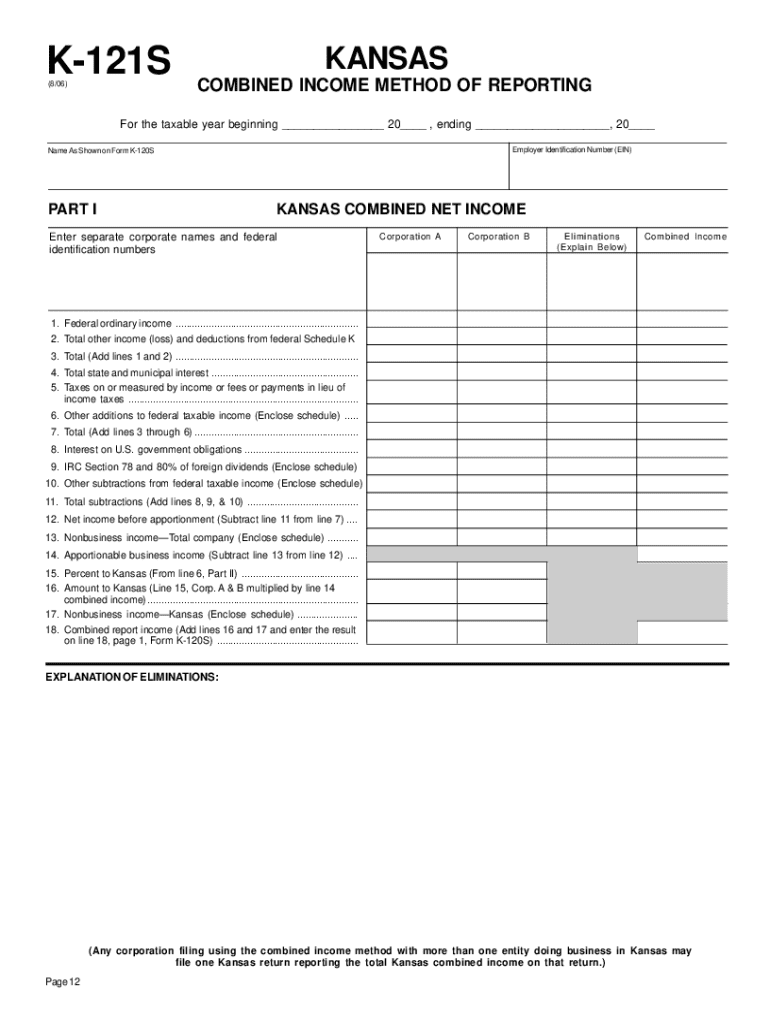







Definition and Purpose of Kansas Form K-120S
Kansas Form K-120S is an official document used by S corporations and partnerships to report income, deductions, and other relevant tax information to the state of Kansas. This form helps businesses ensure compliance with state tax regulations by outlining taxable income, credits, and taxes owed. It is essential for entities operating within Kansas that are structured as either partnerships or S corporations. Understanding the purpose of this form can aid businesses in fulfilling their tax obligations accurately and efficiently.
How to Use the Kansas Form K-120S
The Kansas Form K-120S is used for reporting specific tax-related information. To apply the form effectively, businesses should:
- Begin by gathering all necessary financial documents related to income and expenses.
- Carefully read the instructions accompanying the form to understand specific line items and required details.
- Complete each section with precise figures reflecting the business's financial activities.
- Verify all entries to ensure accuracy, as incorrect information can lead to penalties.
- Retain a copy of the completed form for your records for compliance and future reference.
How to Obtain the Kansas Form K-120S
The form can be accessed through several channels:
- Visit the official Kansas Department of Revenue website to download a digital copy.
- Request a physical copy by contacting the Kansas Department of Revenue.
- Utilize third-party tax software that provides access to state tax forms for download and submission.
Steps to Complete the Kansas Form K-120S
-
Identify Business Details: Start with filling out business information, including name, address, and federal employer identification number (FEIN).
-
Enter Income Details: Document all sources of income and any applicable deductions. Pay attention to sections that require detailed itemization.
-
Compute Tax Liability: Calculate income subject to Kansas tax, including any tax credits applicable.
-
Review and Double-check: Ensure all sections are filled accurately before submission. Use prior years’ submissions as a guide for consistency.
-
Submit the Form: Depending on your method (online, mail, or in-person), follow the specific instructions for submission to avoid delays.
Key Elements of the Kansas Form K-120S
Several key elements must be properly addressed in the form:
- Income Reporting: Include all pertinent financial data reflecting annual revenue.
- Deductions and Credits: Clearly list all eligible deductions and credits to reduce total tax liability.
- Apportionment: Explain how the income is apportioned if the business operates in multiple states.
- Signatures: Ensure all required parties sign the document to certify its accuracy and truthfulness.
Eligibility Criteria
Eligible entities for this form include partnerships and S corporations with business operations in Kansas. It is critical that the entity is structured accordingly and has derived income or incurred expenses within the state.


Filing Deadlines and Important Dates
Timeliness is crucial when dealing with tax forms:
- The deadline for filing the Kansas Form K-120S generally aligns with federal tax deadlines, typically April 15.
- If the deadline falls on a weekend or public holiday, it’s extended to the next working day.
- Inform the Kansas Department of Revenue immediately if an extension is needed to avoid penalties.
Applicable Penalties for Non-Compliance
Failure to file Kansas Form K-120S timely or accurately can result in:
- Monetary penalties based on the amount of tax owed.
- Interest charges on overdue amounts.
- Potential audits, which could lead to further investigation and larger fines.
State-Specific Rules for the Kansas Form K-120S
Kansas may have unique stipulations compared to other states:
- Businesses must adhere to state-specific deductions or credits not mirrored at the federal level.
- Consider any recent legislative changes impacting business taxes in Kansas, as these could affect the completion of the form.
- Stay abreast of local tax support and consultations to ensure compliance with constant regulatory updates.




