







Definition & Meaning
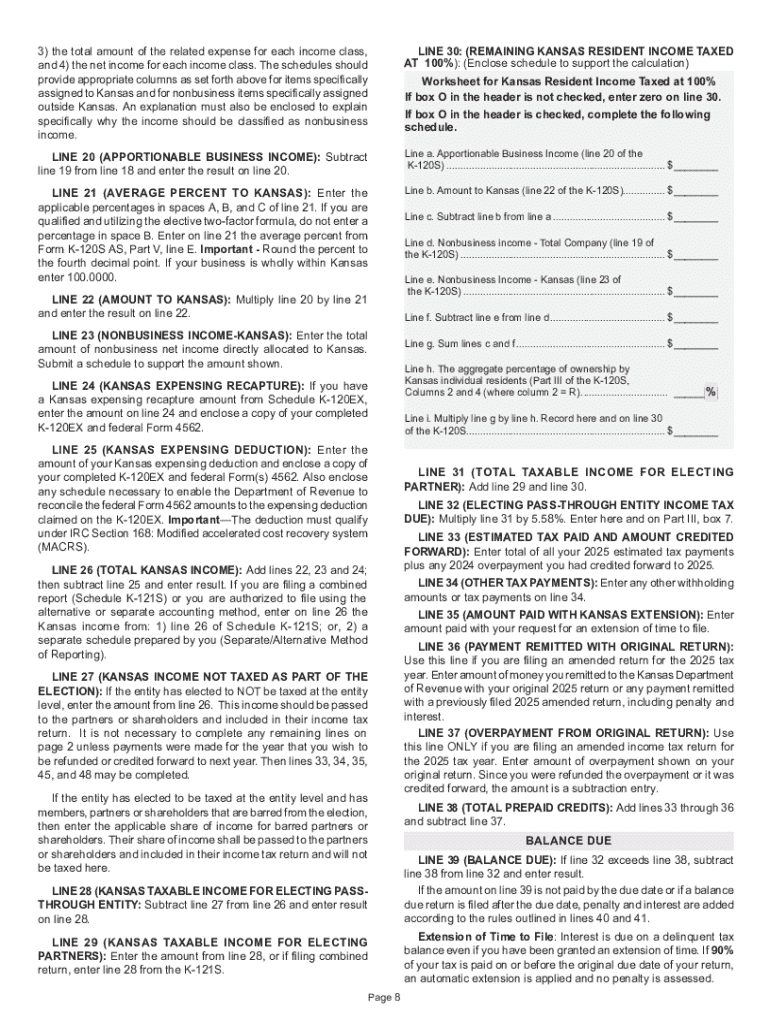
The Kansas Partnership or S Corporation Income Tax Form is a tax document used by businesses operating as partnerships or S corporations in Kansas to report their income, deductions, and credits for the state tax year. It informs the state about the business's financial activities, ensuring compliance with Kansas tax laws. By providing a comprehensive breakdown of profits, losses, and other financial details, this form helps calculate the state tax liability for these types of business entities.
How to Use the Kansas Partnership or S Corporation Income Tax Form
To use the Kansas Partnership or S Corporation Income Tax Form effectively, businesses must gather all necessary financial records, such as income statements, expense ledgers, and any relevant tax documents from the federal level, such as the IRS Form 1065 or 1120S. This information is used for accurate computation of taxable income. Businesses need to carefully follow the instructions provided by the Kansas Department of Revenue for each section of the form, ensuring all relevant details are included.
Key Steps for Usage
- Compile all financial records relevant to the tax year.
- Follow the form's instructions to complete it accurately.
- Double-check for errors or omissions.
- Submit the completed form by the due date specified by the Kansas Department of Revenue.
Steps to Complete the Kansas Partnership or S Corporation Income Tax Form
Completing the Kansas Partnership or S Corporation Income Tax Form requires careful attention to detail.
- Gather Required Documents: Collect financial statements, federal tax returns, and additional state-required documents.
- Fill Out Identifying Information: Enter business name, address, tax ID number, and other relevant details.
- Calculate Income and Deductions: Use financial records to list all income sources and allowable deductions.
- Determine State Tax Liability: Apply Kansas tax rates to the net income to determine the final tax due.
- Review and Verify: Ensure all sections are filled accurately and cross-verify with federal documents.
- File the Form: Submit electronically if possible for faster processing, or send via mail before the deadline.
Required Documents
Several documents are essential when filing the Kansas Partnership or S Corporation Income Tax Form:
- Federal Tax forms such as Form 1065 or 1120S
- Annual income statements and balance sheets
- Records of business expenses and other deductions
- Previous year’s state tax return, if applicable
- Detailed account of partners’ or shareholders’ distributions
Filing Deadlines / Important Dates
Businesses must adhere to specific filing deadlines when submitting the Kansas Partnership or S Corporation Income Tax Form. Typically, this form is due on the fifteenth day of the fourth month after the close of the fiscal year. For most businesses, this is April 15 if the fiscal year aligns with the calendar year. Extensions may be available, but late submissions without approval can result in penalties.
Important Date Considerations
- Understand the standard filing deadline of April 15.
- Apply for an extension if necessary well before the due date.
- Keep track of any state-specific holidays that might affect submission dates.
Who Typically Uses the Kansas Partnership or S Corporation Income Tax Form
This form is primarily utilized by partnerships and S corporations operating within Kansas that need to report their income and tax obligations to the state.
- Partnerships: Entities where two or more individuals share ownership and agree to share profits and losses.
- S Corporations: Corporations electing a special tax status that allows profits to pass through to shareholders, avoiding double taxation.


Other Typical Users
- Foreign partnerships with income derived from within Kansas
- Multi-state partnerships that include Kansas operations
Legal Use of the Kansas Partnership or S Corporation Income Tax Form
Compliance with legal requirements is crucial when using the Kansas Partnership or S Corporation Income Tax Form. This form must accurately represent the financial status and operations of the business. Misrepresentation or failure to comply can result in legal repercussions, including audits and potential penalties.
Legal Compliance Tips
- Ensure accuracy and truthfulness in all reported figures.
- Retain copies of submitted forms and supporting documents.
- Consult with a tax professional if uncertain about form requirements.
Penalties for Non-Compliance
Failing to correctly submit the Kansas Partnership or S Corporation Income Tax Form can result in several penalties, varying based on the gravity of the compliance issue. These might include:
- Monetary fines or interest on unpaid taxes
- Additional fees for late filing
- Increased scrutiny and more frequent audits from tax authorities
Digital vs. Paper Version
The Kansas Partnership or S Corporation Income Tax Form is available in both digital and paper formats. Choosing the most suitable medium involves considering factors like convenience, accessibility, and processing time.
Advantages of Digital Filing
- Quicker processing and confirmation of receipt
- Easier correction of errors before final submission
- Enhanced tracking with electronic records
Benefits and Drawbacks of Paper Filing
- Paper copies serve as tangible records for filing history
- May be preferred by those less comfortable with digital platforms
- Slower processing and subject to mailing delays




