




01. Edit your form 943 online
Type text, add images, blackout confidential details, add comments, highlights and more.

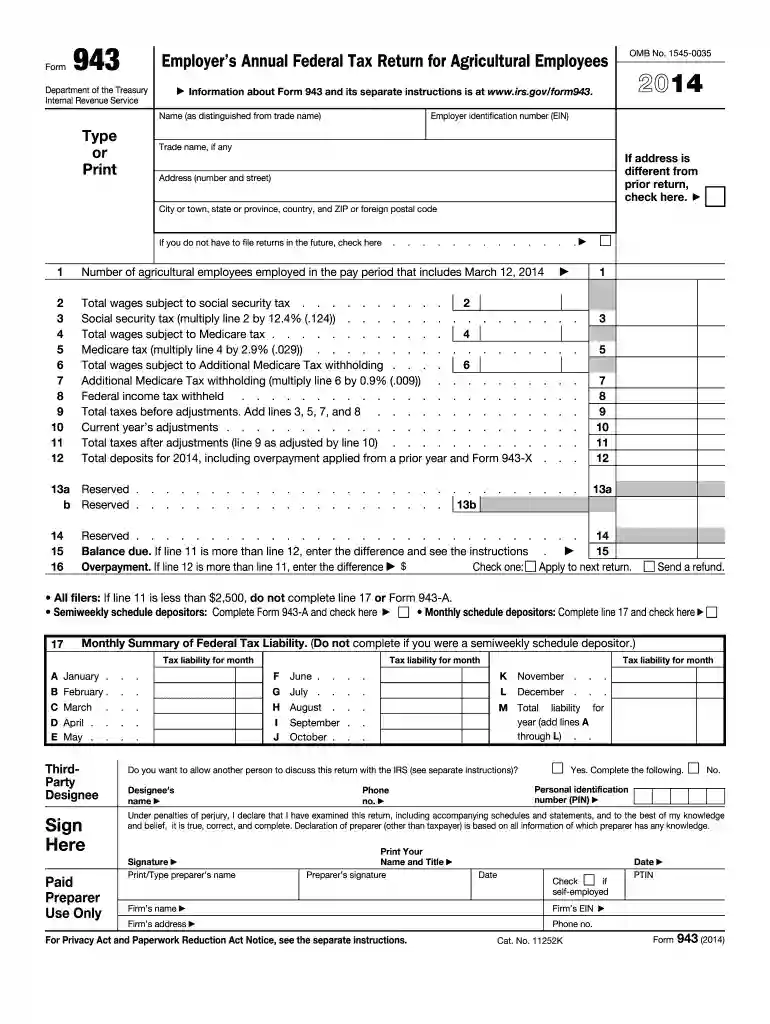
Type text, add images, blackout confidential details, add comments, highlights and more.

Draw your signature, type it, upload its image, or use your mobile device as a signature pad.

Send it via email, link, or fax. You can also download it, export it or print it out.
Form 943, officially known as the Employer's Annual Federal Tax Return for Agricultural Employees, is a mandatory document that agricultural employers in the United States use to report the taxes withheld from farm workers' wages. This form addresses key taxation components such as Social Security and Medicare taxes. It's a critical tool for ensuring compliance with federal tax obligations specific to the agricultural sector. Unlike other employer-based forms, Form 943 is tailored to capture data pertinent to seasonal and year-round agricultural labor, adding a layer of accuracy to the industry's tax reporting processes.
Agricultural employers looking to file Form 943 for the year 2014 can acquire this document directly from the IRS’s official website or request a paper version through mail. Accessing the form through digital platforms simplifies the process, allowing employers to download, complete, and submit it efficiently. Additionally, specialized tax preparation software like TurboTax or QuickBooks may provide integrated support for this form, ensuring accurate and streamlined processing.
Accurate completion of Form 943 requires careful navigation through various sections. Employers must diligently report all pertinent wage information and tax withholdings. Adequate attention to detail during the filling process minimizes errors and potential non-compliance implications.
Employers filing Form 943 must adhere to legal guidelines set by the IRS. Ensuring compliance involves understanding the penalties associated with non-submission or misrepresentation. All provided information should be truthful and reflective of actual business operations to avoid legal repercussions.
Form 943 can be submitted either electronically or via mail. Each submission method has its nuances and offers agricultural employers flexibility in how they report their tax obligations. Electronic filing is often encouraged due to its efficiency and reduced error rates.
The IRS provides extensive guidelines to assist employers in correctly filing Form 943. These guidelines help clarify eligibility criteria, necessary documentation, and specific deadlines. Understanding these deadlines is crucial for operating within federal compliance parameters.
Failing to correctly file Form 943 within the prescribed timelines can lead to significant penalties. Understanding the potential financial and operational impacts of non-compliance encourages diligence in tax preparation and filing processes.
Form 943 has evolved over time, with adjustments reflecting changes in tax laws and agricultural employment practices. Alternative forms may apply depending on the specific nature or scale of agricultural operations, particularly when dealing with multiple forms of employment within a single business entity.
Various business structures, including LLCs, corporations, and partnerships, may have unique requirements when it comes to filing Form 943. Each entity must navigate its specific obligations, considering the multiplicity of state-specific regulations affecting agricultural taxation.
By fully understanding the complexities of Form 943, employers can better ensure compliance, maximize efficiency, and optimize their approach to federal agricultural tax obligations.
We've got more versions of the form 943 form. Select the right form 943 version from the list and start editing it straight away!
| Versions | Form popularity | Fillable & printable |
|---|---|---|
| 2025 | 4.9 Satisfied (33 Votes) | |
| 2024 | 4.4 Satisfied (22 Votes) | |
| 2023 | 4.2 Satisfied (46 Votes) | |
| 2022 | 4.9 Satisfied (44 Votes) | |
| 2021 | 4.9 Satisfied (45 Votes) | |
| 2020 | 4.2 Satisfied (66 Votes) | |
| 2019 | 4.3 Satisfied (109 Votes) | |
| 2018 | 4.4 Satisfied (140 Votes) | |
| 2017 | 4.3 Satisfied (146 Votes) | |
| 2016 | 4.4 Satisfied (310 Votes) | |
| 2015 | 4.3 Satisfied (52 Votes) | |
| 2014 | 4 Satisfied (46 Votes) | |
| 2013 | 4.3 Satisfied (29 Votes) | |
| 2012 | 4.4 Satisfied (33 Votes) | |
| 2011 | 4 Satisfied (48 Votes) |
At DocHub, your data security is our priority. We follow HIPAA, SOC2, GDPR, and other standards, so you can work on your documents with confidence.

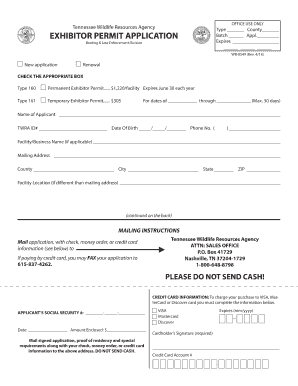
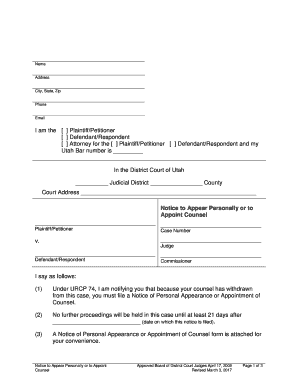


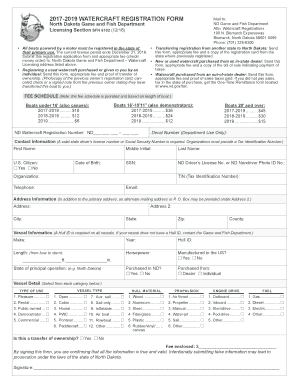
Required to report wages paid, tips received, federal taxes withheld, Social Security and Medicare withholding, and advance EIC payments for non-farm workers.Read more
Apr 15, 2015 Whats New. Premium tax credit. You may be eligible to claim the premium tax credit if you, your spouse, or a dependent.Read more
Complete Form 943-V, Payment Voucher, if you are making a payment with Form 943, Employers Annual. Federal Tax Return for Agricultural Employees. We will useRead more


