



01. Edit your form 943 vs 941 online
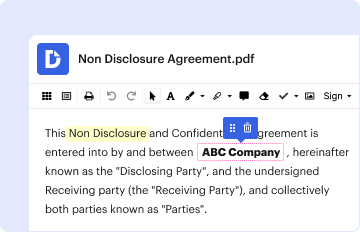
Type text, add images, blackout confidential details, add comments, highlights and more.

Type text, add images, blackout confidential details, add comments, highlights and more.
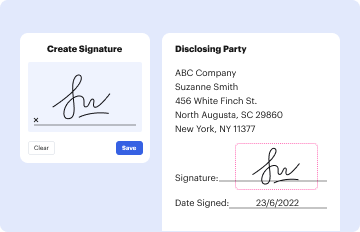
Draw your signature, type it, upload its image, or use your mobile device as a signature pad.

Send it via email, link, or fax. You can also download it, export it or print it out.
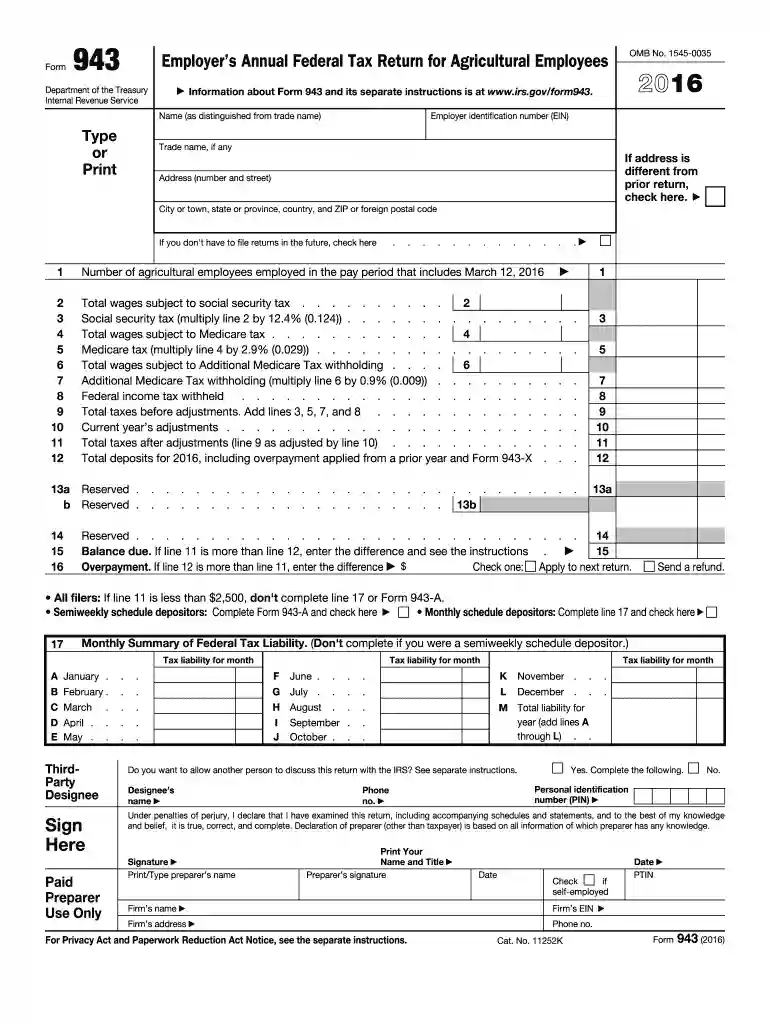
Form 943, officially titled "Employer's Annual Federal Tax Return for Agricultural Employees," is utilized by employers to report agricultural employment taxes. This specific form is designated for use in the 2016 tax year. It requires employers to detail wages paid to agricultural workers and the respective Social Security and Medicare taxes withheld.
Agricultural employers must use this form to keep accurate accounts of their yearly tax obligations. It serves as a critical record-keeping instrument for the Internal Revenue Service (IRS) and plays an essential role in ensuring employers fulfill their tax responsibilities pertaining to employees classified within the agricultural sector.
Employers need to complete Form 943 annually to declare Social Security, Medicare, and withheld income taxes drawn from their agricultural employees' wages. The process involves accumulating data over the year, ensuring that all taxable wages and withholdings are accurately calculated and reported.
Follow these steps to accurately fill out Form 943 for 2016:
The IRS mandates that Form 943 be filed annually by employers of agricultural workers. It is critical to adhere to the deadlines to avoid penalties.
Form 943 is predominantly used by businesses that employ workers for farming activities, including:
Organizations involved in these sectors rely on Form 943 to maintain compliance with tax reporting obligations specific to agricultural employment.
Form 943 includes several crucial sections that require accurate completion:
Each of these elements plays a pivotal role in ensuring that the employer's tax obligations are clearly and accurately communicated to the IRS.
Failing to accurately complete and file Form 943 can result in significant penalties:
Timely and precise completion of Form 943 is essential to avoid these costly penalties, ensuring compliance with federal tax laws.
Employers have the option to file Form 943 either digitally or via paper submission:
Both methods require meticulous entry of information, though digital filing typically offers more safeguards against inaccuracies.
We've got more versions of the form 943 vs 941 form. Select the right form 943 vs 941 version from the list and start editing it straight away!
| Versions | Form popularity | Fillable & printable |
|---|---|---|
| 2025 | 4.9 Satisfied (33 Votes) | |
| 2024 | 4.4 Satisfied (22 Votes) | |
| 2023 | 4.2 Satisfied (46 Votes) | |
| 2022 | 4.9 Satisfied (44 Votes) | |
| 2021 | 4.9 Satisfied (45 Votes) | |
| 2020 | 4.2 Satisfied (66 Votes) | |
| 2019 | 4.3 Satisfied (109 Votes) | |
| 2018 | 4.4 Satisfied (140 Votes) | |
| 2017 | 4.3 Satisfied (146 Votes) | |
| 2016 | 4.4 Satisfied (310 Votes) | |
| 2015 | 4.3 Satisfied (52 Votes) | |
| 2014 | 4 Satisfied (46 Votes) | |
| 2013 | 4.3 Satisfied (29 Votes) | |
| 2012 | 4.4 Satisfied (33 Votes) | |
| 2011 | 4 Satisfied (48 Votes) |
At DocHub, your data security is our priority. We follow HIPAA, SOC2, GDPR, and other standards, so you can work on your documents with confidence.



No information is available for this page.
Apr 15, 2015 You may be eligible to claim the premium tax credit if you, your spouse, or a dependent enrolled in health insurance through the HealthRead more
Form 943, and 2016 on your check or money order. Dont send cash. Dont attach Form 943-V or your payment to Form 943 (or to each other). Detach FormRead more


