






Definition & Meaning
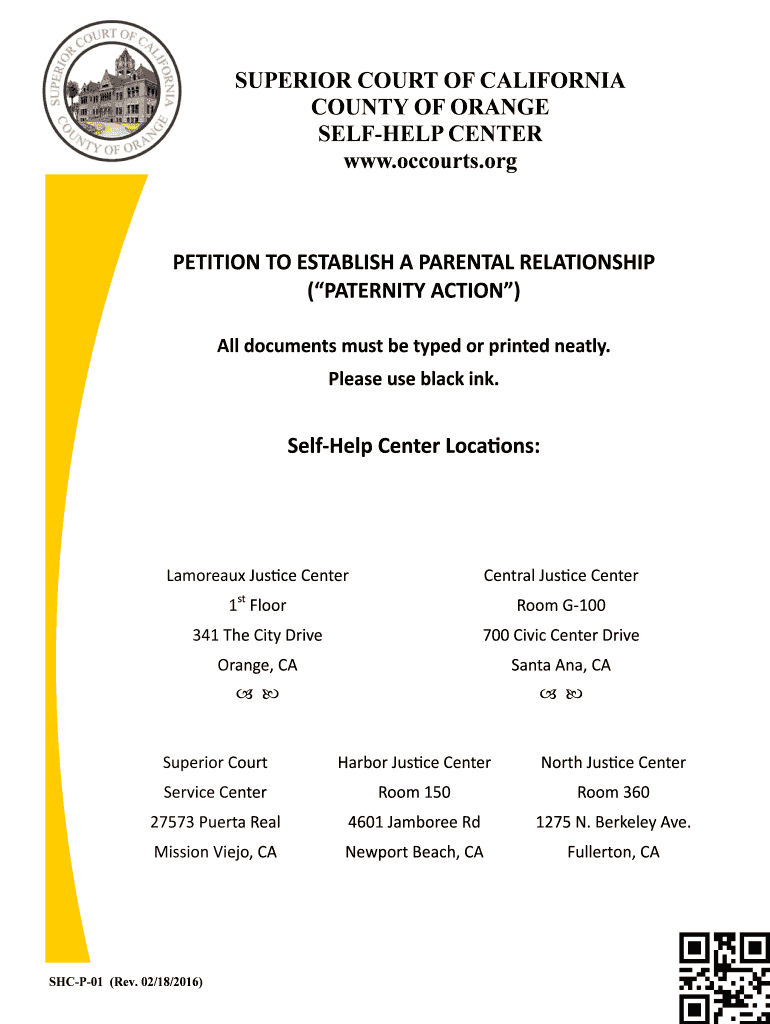
The "Self-Help - The Superior Court of California - County of Orange" form is designed to assist individuals in establishing legal parental relationships, particularly regarding paternity. It facilitates matters such as child custody, visitation, child support, and other related legal determinations. The form serves as a formal petition to the court, helping individuals seek clarity and resolution on various family law issues. It comprises sections that require detailed input about the petitioner, respondent, and the children involved. This form is a vital tool for those needing to navigate the legal complexities of family law without full-time legal representation.
How to Use the Self-Help Form
When utilizing the "Self-Help - The Superior Court of California - County of Orange" form, users should follow a systematic approach to ensure accuracy and completeness:
- Gather Information: Collect all necessary personal details, including names, addresses, and information about the children involved.
- Complete Sections: Fill out each segment of the form, ensuring to input accurate information about custody and support requests.
- Attach Supporting Documents: Provide any necessary documentation, such as birth certificates or financial statements, to bolster the form.
- Review Information: Carefully go through each part of the form to verify that all details are correct and up-to-date.
Important Considerations
- Legal Terminology: Familiarize yourself with any legal jargon present in the form to ensure proper compliance.
- Consultation: If possible, seek guidance from legal professionals or self-help centers for additional support.
Steps to Complete the Self-Help Form
Filling out the form involves several critical steps:
- Identify Parties: Clearly delineate the roles of petitioner and respondent.
- Detail Jurisdictional Claims: Assert the basis on which the court has jurisdiction over the case.
- Child Information: Include comprehensive details about the children, emphasizing any health or welfare considerations.
- Custody and Support Requests: Specify the desired custody arrangement, visitation schedules, and any child support orders.
- Mediation Requests: Indicate if mediation is sought to resolve disputes amicably.
- Sign and Date: Ensure that all signatures are applied where required and that dates are correct.
Examples of Common Scenarios
- Seeking Custody: A parent desires sole custody due to the other parent's unavailability or lack of suitability.
- Child Support Adjustment: An increase in financial support is necessary due to changed economic circumstances.
Key Elements of the Form
The form comprises several essential components:
- Petitioner and Respondent Information: Basic identification and contact information for the involved parties.
- Children's Background: Details on names, birthdates, and current living arrangements.
- Court Orders: Clarification of existing court orders that may impact the case.
- Financial Disclosure: Breakdown of petitioner’s and respondent's financial situations to support child support calculations.
Nuances and Edge Cases
- Name Changes: Requests for altering children's names need specific justification.
- Emergency Orders: Possibility to request expedited hearings under certain conditions.
Legal Use of the Form
The form is a legal mechanism to establish or dispute parental responsibilities and rights. Proper use can lead to legally binding decisions by the court. Compliance with the Superior Court's regulations is essential to maintain validity. Misuse or incorrect filing may lead to delays or dismissals.
Required Documents
Supporting documents are often required to complete the self-help process effectively:
- Birth Certificates: To verify the identities and relationship with the children involved.
- Financial Statements: To provide a clear picture of income and expenses for child support deliberations.
- Previous Court Orders: Any existing judgments that affect the current case, such as divorce decrees.
Who Typically Uses the Self-Help Form
The form is primarily used by individuals directly involved in familial legal issues, such as:
- Unmarried Parents: Seeking to establish or confirm paternity and associated responsibilities.
- Separated or Divorced Spouses: Looking to amend existing custody or support arrangements.
- Legal Guardians: Acting on behalf of minors when parental figures are absent or unable to participate.
In summary, the "Self-Help - The Superior Court of California - County of Orange" form is a comprehensive tool for individuals navigating the complexities of family law. Through careful completion and proper use, it aids in generating clear resolutions to paternity-related issues within the legal framework of California.