
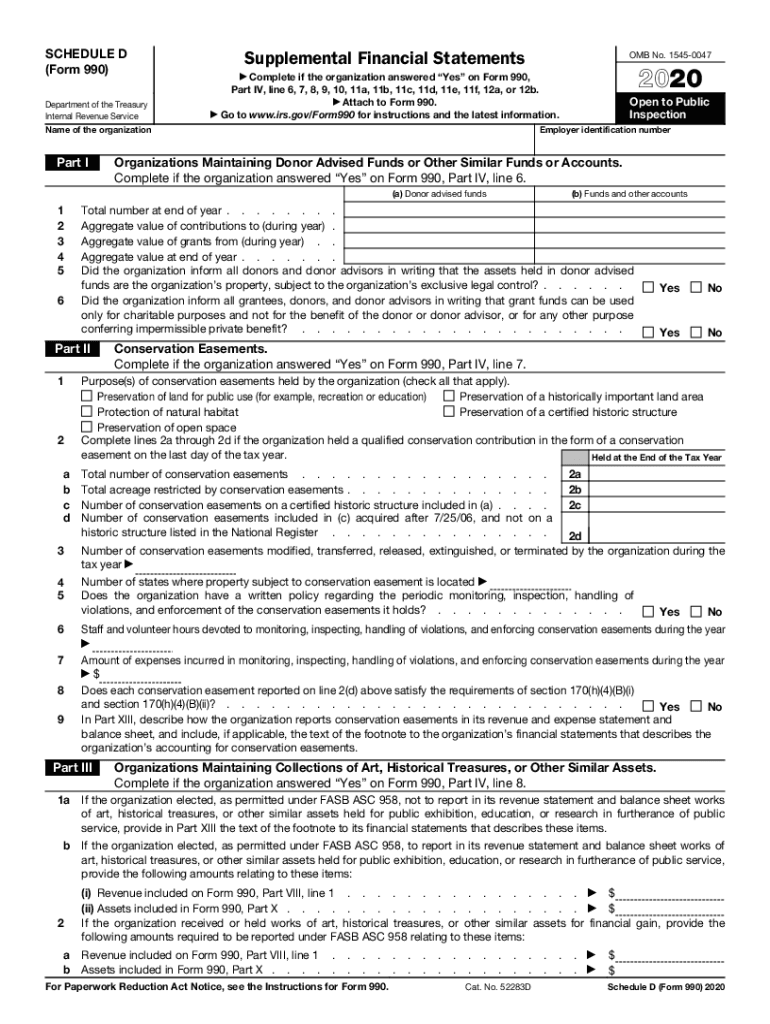







Definition and Purpose of IRS Schedule D
IRS Schedule D is a supplemental schedule attached to an individual's or entity's federal tax return, primarily used to report capital gains and losses derived from investments or property transactions. It is an essential part of the tax filing process for taxpayers who have sold assets, such as stocks, bonds, or real estate, and need to determine the net capital gain or loss to report on their tax return. The form ensures taxpayers correctly calculate and disclose any profits or losses, contributing to accurate tax assessments in compliance with IRS standards.
In simple terms, Schedule D captures and organizes information about each eligible sale or exchange of a capital asset. This supports transparency and accuracy in tax reporting, reducing the risk of errors or omissions that could lead to penalties or audits. Understanding how to accurately complete Schedule D is crucial for taxpayers with investment activities, as this affects their taxable income and potential refunds or payments.
Key Components of IRS Schedule D
-
Long-Term vs. Short-Term Transactions: Schedule D distinguishes between long-term capital gains and losses (held longer than one year) and short-term capital gains and losses (held one year or less).
-
Netting Process: Taxpayers must combine their gains and losses from various transactions to arrive at a net gain or loss for each category. This total is then transferred to Form 1040 for individuals or the relevant tax return for entities.
-
Carryover Losses: Schedule D allows taxpayers to carry forward unused capital losses to future tax years, which can be beneficial in offsetting future gains.
How to Complete IRS Schedule D
Completing IRS Schedule D involves a series of steps focused on accurately identifying and reporting each transaction. Here's a detailed process to guide taxpayers:
-
Gather Transaction Documents: Begin by collecting 1099-B forms from brokers, purchase and sale receipts, and any relevant financial statements. These documents provide critical information about the date of acquisition, date of sale, sale price, cost basis, and any related expenses.
-
Identify Short-Term Transactions: Use Part I of Schedule D to list all short-term capital asset sales. Record details such as the description of the asset, date acquired, date sold, proceeds, and cost basis.
-
Identify Long-Term Transactions: For assets held over one year, use Part II of Schedule D. The same details as short-term transactions must be accurately recorded to ensure appropriate tax treatment.
-
Calculate Gains and Losses: For each asset listed, determine the gain or loss by subtracting the cost basis from the sale proceeds. Classify these into short-term and long-term categories for further processing.
-
Complete the Summation Section: Consolidate the net amounts of short-term and long-term gains and losses. Calculate the overall net gain or loss to transfer to your primary tax form.
-
Include Capital Loss Carryovers: If applicable, apply any carryover losses from previous years to reduce the current year's gains. Proper documentation of these carryovers is essential.
-
Review and Submit: Thoroughly check all entries for accuracy. Once confident, include Schedule D with your tax return and submit before the deadline.
Common Use Cases for IRS Schedule D
IRS Schedule D is applicable in various scenarios involving the sale of capital assets. Below are some common situations where taxpayers typically utilize this form:
-
Stock Market Investors: Individuals actively trading stocks or mutual funds need to use Schedule D to report each trade's gain or loss, which often involves multiple transactions throughout the year.
-
Real Estate Transactions: Selling a rental property or investment real estate also necessitates Schedule D. Proper documentation of purchase and sale details is critical in such cases.
-
Business Asset Disposal: When businesses sell depreciated or appreciated assets, they utilize Schedule D to report the financial outcome of the transactions, thus reflecting the true financial position in the tax return.
IRS Guidelines and Compliance
Following IRS guidelines ensures that Schedule D is correctly completed and filed, which is crucial for compliance and avoiding penalties. Key guidelines include:
-
Accurate Record-keeping: Maintain meticulous records of all transaction-related documentation, including purchase and sales confirmations, brokerage statements, and prior year carryover information. This reduces discrepancies and substantiates claims in case of an audit.
-
Separate Recording: Ensure the distinct recording of short-term and long-term transactions, as they are taxed differently. Failing to differentiate these correctly can lead to an incorrect tax liability.
-
Timely Filing: File Schedule D along with your main tax return by the April 15 deadline, unless extended. Missing this deadline without an extension can result in interest and penalties.
Required Documents for Completing Schedule D
To accurately prepare IRS Schedule D and support your reported transactions, gather the following documents:
-
Form 1099-B: Issued by brokers or mutual fund companies, it outlines the sales of securities. This form provides many details necessary for completing Schedule D.
-
Brokerage Account Statements: Show detailed transaction history, including purchases and sales, which is essential for accurate reporting.
-
Receipt of Purchase/Sale: Provides purchase prices, sale amounts, and associated costs, helping determine the exact gain or loss for each transaction.
-
Previous Tax Filings: Necessary for identifying carryover losses or correctly adjusting past statements due to amendments or audits.
Penalties for Non-Compliance
Misreporting or failing to include IRS Schedule D when required can lead to serious consequences, including:
-
Fines and Interest: Filing inaccurately or omitting sales can result in underreported income and associated tax. The IRS imposes fines and interest charges on these discrepancies.
-
Audits: Significant errors or omissions increase the likelihood of attracting IRS scrutiny, leading to potential audits and more severe penalties.
-
Loss of Future Benefits: Failing to report losses accurately may prevent the use of carryover losses in future tax periods, affecting long-term tax strategies.
Taxpayers are encouraged to use tools and platforms that streamline the completion and filing process of complicated forms like IRS Schedule D. This ensures that the form is both complete and compliant, protecting the taxpayer from potential issues.




