

Gambling asam criteria 2026

Get Form
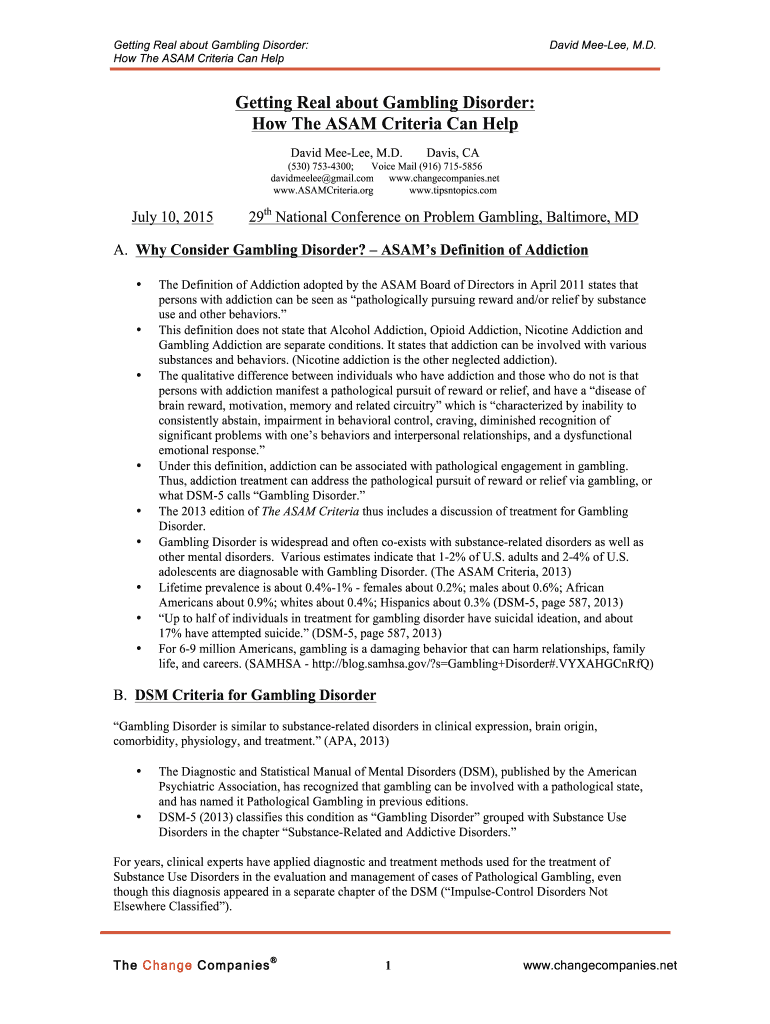
peter and jane book 1a pdf Preview on Page 1

Here's how it works

01. Edit your peter and jane book 1a pdf online
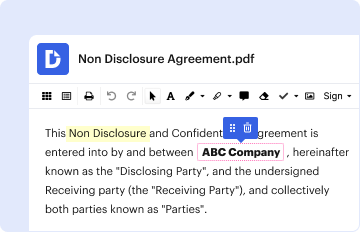
Type text, add images, blackout confidential details, add comments, highlights and more.
02. Sign it in a few clicks
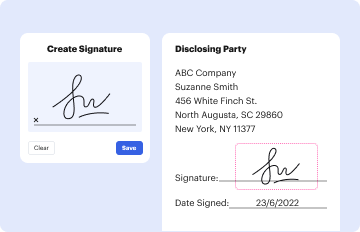
Draw your signature, type it, upload its image, or use your mobile device as a signature pad.
03. Share your form with others
Send peter and jane 4b pdf via email, link, or fax. You can also download it, export it or print it out.

How to use or fill out gambling asam criteria with our platform

Form edit decoration
9.5
Ease of Setup
DocHub User Ratings on G2
9.0
Ease of Use
DocHub User Ratings on G2
  1. Click ‘Get Form’ to open the gambling asam criteria document in the editor.
  2. Begin by reviewing the introduction section, which outlines the importance of understanding gambling disorders and their impact on individuals.
  3. Move to the DSM Criteria for Gambling Disorder. Here, you will find a list of symptoms. Check each symptom that applies to your situation.
  4. In the next section, assess your current severity by selecting from mild, moderate, or severe based on how many criteria you meet.
  5. Proceed to fill out any additional sections regarding health coverage and treatment options available for gambling disorder.
  6. Finally, review all entries for accuracy before saving or sharing your completed form using our platform's export feature.

Start using our platform today to easily fill out your gambling asam criteria form online for free!

See more gambling asam criteria versions

We've got more versions of the gambling asam criteria form. Select the right gambling asam criteria version from the list and start editing it straight away!
Versions Form popularity Fillable & printable
2015 4.9 Satisfied (50 Votes)
be ready to get more

Complete this form in 5 minutes or less

Get form

Got questions?

We have answers to the most popular questions from our customers. If you can't find an answer to your question, please contact us.
Contact us
The ASAM Criteria Fourth Edition is a comprehensive set of standards and decision rules that use a holistic, person-centered approach to determining the appropriate level of care and developing treatment plans for patients with addiction and co-occurring conditions.
What is the ASAM Criteria Acute intoxication and/or withdrawal potential. Biomedical conditions and complications. Emotional, behavioral, and cognitive conditions and complications. Readiness to change. Relapse, continued use, or continued problem potential. Recovery/living environment.
Guideline 1: Gamble no more than 1% of household income Dont bet more than 1% of your household income before tax per month. For example, someone with a household income of $70,000 before tax should gamble no more than $58 per month.
In the DSM-5-Only group, the most frequently endorsed criteria were Preoccupation with gambling (90.4%), Chasing losses (82.6%), Need to increase the amount of money gambled (65.2%), and Reliance on others for money (54.8%). These 4 criteria were the most frequently endorsed in the other groups as well.
In the DSM-5-Only group, the most frequently endorsed criteria were Preoccupation with gambling (90.4%), Chasing losses (82.6%), Need to increase the amount of money gambled (65.2%), and Reliance on others for money (54.8%).

Security and compliance

At DocHub, your data security is our priority. We follow HIPAA, SOC2, GDPR, and other standards, so you can work on your documents with confidence.

Learn more
ccpa2
pci-dss
gdpr-compliance
hipaa
soc-compliance

People also ask

According to the DSM-5, a diagnosis of IGD is given when five (or more) of the following nine criteria are met: (1) preoccupation with internet games, (2) withdrawal symptoms when internet gaming is taken away, (3) tolerance the need to spend increasing amounts of time engaged in internet games, (4) loss of control -
Evidence suggests that Cluster B personality disorders are the most prevalent among problem gamblers and that borderline personality disorder is one of the most or the most prevalent [6**] which makes it a docHub risk factor for problem gambling.
Diagnostic Criteria for 312.31 Pathological Gambling frequent preoccupation with gambling or with obtaining money to gamble. (2) frequent gambling of larger amounts of money or over a longer period of time than intended.

peter and jane 4a pdf