







Definition and Purpose of the California Form
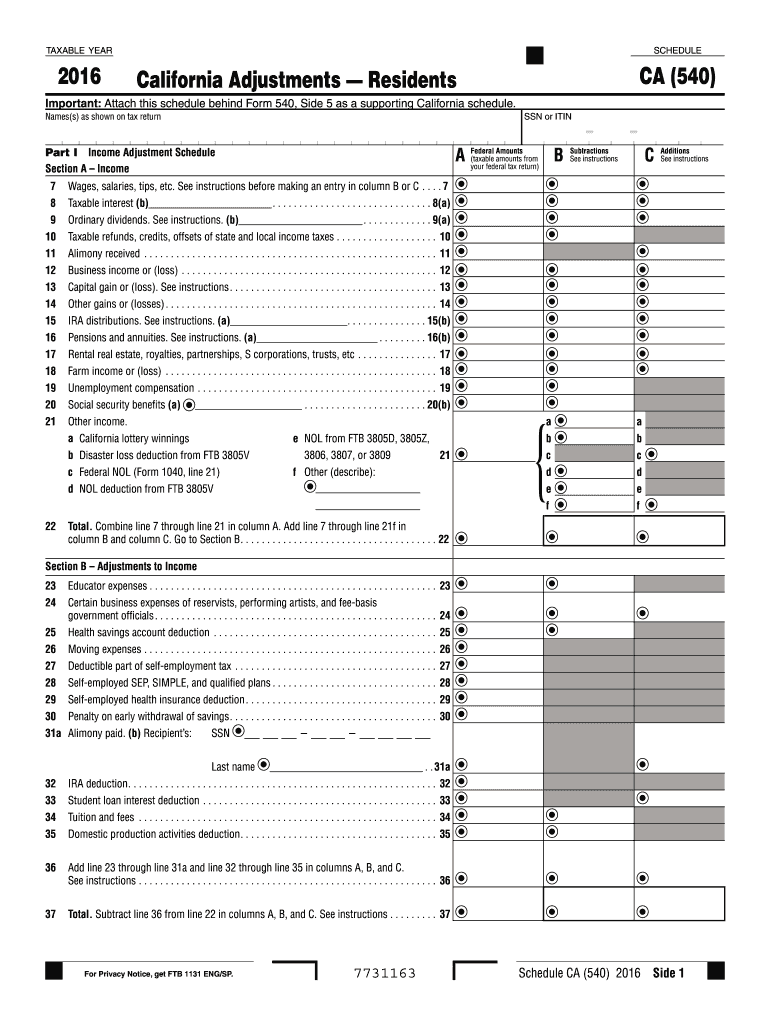
The California form, also known as the California Resident Income Tax Return, is a comprehensive document used by California residents to report their income and calculate state income tax obligations for the year 2016. It captures a detailed view of an individual's financial activities, encompassing various sources of income such as wages, dividends, and interest. The form also enables taxpayers to report adjustments to federal itemized deductions and reflect California-specific tax laws. Compiling this information ensures that the state collects the appropriate taxes based on individual earnings and helps facilitate the equitable distribution of tax liabilities across different income levels.
Key Features of the Form
- Income Reporting: Individuals must detail all sources of income, ensuring accurate reflection of their financial situation.
- Deductions and Credits: The form allows for specific state-level deductions and credits, differing from federal deductions.
- Adjustments Section: Adjustments unique to California state laws must be noted to assure the correct tax calculations.
- Multiple Schedules: It includes schedules for various deductions, credits, and other tax-related specifics to tailor the tax responsibility.
How to Obtain the California Form
Securing the California form is an essential first step for residents preparing to file their state taxes. This form is available through multiple channels to accommodate different preferences and needs.
Methods to Access the Form
- Online Download: The form can be easily downloaded from the California Franchise Tax Board’s official website in a printable PDF format.
- Federal and State Tax Software: Various tax preparation software and platforms offer the form within their California state tax filing packages.
- Physical Copies via Mail: Residents can request a physical copy of the form by calling the California Franchise Tax Board, ensuring accessibility for those preferring non-digital methods.
- Local Tax Offices: Copies can often be picked up at local tax offices for those who prefer in-person services.
Steps to Complete the California Form
Filling out the California form requires careful attention to detail to ensure accurate tax reporting and compliance with state regulations. Follow these steps to correctly complete the form.
Detailed Instructions
- Personal Information: Start by accurately entering basic personal details such as name, address, and Social Security Number to identify your filing.
- Income Section: Collect all necessary financial documentation to report wages, dividends, and other income types. Attach relevant documents as required.
- Deductions and Credits: Review state-specific deductions and credits you may be eligible for to reduce your tax bill. Calculate and enter amounts carefully.
- Adjustments to Income: Note any California-specific adjustments that affect your federal itemized deductions to reflect true taxable income.
- Tax Calculation: Use provided tax tables to determine tax liability based upon reported earnings and applicable deductions.
- Sign and Date: Ensure the form is duly signed and dated before submission, as unsigned forms are considered invalid.
Important Terms Related to the California Form
Understanding the terminology used in the California form is crucial for accurate completion and reporting. This section explains key terms frequently encountered.
Glossary of Terms
- Adjusted Gross Income (AGI): The total gross income minus specific reductions to determine taxable income.
- Itemized Deductions: Deductions that taxpayers can use to decrease taxable income, aligned with eligible personal expenses.
- Tax Credits: Direct reductions in the amount of tax owed, often tied to specific behaviors or circumstances like education or energy efficiency.
- Exemptions: Specific allowances provided to taxpayers, reducing overall taxable income.
Filing Deadlines and Important Dates
Staying informed about critical deadlines is vital for California tax filers to avoid penalties and ensure compliance.
Key Dates
- Regular Filing Deadline: Typically falls on April 15 following the tax year unless it coincides with a weekend or holiday, in which case it extends to the next business day.
- Extension Filing Deadline: If a filing extension is requested, completed forms must be submitted by October 15 of the same year.
- Estimated Tax Payment Dates: Quarterly estimated tax payments have specific due dates to adhere to throughout the tax year.
Penalties for Non-Compliance
Failure to adhere to California tax laws and deadlines can result in significant financial repercussions. Understanding these penalties is crucial for compliance.
Common Penalties
- Late Filing Penalty: Applied to tax returns submitted past the due date without an approved extension, calculated as a percentage of unpaid taxes.
- Late Payment Penalty: Imposed for any outstanding tax liabilities not settled by the deadline, accompanied by interest charges.
- Underpayment Penalty: If estimated tax payments are insufficient or submitted late, penalties may apply, emphasizing the need for timely and accurate payments throughout the year.
Digital vs. Paper Versions: Pros and Cons
Choosing between digital and paper submissions of the California form offers benefits and trade-offs depending on accessibility needs and personal preferences.
Comparison
-
Digital Submission:
- Advantages: Faster processing times, confirmation of receipt, and reduction in potential errors through software checks.
- Drawbacks: Requires internet access and can be daunting for individuals unfamiliar with digital platforms.
-
Paper Submission:
- Advantages: Familiarity for many filers, no need for digital access, and allows piece-by-piece completion at one’s own pace.
- Drawbacks: Longer processing times, potential for incomplete submission, and lack of instant receipt confirmation.
Examples of Using the California Form
This section provides real-world examples and scenarios demonstrating the practical application of the California form.
Scenario-Based Examples
- Freelancer: A freelance graphic designer uses the form to report varied income streams from multiple clients, utilizing itemized deductions for business-related expenses.
- Retiree: A retired individual with pension income reports using this form, focusing on exemptions and credits applicable to fixed income conditions.
- New Homeowner: A newly qualified homeowner claims mortgage interest and property tax deductions, impacting the overall tax liability and yielding a suitable refund.
By following these comprehensive guidelines and instructions, you can ensure thorough understanding and correct filing of the California form, optimizing your tax situation and maintaining compliance with state tax laws.




