
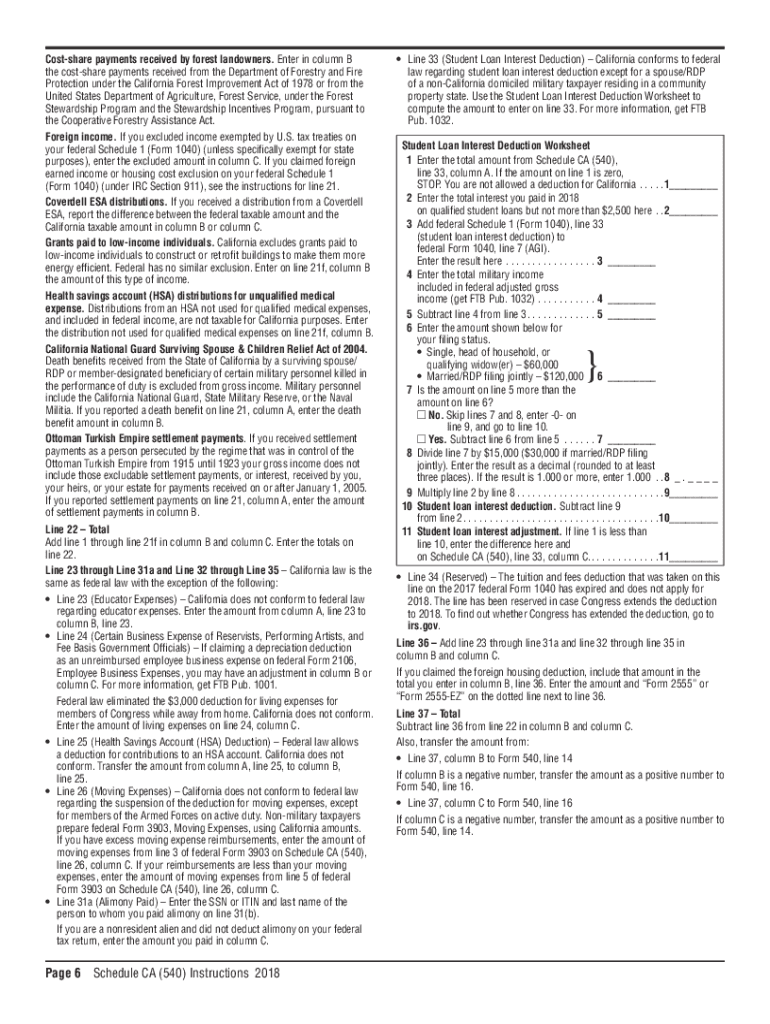







Definition & Purpose of the California Instructions 540 Form Printable
The California 540 form is a state income tax return form used by California residents to report their annual income and calculate their state tax liability. The accompanying instructions for the 540 form provide detailed guidance on how to accurately complete the form, ensuring compliance with California's tax laws. These instructions cover everything from calculating taxable income to understanding deductions and credits specific to California. The form is an essential document for individuals who reside in California and have earned income that needs to be reported to the state.
How to Use the California Instructions 540 Form Printable
The instructions for the 540 form are designed to be a comprehensive guide for taxpayers filing their state income tax return. Users should follow these steps:
-
Gather Necessary documents: Before starting, gather all relevant financial documents, including W-2s, 1099 forms, and records of any additional income or deductions.
-
Understand Taxable Income: Use the instructions to determine what qualifies as taxable income under California law, including any differences from federal definitions.
-
Deductions and Credits: Identify which deductions and credits apply, ensuring they are accurately calculated and documented.
-
Calculate Total Tax Owed: With the guidance provided, accurately compute the total tax owed or refund due.
-
Check for Errors: Carefully review all entries to ensure accuracy before submitting.
How to Obtain the California Instructions 540 Form Printable
The instructions for the 540 form can be obtained in several ways:
-
Official Websites: Visit the California Franchise Tax Board's official website to download a printable version directly from their resources.
-
Tax Preparation Software: Many tax preparation software programs include the instructions as part of their service offering.
-
Local Libraries or Government Offices: Some locations provide physical copies during tax filing season.
Steps to Complete the California Instructions 540 Form Printable
Completing the California 540 form involves several steps, each of which is crucial for ensuring accuracy:
-
Read the Instructions Thoroughly: Start by reading the entire set of instructions to familiarize yourself with the form's requirements.
-
Input Personal Information: Fill in your personal details, including name, address, and Social Security number.
-
Report Income: Use the appropriate sections to report all income, referencing employment, self-employment, and other sources as required.
-
Calculate Adjustments: Follow specific line instructions to adjust income for state-specific deductions or non-conformities, such as those gifted through the Tax Cuts and Jobs Act.
-
Claim Credits and Deductions: Accurately calculate and report any eligible tax credits or deductions on the form.
-
Review and File: Before submission, review the full form using the provided checklist in the instructions to ensure no detail is missed.
Key Elements of the California Instructions 540 Form Printable
The instructions include several critical components that guide taxpayers through the filing process:
-
Line-by-Line Guidance: Detailed explanations for each line of the form, explaining what information should be entered and where to find corresponding figures.
-
Adjustment Instructions: Sections dedicated to how taxpayers can adjust their federal income to align with state tax laws.
-
Deduction Clarifications: Insights into California-specific deductions not applicable at the federal level, such as certain education credits.
-
Filing Status Details: Explanation of filing status options, including married, single, and head of household.
-
Verification and Certification Procedures: Steps required for taxpayers to verify the accuracy of the entered information and certify their return.
State-Specific Rules for the California Instructions 540 Form Printable
California residents must be aware of unique state-specific tax rules when completing the 540 form:
-
Non-Conformity Adjustments: Areas where California tax law does not conform to federal changes, requiring separate calculations.
-
In-State Income Adjustments: Differentiation between income earned in-state versus out-of-state, impacting tax liability.
-
Community Property Considerations: For married couples, the instructions address how to report community property.
Required Documents for the California Instructions 540 Form
To complete the 540 form accurately, specific documents are necessary:
-
W-2s for Wage Income: Needed for reporting income from employment.
-
1099 Forms: For income from freelance work, interest, dividends, or other sources.
-
Deduction Records: Documentation supporting any claimed deductions, such as mortgage interest or charitable contributions.
-
Previous Year’s Tax Return: For reference and comparative purposes.
Penalties for Non-Compliance
Failing to correctly complete and file the 540 form can result in penalties:
-
Late Fees: Imposed for any filings submitted past the deadline.
-
Accuracy-Related Penalties: Charged if there are substantial errors in the reported figures that affect tax liability.
-
Failure to File: Leads to additional fines, proportionate to the tax owed.
Understanding these penalties highlights the importance of accurately following the instructions and completing the form correctly.




