
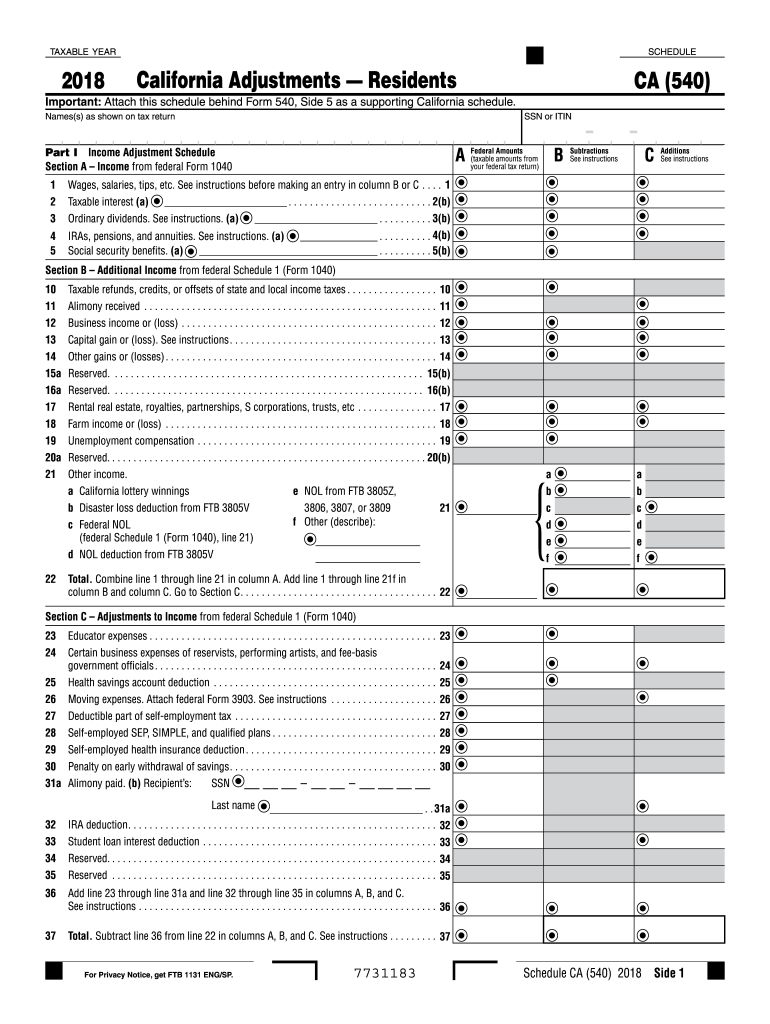







Definition & Purpose of CA FTB 540
The CA FTB 540, also known as the California Resident Income Tax Return, is a form used by California residents to report their annual income to the state's Franchise Tax Board (FTB). The form is essential for residents who need to determine their state income tax liability based on adjustments and itemized deductions specific to California. By completing this document, taxpayers ensure that they are correctly declaring their income, subtractions, and additions, following the state's tax laws.
Key Sections of the Form
- Income Reporting: This section requires a detailed listing of all sources of income, including wages, interest, dividends, and any other taxable earnings.
- Adjustments to Income: Taxpayers must declare any deductions or additions to their reported income, such as student loan interest or IRA contributions.
- Deductions and Credits: Offers a detailed account of itemized deductions like mortgage interest, property taxes, and various tax credits available to reduce tax liability.
How to Use the CA FTB 540
Using the CA FTB 540 requires careful consideration of several income-related factors and state-specific regulations. Taxpayers need to ensure the complete and accurate declaration of income, deductions, and credits to avoid underpayment or examination by the FTB.
Step-by-Step Process
- Gather Financial Documents: Compile all W-2s, 1099s, and other relevant income documents.
- Calculate Adjusted Gross Income (AGI): Use federal income data as a baseline and apply necessary adjustments specific to California.
- Determine Deductions and Credits: Evaluate eligibility for standard deductions or itemized options, such as medical expenses or interest payments.
- Complete Income and Deductions Sections: Input accurate figures to reflect total income, adjustments, and eligible deductions.
- Review and Submit: Double-check all entries for accuracy before submitting the form, either electronically or via mail.
Steps to Complete the CA FTB 540
Completing the CA FTB 540 accurately is crucial for ensuring compliance with California state tax laws. The following steps outline the most efficient approach to filling out this form:
- Personal Information Entry: Ensure all personal data such as name, address, and Social Security number are correct.
- Income Declaration: List all income sources, including wages and additional taxable income.
- Deductions Calculation: Decide between standard or itemized deductions based on financial situations and available tax credits.
- Calculate Tax Liability: Subtract deductions and credits from total income to determine your tax obligation.
- Verification and Submission: Ensure accuracy by double-checking all calculations and supporting documentation before submission.
Important Terms Related to CA FTB 540
Understanding terminology related to the CA FTB 540 can simplify the process of completing the form accurately.
- Adjusted Gross Income (AGI): The total income minus specific deductions, often a critical factor in determining tax liability.
- Itemized Deductions: Detailed deductions including mortgage interest, charitable contributions, and other expenses that might reduce taxable income.
- Tax Credits: Financial credits that directly reduce the amount of tax owed, such as education or energy-related credits.
- Withholding: The amount deducted from wages throughout the year, applied against the total tax owed.
Filing Deadlines and Important Dates
Meeting the filing deadlines for the CA FTB 540 is essential to avoid penalties. Typically, the form is due:
- April 15: This is the standard deadline for filing California state tax returns, aligning with the federal tax deadline.
- Extension Filing: Taxpayers may file for a six-month extension if more time is needed, pushing the deadline to October, provided all taxes due are paid by April 15.
Late Filing Penalties
- Failure-to-File Penalty: A percentage charged on taxes not paid by the deadline, increasing monthly until submission.
- Interest on Late Taxes: Accrues daily from the original deadline until the taxes are paid in full.
Legal Use of the CA FTB 540
The CA FTB 540 must be used in compliance with California tax laws. This involves accurate reporting and adherence to guidelines provided by the FTB. It acts as the official document for declaring personal income and calculating state income tax liability.
Compliance Measures
- Accurate Reporting: All income, credits, and deductions must be thoroughly documented and submitted honestly.
- Supporting Documentation: Retain copies of all forms and receipts that support reported figures for verification purposes.
- Audit Preparedness: Maintain detailed records in case of an audit, ensuring all information can be easily reviewed and substantiated by authorities.
Required Documents for Submission
When preparing to submit the CA FTB 540, gather the following documents to streamline the process and ensure full compliance:
- Income Statements: W-2s, 1099s, and any other forms declaring annual income.
- Deduction Receipts: Proof of payments such as charitable donations, mortgage interest, and medical expenses.
- Federal Tax Return Copy: Utilize your federal return as a reference for state calculations.
Handling Inaccurate or Missing Information
- Obtaining Missed Documents: Contact your employer or payer if you do not have all needed income documentation.
- High-Level Review: Conduct a final review of all information to confirm accuracy before submitting the form.
Eligibility Criteria for the CA FTB 540
Determining whether you need to file a CA FTB 540 depends on several criteria including residency status, income level, and age.


Who Needs to File?
- Residency: California residents or part-year residents with sufficient income.
- Income Threshold: Varies based on filing status, age, and dependency status; consult FTB guidelines for current requirements.
- Filing Status: Single, married, and heads of household, along with dependents meeting certain conditions, might have to file depending on income level.
Filing for Special Circumstances
- Nonresident Filers: Use the related form for nonresidents if earning income from California sources.
- Dependents under 18: Requirements vary based on income from wages versus unearned sources like dividends.




