






Definition & Meaning
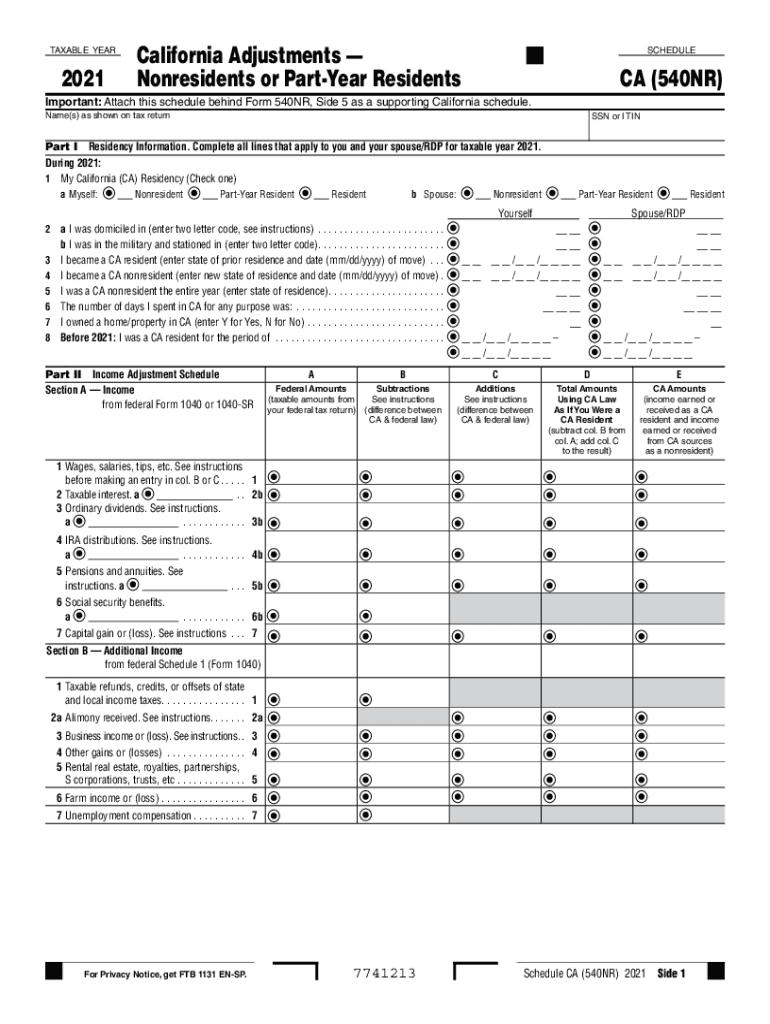
The 2021 Schedule CA (540NR) California Adjustments is a crucial tax form for nonresidents or part-year residents of California. It is designed to outline necessary adjustments to federal figures for state purposes. This form requires individuals to disclose their residency status, income from various sources, and any applicable adjustments or deductions to determine their California taxable income.
Key Elements of the Form
- Residency Information: It specifies the periods you were a resident or nonresident.
- Income Adjustments: It provides a detailed breakdown of income adjustments based on California-specific tax regulations.
- Deductions: It outlines deductions permissible under California law, differing from federal deductions.
Steps to Complete the Form
Completing the 2021 Schedule CA (540NR) involves several methodical steps. Missing one step can lead to incorrect tax calculations or penalties.
- Residency Status: Start by indicating whether you were a nonresident, a part-year resident, or both during the year.
- Income Adjustments: Enter your income from various sources, adjusting federal figures to comply with California law.
- Deductions: List deductions, ensuring they align with California guidelines.
- Calculate Taxable Income: Based on adjusted income and deductions, determine your final California taxable income.
Detailed Steps
- Review Federal Return: Verify entries on your federal tax return, as these will serve as your starting point for adjustments.
- Use California Tax Tables: Reference California's tax tables to determine adjustments needed.
- Check for Updates: Stay informed about any tax law changes affecting the 2021 filing year.
Importance of Schedule CA (540NR)
This form is essential to ensure that out-of-state or part-time residents accurately pay their California taxes. By aligning federal data with California requirements, it helps avoid discrepancies and potential legal issues.
Why It Matters
- Compliance: Ensures adherence to California tax laws.
- Accurate Taxation: Leads to precise tax obligations, minimizing overpayment or underpayment risks.
Who Uses the Form
The 2021 Schedule CA (540NR) is primarily used by individuals who earned income in California but resided outside or partially within the state during the tax year.
Typical Users
- Remote Workers: Those who worked remotely for California-based companies while living elsewhere.
- Students: Individuals studying in California for part of the year with income sources tied to the state.
- Nonresident Business Owners: Entrepreneurs with California-based income but residing primarily in another state.
State-specific Rules
California tax law has unique stipulations that affect nonresidents or part-year residents, influencing how adjustments are calculated on Schedule CA (540NR).
Notable Rules
- Income Sourcing: Only income earned within California is subject to state taxation.
- Deductions: Some federal deductions may not be recognized or have different limits under state law.
Legal Use of the Form
Completing Schedule CA (540NR) accurately is a legal obligation for applicable filers to ensure compliance with California tax laws.
Legality
- Filing Requirements: Misreporting can lead to audits, penalties, or legal action from California's tax authorities.
- Document Retention: Taxpayers should keep copies of their filed forms for several years as proof of compliance.
Filing Deadlines / Important Dates
Adhering to the correct filing deadlines is critical to avoid late penalties and interest charges.
Key Dates
- April 15: Typically the deadline for filing California state taxes, aligned with federal deadlines.
- Extensions: Taxpayers may request extensions, although this does not delay payment obligations.
Required Documents
Gathering all necessary documents before starting can streamline the completion of Schedule CA (540NR).
Necessary Paperwork
- Federal Tax Return: A completed federal return is essential for starting state adjustments.
- Income Statements: W-2s, 1099s, or other income documentation specific to California.
- Proof of Residency: Evidence of residency duration, like rental agreements or utility bills, clarifying your residential status throughout the year.