






Understanding Form 540
Form 540 is a key document used by California residents for reporting income and determining state tax obligations. It offers a standardized way to address income variations specific to California, ensuring that taxpayers appropriately adjust their federal income to comply with state regulations.
Steps to Complete Form 540
To effectively complete Form 540, taxpayers should follow these steps:
- Collect Necessary Documents: Gather your federal tax return, W-2 forms, and any 1099 documents. These will provide the basis for your California income calculations.
- Calculate Federal Adjustments: Use your federal return to identify income figures that you'll need to report on the state form.
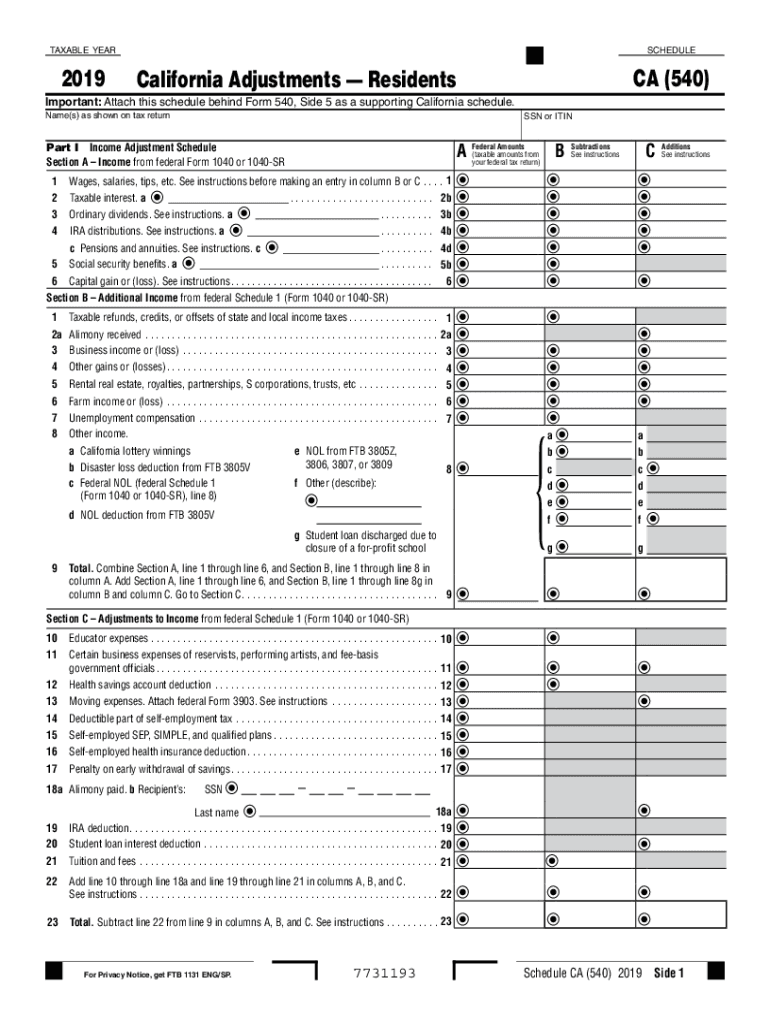
- Report California Adjustments: On the 540, make any necessary modifications to your federal income, such as subtractions and additions specific to California tax laws.
- Deductions and Credits: Claim itemized deductions or the standard deduction, whichever is applicable. Also, include any state credits you may qualify for.
- Finalize the Return: Review for accuracy, complete the necessary schedules attached to the form, and ensure all calculations are correct before submission.
Key Elements of Form 540
Several critical components constitute the 540:
- Personal Information Section: Includes fields for personal data, such as name, Social Security number, and address.
- Income and Adjustments Fields: Where you input data from your federal return, along with any state-specific adjustments.
- Tax Calculation Areas: Detail the computations for non-refundable and partially refundable credits, income tax, and other state-specific tax elements.
- Payment and Refund Details: Sections that outline how much you owe or your refund amount after applying payments and credits.
Why Form 540 is Important
Form 540 ensures compliance with California's tax laws, serving to reconcile any discrepancies between state and federal taxable income. Additionally, it facilitates the correct application of state-specific credits and deductions.
Legal Use of Form 540
The legal application of Form 540 varies for individuals who meet specific residency requirements. California residents are mandated to file if their income surpasses the state's income threshold, even if they're not obligated at the federal level.
State-Specific Rules for Form 540
California implements unique guidelines that might differ from federal tax rules. Key differences may include unique credits, such as renter's credit or other location-specific benefits that apply only to California residents.
Forms Related to 540
Taxpayers may need to use additional forms in conjunction with 540, such as:
- Schedule CA (540): To report California income adjustments.
- Form 540 NR (Nonresident): For nonresidents who earn income in California.
- Form 540-ES: For estimating state taxes if you need to prepay.
Penalties for Non-Compliance
Failure to submit Form 540 accurately or by the given deadline can lead to penalties, including fines or an audit by the California Franchise Tax Board. It's crucial for taxpayers to review their completed forms for errors and omissions to avoid these consequences.
Filing Deadlines for Form 540
Form 540 is due on April 15 for most individuals; however, extensions may be available upon request. Californians should be aware of any year-specific changes to deadlines, especially if such dates fall on a weekend or holiday.
Who Typically Uses Form 540
This form is tailored for California residents, including individuals who live or work in California and earn income from the state. Typically, this encompasses full-time residents, as well as part-year residents, who must acknowledge their earnings associated with California during their residency period.