




01. Edit your 2014 fillable 1040 form online
Type text, add images, blackout confidential details, add comments, highlights and more.

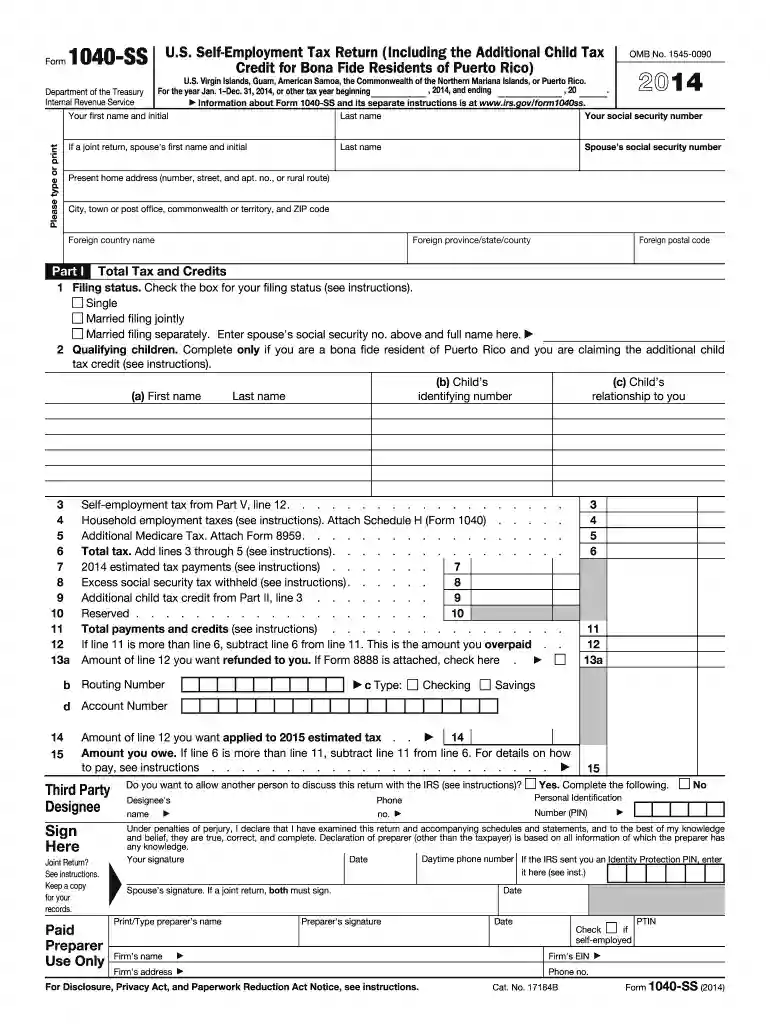
Type text, add images, blackout confidential details, add comments, highlights and more.

Draw your signature, type it, upload its image, or use your mobile device as a signature pad.

Send it via email, link, or fax. You can also download it, export it or print it out.
The 2014 Form 1040 is a fillable tax document used by individuals in the United States to report their annual income to the Internal Revenue Service (IRS) and determine tax liability. This form is central to the federal tax filing process and includes various sections for reporting wages, salaries, dividends, and other income sources. It is essential for taxpayers to accurately complete and submit this form to avoid any legal issues or penalties.
The 2014 Form 1040 can be accessed in several ways to ensure taxpayers can conveniently complete their tax returns:
Completing the Form 1040 involves a systematic approach to ensure accuracy and compliance with tax regulations:
Gather Required Information:
Enter Personal Information:
Report Your Income:
Claim Deductions & Credits:
Calculate Tax Liability:
Sign and Date the Form:
The 2014 Form 1040 is used broadly within the United States by various individuals:


The Form 1040 includes a variety of essential sections that must be completed accurately:
The IRS provides detailed instructions on completing the Form 1040 accurately:
When preparing to fill out the 2014 Form 1040, ensure you have the following documents:
The form can be submitted via different methods depending on taxpayer preference and accessibility:
Failing to file the Form 1040 or submitting an inaccurate return can lead to significant repercussions:
We've got more versions of the 2014 fillable 1040 form form. Select the right 2014 fillable 1040 form version from the list and start editing it straight away!
| Versions | Form popularity | Fillable & printable |
|---|---|---|
| 2025 | 4.7 Satisfied (30 Votes) | |
| 2024 | 4.5 Satisfied (30 Votes) | |
| 2023 | 4.1 Satisfied (54 Votes) | |
| 2022 | 4.1 Satisfied (48 Votes) | |
| 2021 | 4.8 Satisfied (110 Votes) | |
| 2020 | 3.9 Satisfied (28 Votes) | |
| 2019 | 4.2 Satisfied (99 Votes) | |
| 2018 | 4.4 Satisfied (131 Votes) | |
| 2017 | 4.1 Satisfied (31 Votes) | |
| 2016 | 4.4 Satisfied (1669 Votes) | |
| 2015 | 4 Satisfied (31 Votes) | |
| 2014 | 4 Satisfied (55 Votes) | |
| 2013 | 4.2 Satisfied (68 Votes) | |
| 2012 | 4 Satisfied (41 Votes) | |
| 2011 | 4.3 Satisfied (65 Votes) |
At DocHub, your data security is our priority. We follow HIPAA, SOC2, GDPR, and other standards, so you can work on your documents with confidence.
Attach Form(s). W-2 here. Also attach Forms. W-2G and. 1099-R if tax was withheld. If you didRead more
Dec 16, 2024 Fillable Forms. Available for any income level, Free Fillable Forms allows people who are experienced in preparing their own tax returns toRead more


