







Definition & Meaning
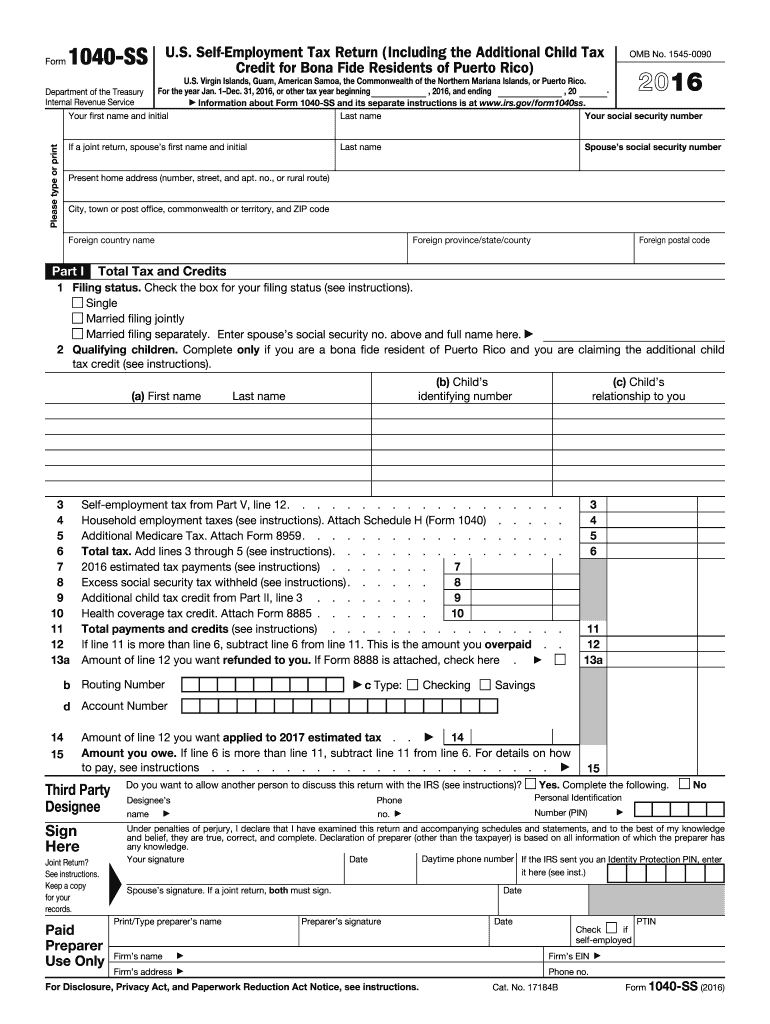
The 2016 Form 1040 is a comprehensive U.S. federal income tax return form used by individual taxpayers to report their annual income, calculate taxes owed or refunds due, and determine the amount of income tax they are liable to pay. It encompasses various sources of income, tax deductions, credits, and tax liability, serving as a key document for fulfilling federal tax obligations. This form is essential for providing detailed information about an individual's financial situation to the Internal Revenue Service (IRS) and helps in ensuring compliance with tax laws.
Steps to Complete the 2016 Form 1040
Completing the 2016 Form 1040 involves several detailed steps:
-
Gather Required Information: Ensure you have all necessary documents, such as W-2s, 1099s, and records of other income.
-
Fill Personal Information: Begin with your name, address, and Social Security Number (SSN).
-
Report Income: List all income sources, including wages, interest, dividends, and capital gains on the designated lines.
-
Calculate Adjusted Gross Income (AGI): Subtract allowable deductions from your total income to find your AGI.
-
Consider Deductions: Itemize deductions like mortgage interest and medical expenses, or take the standard deduction, whichever is more beneficial.
-
Apply Credits: Include any tax credits you are qualified for, such as the Child Tax Credit or Education Credits.
-
Determine Tax Liability: Use the tax tables to calculate the final tax liability based on your taxable income.
-
Finalize and Submit: Sign the form, include payment if necessary, and submit either electronically or by mail.
Key Elements of the 2016 Form 1040
The form consists of several sections essential for accurate completion:
-
Personal Information: Found at the top of the form, requiring details like legal name, SSN, and filing status.
-
Income Calculation: Detailed in sections where taxpayers report wages, business income, rental income, and investments.
-
Tax and Credits: Sections focusing on calculating owed taxes, non-refundable and refundable credits.
-
Payments: Includes withholding, estimated tax payments, and any additional taxes.
-
Signature: Validation section where the taxpayer and preparer (if applicable) sign and date the form to declare accurate information.
Required Documents
Filing the 2016 Form 1040 requires precise documentation to ensure accuracy:
-
W-2 Forms: Document all wages and salaries.
-
1099 Forms: For reporting additional income such as interest, dividends, or contractor payments.
-
Income Records: Any other records evidencing income like rental properties or foreign bank accounts.
-
Deduction Receipts: Documentation of deductible expenses like medical expenses or charitable contributions.
-
Credit Certificates: Proof of eligibility for education credits or credits for energy-efficient improvements.
Important Terms Related to 2016 Form 1040
Understanding key terminology aids in form completion:
-
Adjusted Gross Income (AGI): The total income minus specific deductions, crucial for calculating many credits.
-
Standard Deduction: A fixed dollar amount reduces the income on which you are taxed; varies based on filing status.
-
Exemptions: Deductions for taxpayer and dependents, reducing taxable income.
-
Tax Credit: Amount subtracted from the total tax owed; more beneficial than deductions.
-
Withholding: Income tax withheld from wages by employers throughout the year.
Who Typically Uses the 2016 Form 1040
The 2016 Form 1040 is used broadly, but certain taxpayers are more likely to require this form:
-
Individuals with Diverse Income Sources: Those with complex income such as business owners or investors.
-
Taxpayers Claiming Itemized Deductions: When opting for itemized deductions over the standard deduction.
-
Those Eligible for Numerous Credits: Households claiming multiple credits like education or energy-efficient credits.
-
Filers with Dependents: Parents or guardians claiming exemptions for children.


IRS Guidelines
The IRS provides detailed guidelines for the 2016 Form 1040 to ensure correct filing:
-
Deadline: Typically due by April 15 of the following year, with extensions available upon request.
-
Filing Options: Electronic filing is recommended for faster processing and refund issuance.
-
Extensions and Amendments: Procedures for requesting filing extensions and methods for amending submitted forms for corrections.
-
Assistance: IRS offers resources like the Volunteer Income Tax Assistance (VITA) program for free help with form completion.
Software Compatibility
Modern tax software can greatly streamline completing the 2016 Form 1040 by offering:
-
Integration with Financial Accounts: Quick import of data directly from financial institutions.
-
Error Checking: Automated checks for common errors and ommissions.
-
Filing Simplification: Step-by-step guidance through each form section.
-
Compatibility with Major Tax Platforms: Such as TurboTax and QuickBooks, providing robust support for form completion and submission.
Each heading of this section aids in understanding the utility and requirements of the 2016 Form 1040, ensuring accurate and problem-free filing.




