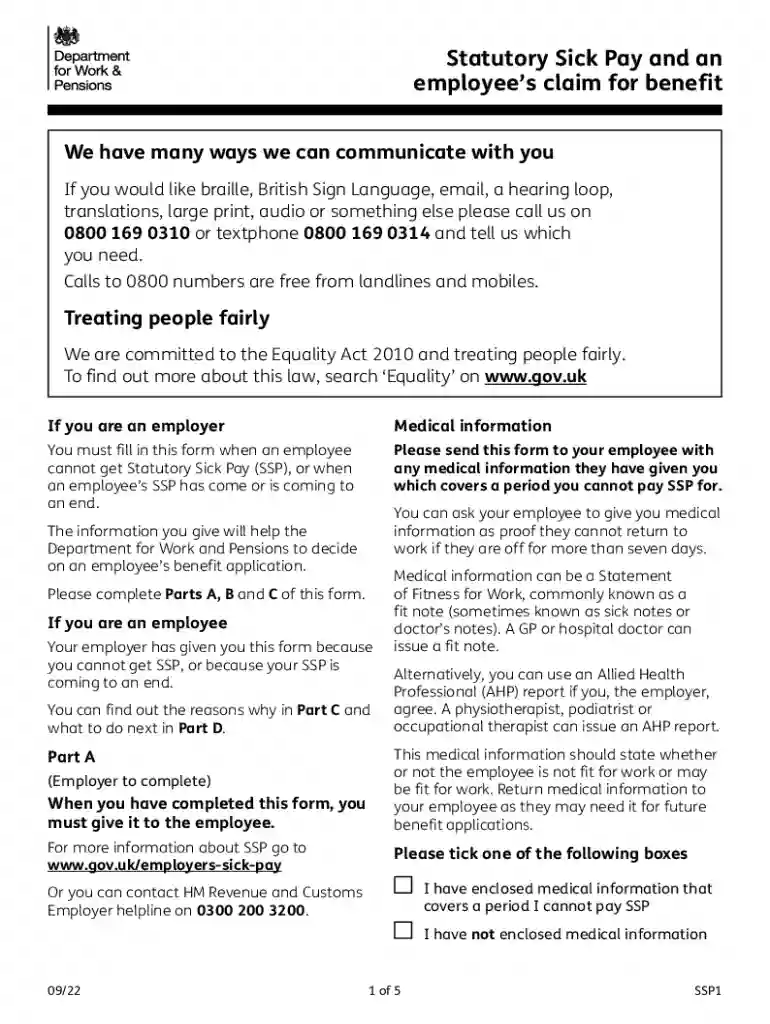
Definition & Meaning
The form "We have many ways we can communicate with you - GOV.UK" is a communication preference document designed to ensure that government services and updates are accessible and tailored to individual needs. Users can specify how they wish to receive information from government agencies, which can help to facilitate smoother and more efficient communication.
Purpose and Functionality
- It supports users in customizing their communication preferences, ensuring the government can reach them via their preferred method.
- Helps enhance accessibility for those with specific communication needs, supporting the wider aim of inclusive service delivery.
Steps to Complete the We Have Many Ways We Can Communicate With You - GOV.UK
Filling out the form requires attention to detail and a clear understanding of each section to ensure preferences are accurately recorded.
- Personal Information: Begin by entering your full name, address, and other identifying information to accurately link your preferences to your records.
- Communication Preferences:
- Select your preferred method(s) of communication—these can include email, postal mail, phone calls, or text messages.
- Indicate whether there are methods you're unable to use due to accessibility issues.
- Consent: You may need to provide consent for your personal data to be used in the context of communication.
- Review and Submit: Double-check all information for accuracy before submitting the form as directed by your specific government agency—options may include online submission, mailing a paper form, or in-person delivery.
Key Elements of the We Have Many Ways We Can Communicate With You - GOV.UK
Understanding the main components of the form helps ensure the process is completed correctly.
- Personal Details Section: Essential for verifying identity and ensuring communication is directed appropriately.
- Preference Options: Lists all available communication methods and allows you to indicate all that apply.
- Accessibility Accommodations: Special options for users who require specific methods due to disabilities or other factors affecting communication channels.
Examples
- A person with visual impairments might specify a preference for communication via phone.
- An individual without internet access would choose postal mail as their primary method.
Legal Use of the We Have Many Ways We Can Communicate With You - GOV.UK
Compliance with legal standards is crucial for both users and government agencies.
- Data Protection: The form’s use aligns with data protection laws, ensuring that personal information is handled securely and only used for specified purposes.
- Consent for Data Use: By submitting the form, users consent to the specified mode of communication, facilitating smooth legal interactions.
Software Compatibility
Ensuring compatibility with digital tools is key for an efficient online submission process.
- Adobe Reader: Necessary for opening and completing a PDF version of the form digitally.
- Web Browsers: Modern browsers like Chrome, Safari, and Firefox often support online form submissions.
Important Terms Related to the We Have Many Ways We Can Communicate with You - GOV.UK
Understanding terminology helps clarify the form’s purpose and requirements.
- Preference: The method or channel chosen for communication.
- Accessibility: The degree to which communication methods are adaptable to different needs.
- Consent: Permission for the government to use personal data in specified ways.
Examples of Using the We Have Many Ways We Can Communicate With You - GOV.UK
Practical applications highlight the form’s adaptability to varied needs.
- Busy Professionals: May choose email as their preferred communication method for its convenience.
- Non-English Speakers: Might prefer language support through specific communication channels to ensure full understanding.
This content structure provides comprehensive coverage of the form's purpose, application, and usage scenarios.