



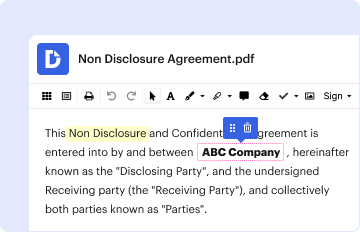
01. Edit your w 3pr online
Type text, add images, blackout confidential details, add comments, highlights and more.

Type text, add images, blackout confidential details, add comments, highlights and more.
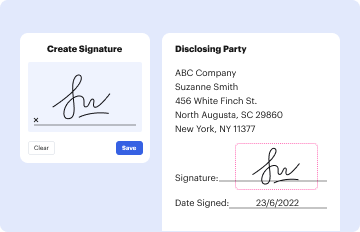
Draw your signature, type it, upload its image, or use your mobile device as a signature pad.

Send w3pr form via email, link, or fax. You can also download it, export it or print it out.
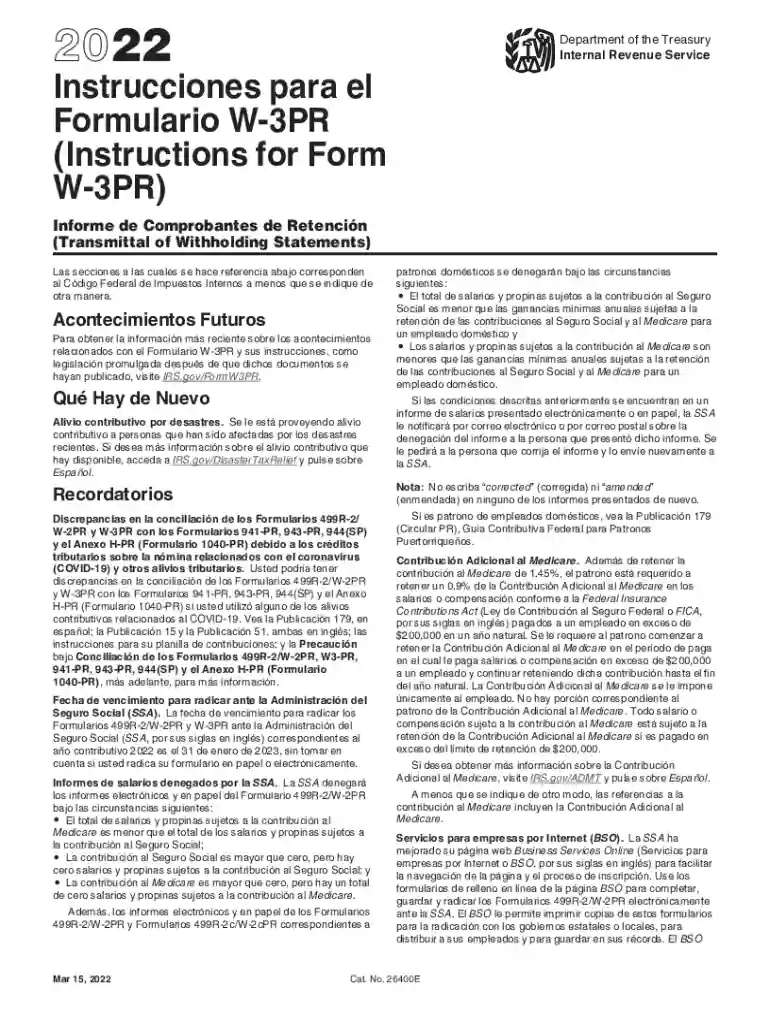
IRS Form W-3PR, also known as the Transmittal of Withholding Statements, is utilized by employers in Puerto Rico to transmit Copy A of Form 499R-2/W-2PR to the Social Security Administration (SSA). This form consolidates the wage and withholding information of all employees, ensuring that the SSA receives accurate reporting for each worker.
The primary purpose of Form W-3PR is to provide a summary of employee wage and tax information to the SSA. Employers must accompany each batch of 499R-2/W-2PR forms with a single Form W-3PR. It should detail aggregate amounts, such as total wages subject to social security tax and Medicare tax, as documented in the individual forms.
Employers can acquire Form W-3PR through the IRS website, ensuring that they access the most current version available. Forms can be downloaded and printed at the employer's convenience. Additionally, tax preparation software may offer integrated access to the form, providing electronic filing options.
Completing Form W-3PR involves accurately summarizing data from individual Form 499R-2/W-2PR submissions.
The filing deadline for Form W-3PR is January 31st following the end of the tax year. Timely submission ensures compliance and avoids penalties. Employers should be aware of any extensions that may apply, particularly in cases of federally declared disaster areas or other exceptional circumstances.
To complete Form W-3PR, employers need:
This documentation ensures accuracy in reporting and compliance with IRS requirements.
Form W-3PR can be submitted:
Electronic submission is encouraged, offering faster processing and confirmation of receipt.
Failure to file Form W-3PR on time or submitting inaccurate information could result in penalties. Fines may increase based on the duration of delay:
Accurate, timely submission of this form is crucial to avoiding financial repercussions.
Various tax preparation programs, such as TurboTax and QuickBooks, support Form W-3PR. These platforms facilitate form completion and filing by:
Leveraging software can help reduce errors and increase efficiency in form submission.
The Internal Revenue Service (IRS), in coordination with the Social Security Administration (SSA), issues Form W-3PR. While the form is primarily filed with the SSA, it is crucial for fulfilling IRS reporting requirements for employers operating in Puerto Rico.
Any employer in Puerto Rico who pays wages and withholds taxes for employees must file Form W-3PR. This includes various business structures, such as sole proprietorships, partnerships, and corporations.
Employers should ensure their compliance with both federal and Puerto Rican tax laws, understanding that Form W-3PR is necessary for accurate tax reporting to the SSA.


We've got more versions of the w 3pr form. Select the right w 3pr version from the list and start editing it straight away!
| Versions | Form popularity | Fillable & printable |
|---|---|---|
| 2024 | 4.2 Satisfied (20 Votes) | |
| 2023 | 4.6 Satisfied (56 Votes) | |
| 2022 | 4.6 Satisfied (54 Votes) | |
| 2021 | 4.8 Satisfied (29 Votes) | |
| 2020 | 4.3 Satisfied (62 Votes) | |
| 2019 | 4.3 Satisfied (128 Votes) | |
| 2018 | 4.3 Satisfied (58 Votes) | |
| 2017 | 4.4 Satisfied (72 Votes) | |
| 2016 | 4.1 Satisfied (76 Votes) | |
| 2015 | 4.3 Satisfied (24 Votes) | |
| 2014 | 4 Satisfied (36 Votes) | |
| 2013 | 4 Satisfied (21 Votes) | |
| 2012 | 4 Satisfied (56 Votes) |
Sure, it is possible with DocHub. This secure and compliant online solution has a phone-based signing option. When you log in to your DocHub account and import your formulario w 3pr to our editor, complete all blank areas and utilize the Sign feature on the top barf. Click on Create your signature and choose Phone from the available options. Here, you scan a QR code with your smartphone and draw your signature on your phone display, as you usually do when signing hard copies. If you access DocHub right from your mobile device, you can eSign your template by drawing your eSignature, adding its photo, or simply with a typed name.
If you are looking for a state-specific irs pubirs-pdf2022 Form W-3PR - Internal Revenue Service sample, you can find it in our DocHub Forms & Templates catalog. Use the search field, enter your form’s name, and search through the results for your state. You may also filter out irrelevant results while exploring our catalog by categories.
At DocHub, your data security is our priority. We follow HIPAA, SOC2, GDPR, and other standards, so you can work on your documents with confidence.


