




01. Edit your michigan lcc online
Type text, add images, blackout confidential details, add comments, highlights and more.

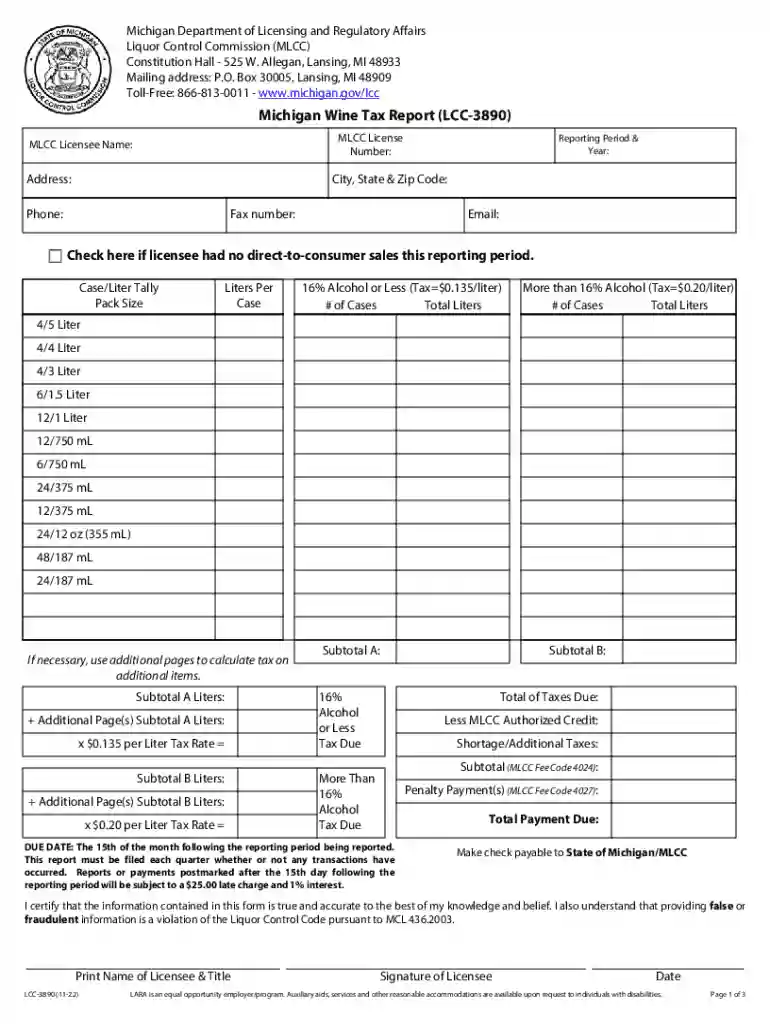
Type text, add images, blackout confidential details, add comments, highlights and more.

Draw your signature, type it, upload its image, or use your mobile device as a signature pad.

Send mi lcc via email, link, or fax. You can also download it, export it or print it out.
The scprod.michigan.gov LARA - New On-Premises Specially Designated Merchant (SDM) Application is a form used in Michigan to apply for a license that allows businesses to sell alcoholic beverages on their premises under specific conditions. This SDM license is essential for establishments like restaurants, bars, and retail stores that wish to sell alcohol for consumption on the property. The application process involves meeting specific criteria set by the Michigan Liquor Control Commission (MLCC) and providing detailed information about the business and its operations.
Using the SDM application involves completing several sections that require precise information about the business and its operations. Applicants need to gather all the necessary documents and details before starting the application process. This ensures accuracy and completeness, which are critical for a successful application. Each section of the form needs to be filled out with care, providing information like the business name, address, type of establishment, and owner details. Moreover, supporting documents such as legal identification, business registration certificates, and site plans may be needed to back the application.
The SDM application can be obtained from the official Michigan Department of Licensing and Regulatory Affairs (LARA) website. It's crucial to access the most recent version of the form to ensure compliance with current regulations. The application is available for download in a PDF format, allowing applicants to complete it digitally or print it out for manual completion. It's advisable to read through any accompanying instructions provided on the LARA website to understand the submission requirements and process thoroughly.
Holding an SDM license is essential for businesses wanting to sell alcohol on their premises legally, aligning with Michigan's state laws. This license enables establishments to enhance their offerings, attract a broader customer base, and increase revenue by providing alcoholic beverages. Obtaining an SDM license demonstrates a commitment to adhering to legal standards, which can enhance the business's reputation and guarantee compliance with state laws.
Typically, a wide range of establishments utilizes the SDM application, including:


The SDM application comprises several critical elements that must be accurately addressed:
An SDM license legally entitles a business to sell alcohol while adhering to Michigan's laws and regulations regarding alcohol sales. This includes limits on operational hours as well as restrictions based on the type of alcohol sold and the location of the business. Compliance ensures businesses avoid penalties and maintain their right to operate legally under state guidelines.
Michigan has specific rules governing the SDM license application process, which can differ from other states. These include:
Before submitting the SDM application, applicants must prepare an array of supportive documents, including:
We've got more versions of the michigan lcc form. Select the right michigan lcc version from the list and start editing it straight away!
Many software solutions are available on the market for document editing and signing. DocHub is one of the most popular online solutions that comply with all security and compliance standards and guarantees your electronically signed paperwork is legally enforceable. All you need to try it out is to create an account, upload your lcc 3890, provide the necessary details, and click Sign. Create your eSignature by typing, drawing it, uploading its picture to your document, or scanning a unique QR code.
You can complete and sign your michigan lcc 3890 on the internet, even on a tight deadline. All you need to access high quality editing instruments on any device is a DocHub account, which you can register in a few moments. Once you sign up, upload your file or find what you are searching for in our catalog, complete it using the editing instruments you want, and put your electronic signature on it at the end.
At DocHub, your data security is our priority. We follow HIPAA, SOC2, GDPR, and other standards, so you can work on your documents with confidence.


