Definition and Purpose of the Michigan Wine Tax Report LCC 3890 Form
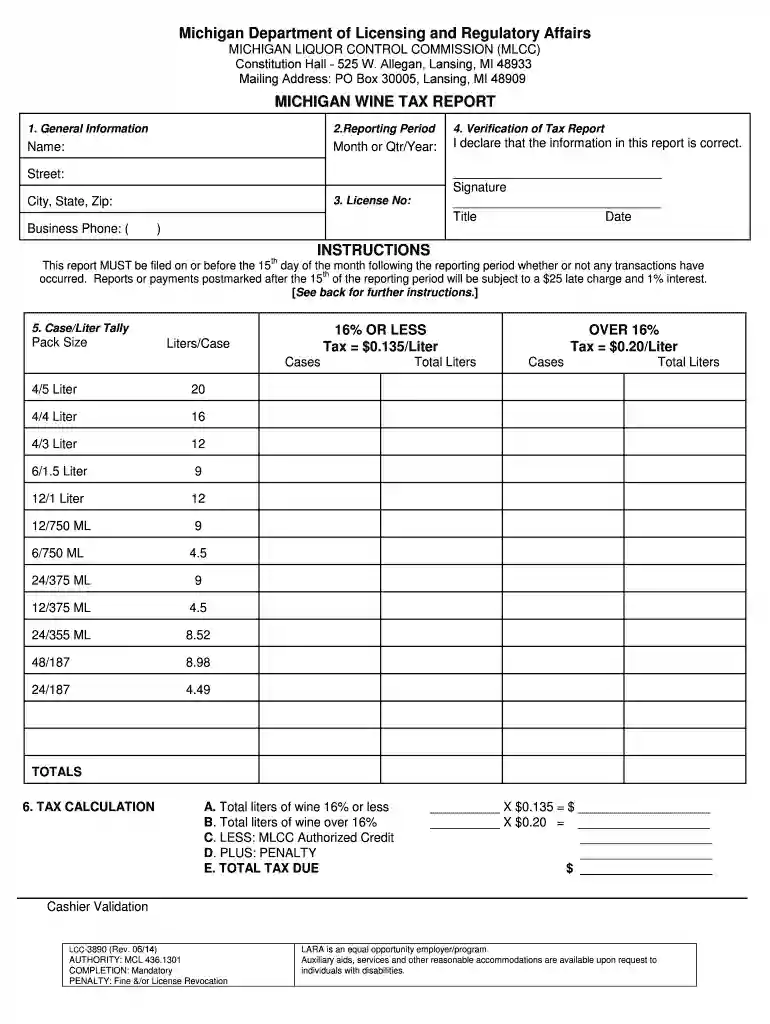
The Michigan Wine Tax Report LCC 3890 Form is a mandatory document issued by the Michigan Liquor Control Commission (MLCC). This form is crucial for wineries and out-of-state sellers as it facilitates the collection and reporting of taxes on wine produced or imported into Michigan. The form ensures compliance with state tax regulations and aids in accurately calculating tax liabilities based on wine alcohol content.
Key Elements of the Form
- Taxpayer Information: Includes the name, address, and identification number of the entity submitting the form.
- Wine Categories: Breaks down the types of wine based on alcohol content, which is essential for determining the applicable tax rates.
- Tax Calculation: Provides detailed instructions on how to calculate taxes owed, considering different rates for various wine categories.
- Declaration and Signature: Requires an authorized signature to verify the accuracy of the reported information.
Steps to Complete the Michigan Wine Tax Report LCC 3890 Form
Filing the Michigan Wine Tax Report LCC 3890 Form involves several key steps to ensure compliance and accuracy.
- Gather Required Documents: Collect all relevant sales information, including invoices and records of wine shipments.
- Fill Out Taxpayer Information: Accurately complete the identification section with the winery or seller's details.
- Categorize the Wine: Use the form's guidelines to classify the wine based on alcohol content.
- Calculate Taxes: Follow the given instructions to compute the taxes owed for each wine category.
- Review and Verify: Double-check all information for accuracy before signing.
- Submit the Form: File the completed form by the specified deadline via the appropriate submission method.
Important Consideration
- Keep copies of all submitted documents for your records, as they may be needed for future audits or inquiries.
Filing Deadlines and Important Dates
Adhering to filing deadlines is crucial to avoid penalties and ensure compliance.
- Quarterly Filing: Typically, the form is due by the 20th day of the month following the end of each quarter—April, July, October, and January.
- Penalties for Late Submission: Missing the filing deadline can result in monetary penalties and interest on unpaid taxes, emphasizing the importance of timely submission.
Obtaining the Michigan Wine Tax Report LCC 3890 Form
Accessing the Michigan Wine Tax Report LCC 3890 Form is relatively straightforward.
Methods to Acquire the Form
- Online: Visit the official Michigan Liquor Control Commission website and download a digital copy.
- Request by Mail: Contact the MLCC to receive a physical copy sent to your address.
- State Offices: Obtain a copy in person by visiting an MLCC office location.
Importance of Correct Form Version
Ensure you use the current version of the form, as outdated forms may not be accepted and can lead to submission errors.
Legal Use and Compliance of the Michigan Wine Tax Report LCC 3890 Form
Regulations governing the Michigan Wine Tax Report LCC 3890 Form are designed to maintain compliance with state taxation laws.
Compliance Guidelines
- Accurate Reporting: Ensure all quantities and tax calculations align with MLCC standards.
- Record Retention: Maintain detailed records of all wine transactions to support entries on the form.
- Audits: Be prepared for potential audits by ensuring that all reported information is accurate and verifiable.
Penalties and Consequences for Non-Compliance
Failure to comply with the form's filing requirements can lead to various penalties.
Types of Penalties
- Monetary Fines: Direct financial penalties for late or inaccurate submissions.
- Interest on Unpaid Taxes: Additional charges applied to any taxes that remain unpaid past the deadline.
Avoiding Penalties
- Double-check all form details before submission to prevent errors.
- Submit the form well in advance of deadlines to avoid last-minute complications.
Examples and Scenarios of Using the Michigan Wine Tax Report LCC 3890 Form
Understanding practical scenarios aids in accurate form completion.
Usage Examples
- Wineries: Calculate the wine tax for bottles shipped directly to Michigan consumers, ensuring compliance with the state's direct shipping laws.
- Out-of-State Sellers: Report taxes on large bulk shipments sent to Michigan retailers, factoring in the different tax rates based on alcohol content.
Business Types and Entities Benefiting from the Michigan Wine Tax Report LCC 3890 Form
The form is particularly beneficial for specific business types that frequently deal with wines.
Beneficial Business Entities
-
Wineries and Vineyards: They benefit from streamlined tax reporting and established tax liability.
-
Distribution Companies: Assist in regulating and reporting their wine distribution within Michigan.
-
Retail Establishments: Ensure tax compliance for wine sales and store operations involving wine.
Key Terms and Important Definitions Related to the Michigan Wine Tax Report LCC 3890 Form
A thorough understanding of related terminologies is essential for proper form usage.
Definitions
- Alcohol Content: The percentage of alcohol in a wine which impacts the tax rate.
- Tax Liability: The total tax amount owed, calculated based on sales volume and wine category.
- Submission Deadline: The last permissible date by which the form must be filed to avoid penalties.
Understanding these terms can significantly enhance the accuracy and effectiveness of completing the Michigan Wine Tax Report LCC 3890 Form.