




01. Edit your earned income credit 2022 table online
Type text, add images, blackout confidential details, add comments, highlights and more.

Type text, add images, blackout confidential details, add comments, highlights and more.

Draw your signature, type it, upload its image, or use your mobile device as a signature pad.

Send earned income credit 2023 table via email, link, or fax. You can also download it, export it or print it out.
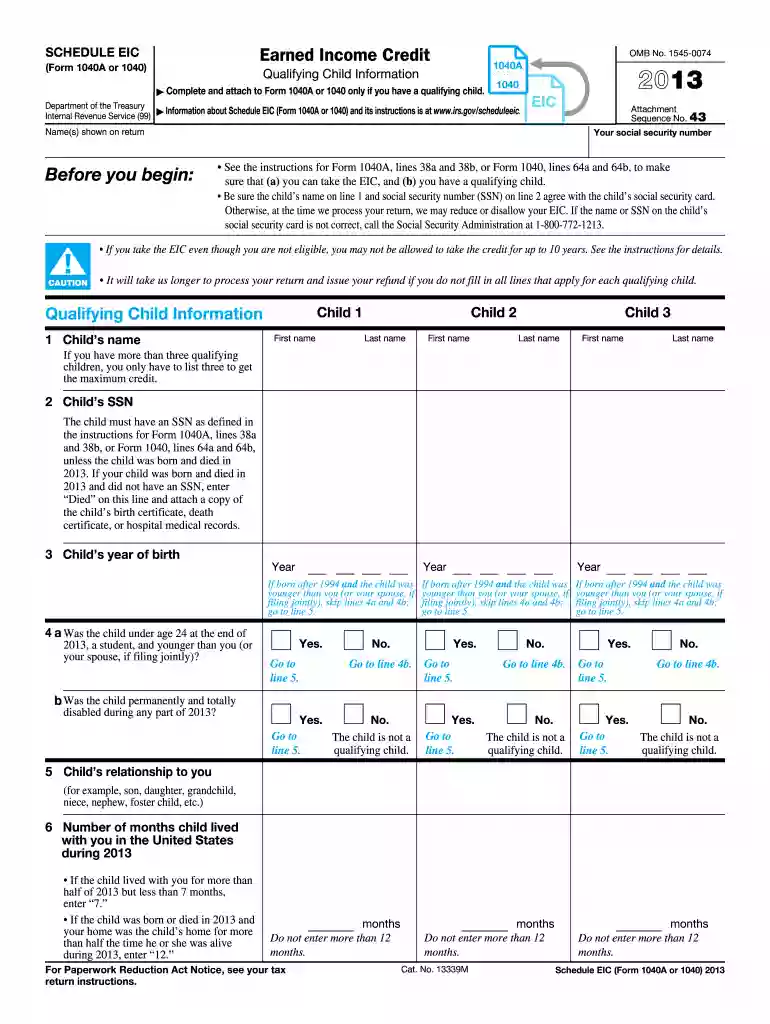
The Earned Income Credit (EIC) Tax Table 2013 form is an essential document used by taxpayers to determine their eligibility and calculate the amount of credit they can claim under the earned income tax credit program. The EIC is designed to benefit low-to-moderate-income workers, particularly those with qualifying children, by reducing the amount of tax owed and potentially resulting in a refund. The 2013 tax table specifically helps to reference past financial records or handle past tax issues.
Review Eligibility Requirements: Start by ensuring you meet the criteria for claiming the EIC. This includes income limits, filing status, and having a valid Social Security number.
Identify Qualifying Children: Determine if you have any qualifying children and note their details including age, relationship, and residence.
Locate Your Income Bracket: Use the form to find your total earned income or adjusted gross income within the table to see the corresponding credit amount.
Subtract Credit from Tax Liability: The amount indicated will be subtracted from your total tax liability, potentially resulting in a refund.
Double-Check Calculations: It is vital to thoroughly review your calculations and ensure all required fields are completed accurately to avoid penalties or delays.
Gather Necessary Documents: Collect all pertinent documents like W-2s, 1099s, and records of any other income.
Complete Tax Return Forms: Fill out the appropriate sections of Form 1040, where the EIC is reported, ensuring all income is documented correctly.
Use the Tax Table: Refer to the 2013 tax table to determine your precise credit amount by matching your income with the correct bracket.
Enter Credit on Tax Return: On your tax return, enter the determined credit from the table, ensuring it's placed in the designated field for accuracy.
Finalize and Review Tax Return: Before submission, double-check all numbers and entries for accuracy to prevent errors that could delay processing.
The legal application of the Earned Income Tax Credit involves adhering to IRS requirements regarding income reporting and dependent claims. Misrepresentation can lead to audits, penalties, and the potential disqualification from future claims. It is imperative to provide accurate and truthful information on all aspects of the form to comply with federal tax laws.
This form is generally utilized by taxpayers who were eligible for the earned income credit in 2013. This includes low-to-moderate-income workers, particularly those with qualifying dependents. Individuals who are required to amend a 2013 tax return or resolve past tax disputes may also use the form.


Income Brackets: The core component is the bracketed table showing various income ranges with corresponding credit amounts.
Qualifying Child Details: This section outlines specifics on the definition and criteria for qualifying children.
Adjusted Gross Income (AGI) Limits: These limits specify the threshold at which the credit phases out completely.
Filing Status Categories: Different sections for single, married filing jointly, heads of household, and others, each affecting credit computation.
An example scenario would describe a single parent with two children and an annual income of $25,000. According to the tax table, this individual may qualify for a credit of up to $5,372, depending on the exact income and filing status. The process involves matching income against table entries to determine precise eligibility and credit amount.
Failure to comply with EIC regulations can result in penalties such as repayment of the received credit with interest, fines, and potential denial of the EIC claim for up to 10 years. Penalties highlight the significance of comprehensive documentation and correct claims.
Taxpayers can submit the earned income credit calculations using either digital platforms like the IRS's free file options or through certified mail. Online submission offers faster processing, while paper submissions may be preferable for those maintaining detailed physical records.
We've got more versions of the earned income credit 2022 table form. Select the right earned income credit 2022 table version from the list and start editing it straight away!
| Versions | Form popularity | Fillable & printable |
|---|---|---|
| 2025 | 4.8 Satisfied (51 Votes) | |
| 2024 | 4.7 Satisfied (48 Votes) | |
| 2023 | 4.2 Satisfied (20 Votes) | |
| 2022 | 4.2 Satisfied (32 Votes) | |
| 2021 | 4.8 Satisfied (50 Votes) | |
| 2020 | 4.1 Satisfied (43 Votes) | |
| 2019 | 4.3 Satisfied (201 Votes) | |
| 2018 | 4.3 Satisfied (276 Votes) | |
| 2017 | 4.1 Satisfied (79 Votes) | |
| 2016 | 4.3 Satisfied (95 Votes) | |
| 2015 | 4 Satisfied (22 Votes) | |
| 2014 | 4 Satisfied (36 Votes) | |
| 2013 | 4.3 Satisfied (44 Votes) | |
| 2012 | 4 Satisfied (33 Votes) | |
| 2011 | 4 Satisfied (58 Votes) |
At DocHub, your data security is our priority. We follow HIPAA, SOC2, GDPR, and other standards, so you can work on your documents with confidence.
Nov 20, 2013 Use this worksheet to figure investment income for the earned income credit when you file Form 1040. Interest and Dividends. 1. Enter any amountRead more
May 2, 2017 Earned income credit (EIC) notice (not applicable to. Forms W-2AS, W-2CM, W-2GU, and W-2VI). You must notify employees who have no income taxRead more
When you look up your EIC in the EIC Table, be sure to use the correct column for your filing status and the number of children you have. Reporting advanceRead more


