






Definition and Purpose of the Earned Income Credit Worksheet 2017 Form
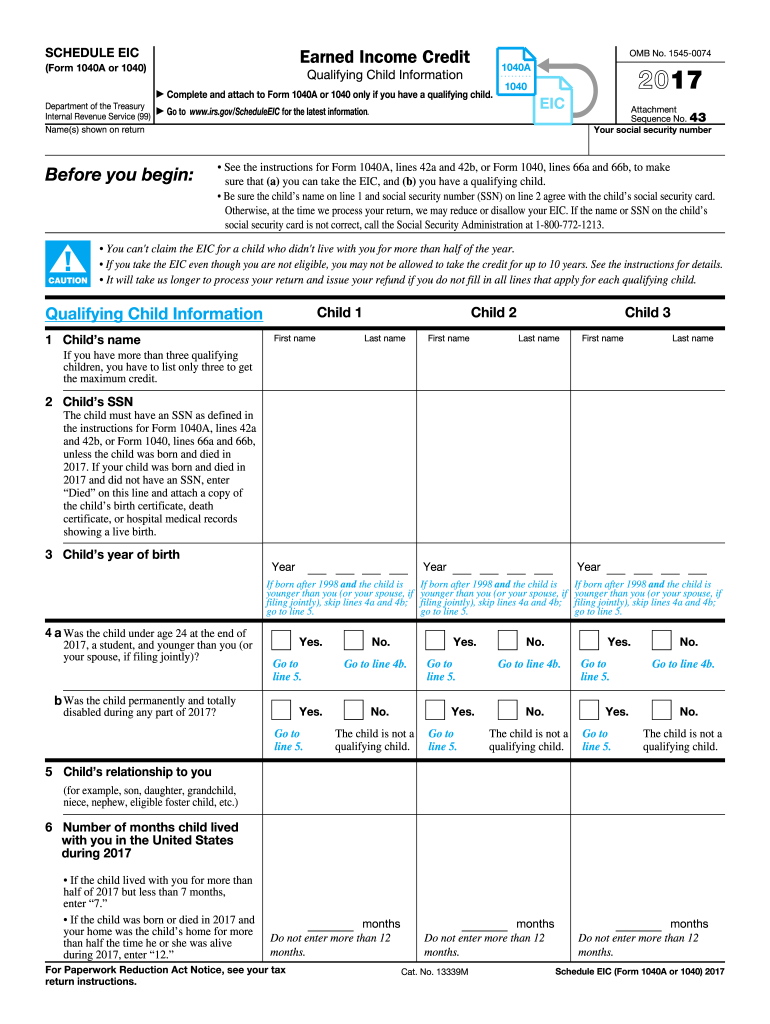
The earned income credit worksheet for 2017 is an essential tool for taxpayers aiming to claim the Earned Income Credit (EIC) on their tax returns, specifically using Form 1040A or 1040. This worksheet assists individuals in calculating the amount of credit they are eligible for based on their income and the number of qualifying children. The EIC is designed to provide financial relief to low-to-moderate income working individuals and families by reducing the amount of tax owed and potentially increasing their refund.
Importance of the Form
Using the worksheet is vital for accurately determining the EIC amount, ensuring compliance with IRS guidelines, and avoiding penalties associated with incorrect claims. Incorrect or incomplete claims can lead to delays, audits, or disallowance of the credit, impacting a taxpayer’s financial situation.
How to Use the Earned Income Credit Worksheet 2017 Form
To use the earned income credit worksheet, taxpayers must follow a series of steps to accurately compute their credit amount. This involves:
-
Gathering Necessary Information:
- Social Security Numbers for all individuals listed.
- Details about earned income, including wages and self-employment earnings.
- Information about any qualifying children, such as age, relationship, and residency requirements.
-
Following the Worksheet Steps:
- Inputting earned income and adjusted gross income (AGI) figures.
- Calculating the number of qualifying children and corresponding credit amount.
- Comparing AGI limits to determine eligibility.
-
Completing IRS Form 1040:
- Transfer the worksheet’s final calculated credit to the relevant section of your tax form.
The worksheet ensures taxpayers include precise financial details to calculate an accurate EIC amount, crucial for filing a correct tax return.
Steps to Complete the Earned Income Credit Worksheet 2017 Form
Completing the earned income credit worksheet involves a meticulous process:
-
Calculate Total Earned Income:
- Combine all wages, salaries, and tips reported on W-2 forms.
- Include any income from self-employment activities.
-
Determine Adjusted Gross Income:
- Consider deductions affecting AGI, such as educator expenses, student loan interest, and IRA contributions.
-
List Qualifying Children:
- Confirm each child's qualification based on IRS definitions: age, relationship, residence, and joint return criteria.
-
Use IRS Charts:
- Refer to the IRS-provided tables to match income levels with the applicable EIC amount.
-
Verify Eligibility:
- Cross-reference with income limitations and other eligibility conditions specific to the filing year.
The completed worksheet should reflect an accurate calculation of the EIC, enabling a smooth reporting process on your tax return.
Important Terms Related to the Earned Income Credit Worksheet 2017 Form
Understanding key terminology is crucial for effectively navigating the worksheet:
- Earned Income: Refers to wages, salaries, tips, and self-employment income.
- Adjusted Gross Income (AGI): The total income minus specific deductions.
- Qualifying Child: A child who meets IRS age, relationship, and residency tests.
- Tax Year: The calendar year for which the taxpayer is reporting income and claiming the credit.
- Filing Status: Determines eligibility based on marital status and income thresholds (e.g., single, married filing jointly).
Familiarity with these terms allows for a clearer comprehension of the form’s requirements and execution.
IRS Guidelines and Eligibility Criteria
The IRS provides precise guidelines governing the eligibility and calculation of the EIC. Key criteria include:
- Income Limits: Vary according to filing status and the number of qualifying children. For the 2017 tax year, income thresholds differ for single versus joint filers.
- Filing Status: Eligible statuses include single, head of household, and married filing jointly. Certain restrictions apply to married filing separately.
- Qualifying Child Standards: A qualifying child must be under 19 (or 24 if a full-time student), related to the claimant, and reside with the taxpayer in the U.S. for more than half the year.
Adherence to these guidelines is central to successfully claiming the EIC without facing legal repercussions.
Examples of Using the Earned Income Credit Worksheet 2017 Form
Practical examples enhance understanding:
-
Example 1: A single parent with two children earns $30,000. By using the worksheet, they find that they qualify for a significant credit that reduces their tax liability.
-
Example 2: A married couple with three children discovers through the worksheet that their combined income disqualifies them from the EIC due to exceeding income thresholds.
These scenarios illustrate how varying incomes, filing statuses, and child qualifications impact EIC eligibility and claim amounts.
Filing Deadlines and Important Dates
Key deadlines associated with the earned income credit worksheet include:
- Tax Filing Deadline: Typically April 15 of the following tax year, although extensions may be available.
- E-File Start Date: IRS e-file typically opens in January, allowing early submissions.
- Amendment Deadlines: Taxpayers have three years from the original filing date to amend returns and claim missed credits.
Observing these deadlines ensures timely filings and maximizes opportunities for potential refunds.
Required Documents for Using the Worksheet
Prior to using the worksheet, taxpayers should collect:
- W-2 Forms: For employer-reported income.
- 1099 Forms: For self-employed or miscellaneous income.
- Social Security Cards: To verify taxpayer and dependent identification.
- Tax Return from Previous Year: Provides context for potential carryovers and auditing.
Having all relevant documents prepared ensures a straightforward completion of the worksheet and correct filing of the tax return.