






Definition and Meaning
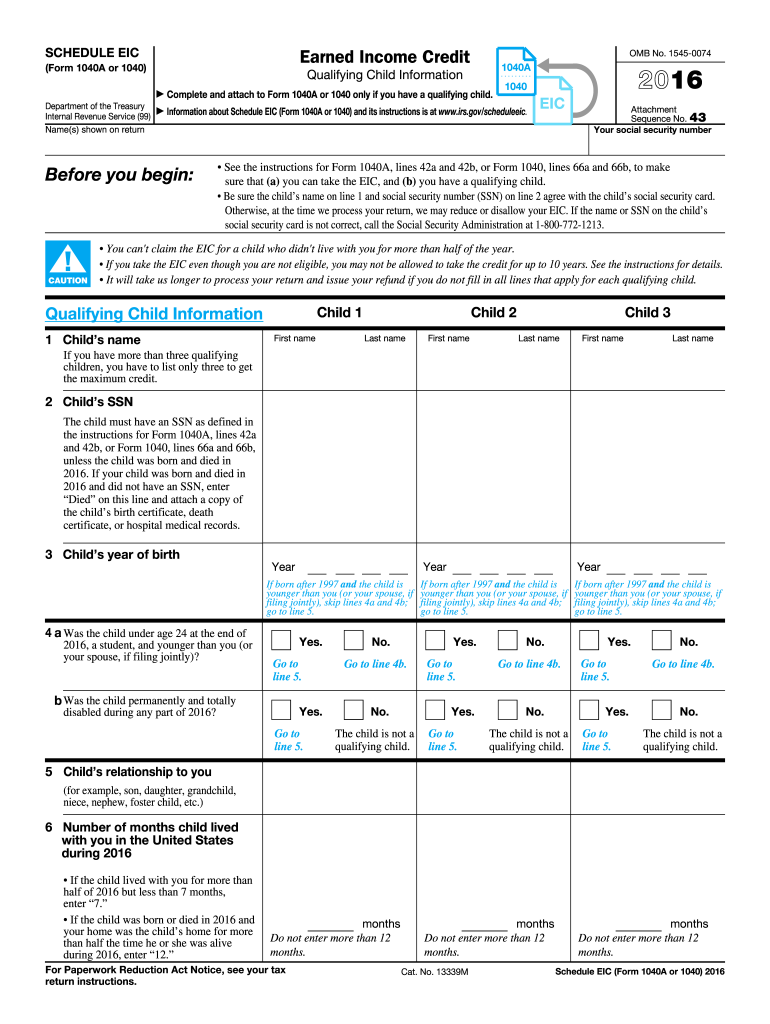
Form EIC 2016 refers to Schedule EIC, which is part of Form 1040 and Form 1040A for the Earned Income Credit (EIC) in the U.S. tax system. This form is instrumental for taxpayers looking to claim the Earned Income Tax Credit, a benefit for working individuals with low to moderate income. The EIC is designed to reduce the amount of tax owed and potentially increase the refund a taxpayer may receive. Understanding the function of this form is crucial for accurate tax filing and maximizing eligible credits.
Eligibility Criteria
Eligibility for the Earned Income Credit via Form EIC 2016 hinges on several factors. Taxpayers must have earned income from employment or self-employment. Additionally, the credit is primarily available to those with qualifying children, though limited benefits are available to those without. Key requirements include U.S. citizenship or residency, a valid social security number, and meeting adjusted gross income limits, which vary according to filing status and number of qualifying children.


Key Elements of Form EIC 2016
The structure of Form EIC 2016 includes sections for filling in personal information such as the taxpayer's name and social security number. It also requires details about each qualifying child, including their name, social security number, and relationship to the taxpayer. The instructions demand precision to ensure correct eligibility and to avoid issues with the IRS. The form must be attached to the main tax return for processing.
Steps to Complete Form EIC 2016
-
Gather Personal Information: Ensure you have all social security numbers and necessary tax documents for yourself and any qualifying children.
-
Fill in Child Information: Enter the qualifying children's details, including names, dates of birth, and social security numbers, ensuring accuracy to avoid IRS rejection.
-
Determine Eligibility: Carefully consult the IRS guidelines to ascertain that all listed children meet the age, residency, and relationship criteria.
-
Attach to Tax Return: Once completed, attach Schedule EIC to your Form 1040 or 1040A during filing.
-
Double-Check for Accuracy: Review all entries for errors to prevent processing delays.
Important Terms Related to Form EIC 2016
Understanding the terminology associated with Form EIC 2016 is vital. Terms such as 'qualifying child' refer to meeting specific age, residency, and family relationship criteria. 'Earned income' includes wages, salaries, tips, and net earnings from self-employment. 'Adjusted gross income' (AGI) is a person's total gross income minus specific deductions. Familiarity with these terms ensures accurate completion and submission of the form.
IRS Guidelines
The IRS provides comprehensive guidelines for completing Form EIC 2016, emphasizing correct and truthful reporting. These guidelines ensure that qualifications are met, and proper documentation accompanies the form. Key recommendations include avoiding common errors related to social security numbers and ensuring all income is reported accurately. The IRS also advises seeking assistance from tax professionals if uncertainties arise.
Filing Deadlines and Important Dates
The typical deadline for filing Form EIC 2016 falls on April 15th, which aligns with the annual federal tax filing deadline. It is essential to stay informed about any extensions or changes to this date. Filing on time ensures access to eligible credits and avoids penalties. For individuals who miss the regular filing deadline, submitting a valid extension can provide additional time to complete the necessary forms.
Penalties for Non-Compliance
Failing to accurately complete or timely file Form EIC 2016 can result in penalties from the IRS, such as fines or the disallowance of the Earned Income Credit. Mistakes like incorrect or missing information can also delay processing, potentially affecting refunds and future credit eligibility. Taxpayers must ensure compliance by strictly following IRS instructions and double-checking the accuracy of the information supplied on all related forms.