






Definition & Purpose of the 1099 Form 2021
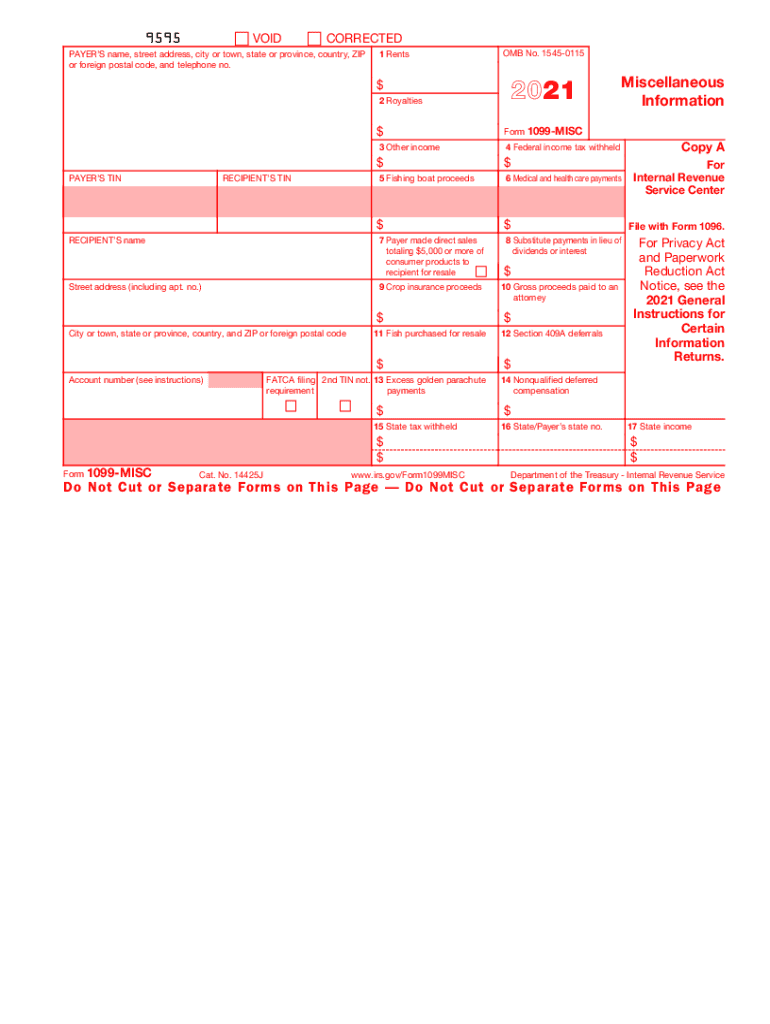
The 1099 form 2021 is a tax form used in the United States to report various types of income that are not covered under the regular W-2 form. It is primarily used to report earnings from sources such as contract work, dividends, interest, and rent payments. Unlike typical employment income reported on a W-2, the 1099 form captures income from freelance work, rental properties, or dividends paid on investments. The IRS requires this form to ensure that all income is reported and taxed accordingly, making it integral for tracking non-employment income.
Key Use Cases
- Freelancers and Independent Contractors: Individuals who receive payments for services rendered outside traditional employment.
- Landlords: Those earning rental income from property leases.
- Investors: Individuals receiving dividends or capital gains from investments.
How to Obtain the 1099 Form 2021
Obtaining a 1099 form can be done through several channels. It is generally issued by the payer, such as a business or individual who paid for services. In cases where you need the form for other income types, it can be requested from the IRS or downloaded from the IRS website.
Steps to Obtain the Form
- From the Payer: Typically, the entity making the payment issues the form.
- Download from the IRS: Available in PDF format for digital or print use.
- Order via Mail: Request printed copies from the IRS to be mailed directly.
Steps to Complete the 1099 Form 2021
Proper completion of the 1099 form ensures compliance with IRS regulations and accurate income reporting. Here's a step-by-step guide to filling out the form:
- Collect Information: Gather details about the payer and the payee, including taxpayer identification numbers.
- Record Income Amounts: List the exact amount of money paid to the independent contractor, investor, or other income recipient.
- Double-Check Tax Details: Ensure that all tax identification numbers are correct to avoid processing delays.
- Signature and Date: Fill in the form's date fields and, if required, provide your signature.
Common Sections to Complete
- Recipient's Information: Full name, address, and taxpayer identification number.
- Income Type and Amount: Identify and record all relevant income types.
Key Elements of the 1099 Form 2021
Understanding the form’s essential components is crucial for accurate completion and compliance.
Primary Components
- Payer's Information: Details of the individual or business issuing payments.
- Recipient Details: Information about the income receiver, like name and TIN.
- Types of Payments: Detailed breakdown of payment types, such as rent, freelance work, or dividends.
- Filing Details: Information required for filing with the IRS and state tax bodies.
IRS Guidelines & Important Dates
The IRS provides detailed guidance on the completion and submission of the 1099 form. Adhering to these guidelines helps avoid penalties and ensure timely filing.
Filing Deadlines
- To Recipients: Forms must be sent to recipients by January 31st.
- To IRS: Electronic submissions are frequently due by March 31st, while paper submissions have a February 28th deadline.
Form Submission Methods
Different methods are available for submitting the 1099 form, catering to both traditional and modern preferences.
Options for Submission
- Electronic Filing: Using IRS-approved e-file systems that simplify submission.
- Mail: Traditional filing by mailing a hard copy of the form to the IRS.
- In-Person: Less common, involves delivering documents directly to an IRS office.
Penalties for Non-Compliance
Not complying with form submission deadlines or guidelines can lead to substantial penalties, making timely and accurate filing critical.
Penalty Details
- Late Filing Penalties: Fees increase the longer the form submission is delayed.
- Incorrect Information: Penalties apply if incorrect taxpayer details are submitted.
State-Specific Rules for the 1099 Form 2021
Various states may have specifics regarding tax form submissions, including additional fields or earlier deadlines. Understanding these state-specific nuances ensures comprehensive compliance.
Considerations for State Compliance
- Unique State Requirements: Some states require additional forms or earlier deadlines.
- Filing with State Authorities: Ensure the 1099 form complies with both state and federal requirements.
Business Types that Benefit Most from the 1099 Form 2021
Not all businesses are affected equally; specific business types benefit significantly from the 1099 form.
Common Beneficiaries
- Freelance Agencies: Organizations hiring independent contractors.
- Investment Firms: Businesses distributing dividends or interest payments.
- Rental Property Management Companies: Firms managing multiple real estate leases.