




01. Edit your 1099 form 2013 fillable online
Type text, add images, blackout confidential details, add comments, highlights and more.

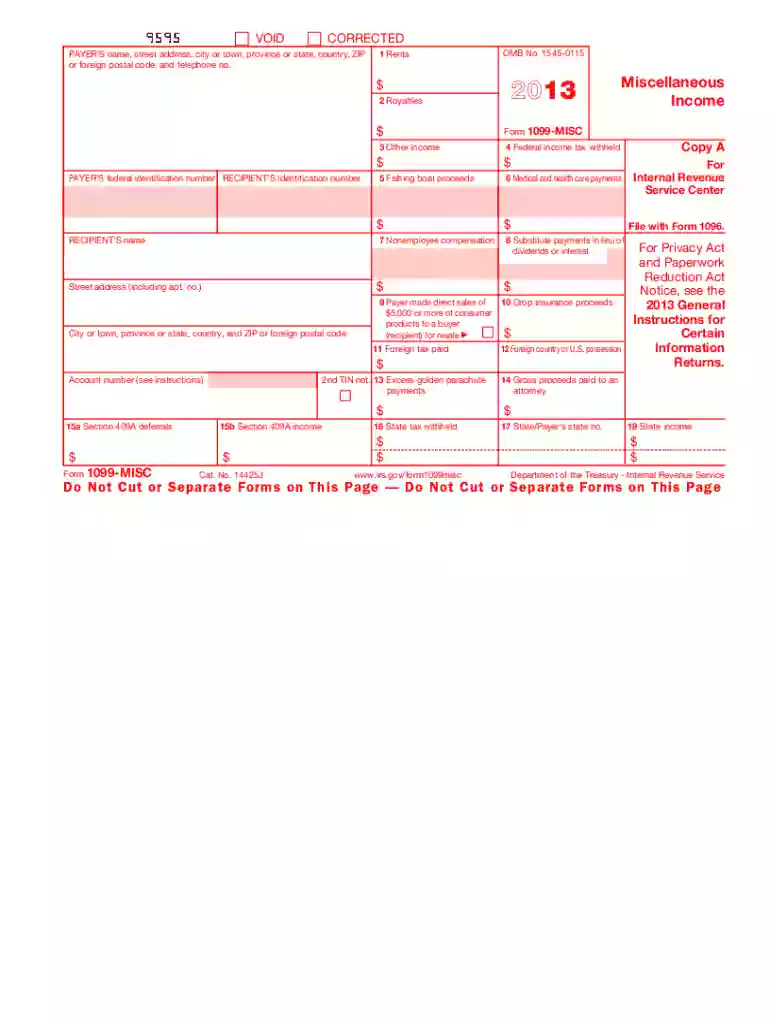
Type text, add images, blackout confidential details, add comments, highlights and more.

Draw your signature, type it, upload its image, or use your mobile device as a signature pad.

Send 1099 misc form 2013 via email, link, or fax. You can also download it, export it or print it out.
The "form 2013 fillable" typically refers to a digital version of a federal or state document, which was created in the year 2013 and can be filled out electronically using PDF software or online platforms like DocHub. This type of form allows users to enter required information directly into designated fields without the need for physical paperwork. It is often used for tax filings, applications, or other official submissions where accuracy and efficiency are necessary. The fillable format ensures that data is clear and legible, reducing errors that might occur with handwritten forms. Users can save, print, or electronically submit the completed form, facilitating a streamlined document workflow.
To utilize a form 2013 fillable, follow these general steps:
Obtaining a form 2013 fillable can be achieved through several methods:
The form comprises several critical elements to gather necessary information:
Follow these organized steps to ensure a properly completed form:
While specific IRS guidelines can vary based on the type of form, general directions typically include:
Understanding the timing of form submission is crucial:
Failing to properly file the form 2013 fillable may result in several consequences:
We've got more versions of the 1099 form 2013 fillable form. Select the right 1099 form 2013 fillable version from the list and start editing it straight away!
| Versions | Form popularity | Fillable & printable |
|---|---|---|
| 2024 | 4.3 Satisfied (49 Votes) | |
| 2022 | 4.9 Satisfied (41 Votes) | |
| 2021 | 4.8 Satisfied (187 Votes) | |
| 2020 | 4.2 Satisfied (31 Votes) | |
| 2019 | 4.4 Satisfied (787 Votes) | |
| 2018 | 4.3 Satisfied (809 Votes) | |
| 2017 | 4.4 Satisfied (1573 Votes) | |
| 2016 | 4.4 Satisfied (963 Votes) | |
| 2015 | 3.9 Satisfied (40 Votes) | |
| 2014 | 3.8 Satisfied (35 Votes) | |
| 2013 | 4 Satisfied (29 Votes) | |
| 2012 | 4 Satisfied (54 Votes) | |
| 2011 | 4.1 Satisfied (22 Votes) | |
| 2010 | 4.4 Satisfied (59 Votes) | |
| 2009 | 4 Satisfied (47 Votes) |
Sure, a typed name is accepted as a valid electronic signature when you create it on your form using a compliant solution like DocHub. Simply upload your 1099 form 2013 to our editor, click Sign in the top tool pane → Create your signature → Type your name in the appropriate tab, and choose how it will appear on your document.
With DocHub, you have several convenient ways to edit your form 1099 misc 2013 online. You can drag and drop the form and edit it straight at the DocHub website or use our browser extension to fill out your form right away. Additionally, you can edit your PDF on your smartphone, as DocHub works with all the accessible mobile platforms.
At DocHub, your data security is our priority. We follow HIPAA, SOC2, GDPR, and other standards, so you can work on your documents with confidence.




If you received a scholarship or fellowship grant or tax-exempt interest income, such as on municipal bonds, see the instructions before filling in the form.Read more
Request Form available on Inside FDA. Submit the form via the preferred method of electronic mail to ORA Recall OE and indicate RES Account Request on theRead more
When preparing your 2013 tax return, you may complete the forms as if these contributions were made on. December 31, 2013, instead of in 2014. To deduct yourRead more


