




Definition and Purpose of Form 8
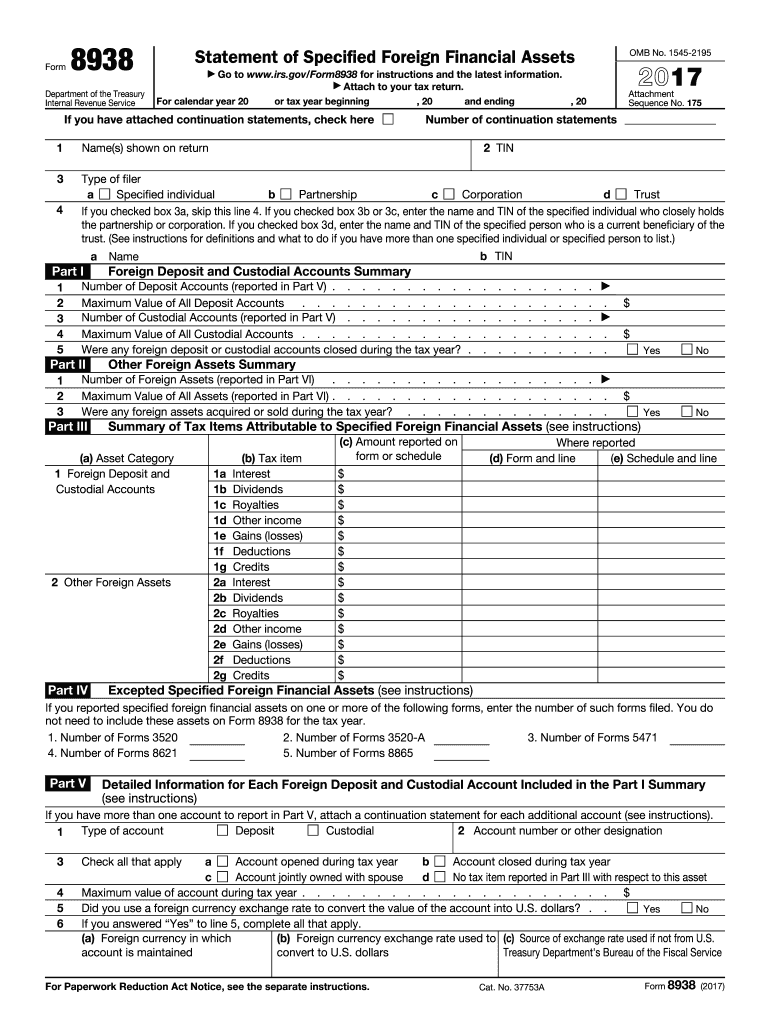
Form 8, commonly referred to as the "Statement of Specified Foreign Financial Assets," is a tax document utilized by specified individuals, partnerships, corporations, and trusts in the United States. Its core function is to report specified foreign financial assets to the Internal Revenue Service (IRS). This requirement aims to ensure transparency and proper taxation of income derived from foreign assets. Financial assets that typically need to be reported include foreign deposit and custodial accounts, as well as other foreign financial instruments.
How to Obtain Form 8
Form 8 is accessible through various channels. Taxpayers can download the form directly from the IRS website, where it is available in PDF format. Additionally, tax preparation software often includes Form 8938 within its suite of tools, simplifying the integration process for users. Those who prefer physical copies can request the form by contacting the IRS, although this may take longer due to mailing times.
Steps to Complete Form 8
- Gather Required Information: Collect details on all foreign financial assets, including account numbers, institutions, and the maximum value during the tax year.
- Complete Part I - Foreign Deposit Accounts: Enter detailed information about any foreign deposit accounts, such as bank names and addresses.
- Fill Out Part II - Foreign Custodial Accounts: Provide relevant data about custodial accounts, ensuring accuracy to avoid discrepancies.
- List Other Foreign Assets in Part III: Include information about other foreign financial instruments or assets not covered in prior sections.
- Calculate Asset Values: Determine the highest value of your specified foreign financial assets during the tax year, using annual statements or equivalent documentation.
- Review and Sign: Ensure all information is accurate before signing the form and attaching it to your tax return.
IRS Guidelines for Form 8
The IRS has set specific guidelines to assist taxpayers in accurately completing Form 8. It is crucial for individuals to report all specified foreign financial assets if the aggregate value exceeds the reporting threshold, which varies based on filing status and residency. Detailed instructions and examples can be found on the IRS website to guide users through potential complexities or unique financial scenarios that may influence how the form is filled out.
Filing Deadlines and Important Dates
Form 8 must be filed along with the taxpayer's annual income tax return by the standard deadline, generally April 15 of the following year. Extensions are available, aligning with any granted for filing income tax returns, typically to October 15. Staying aware of these deadlines is vital to avoid penalties.
Penalties for Non-Compliance
Failure to file Form 8, or filing it incorrectly, can lead to significant penalties. The IRS imposes a standard penalty of $10,000 for non-compliance. Continued failure to file after IRS notification can result in an additional penalty of up to $50,000. Moreover, underreporting can also lead to additional scrutiny and surcharges, emphasizing the importance of thorough and accurate completion.
Eligibility Criteria for Filing
To determine eligibility for filing Form 8, one must evaluate both residency and the value of foreign assets. U.S. citizens, resident aliens, and certain non-resident aliens with significant foreign financial assets that exceed stipulated thresholds are obligated to file. These thresholds vary significantly based on the individual's filing status and physical residence.


Required Documents for Submission
When preparing to complete Form 8, having the necessary documentation is paramount. This includes year-end account statements, foreign financial institution reports, and any contracts related to foreign-held properties or investments. Ensuring these documents are complete and accessible during the filing process can facilitate accurate reporting and compliance with IRS requirements.