




Definition and Meaning of Form 8938
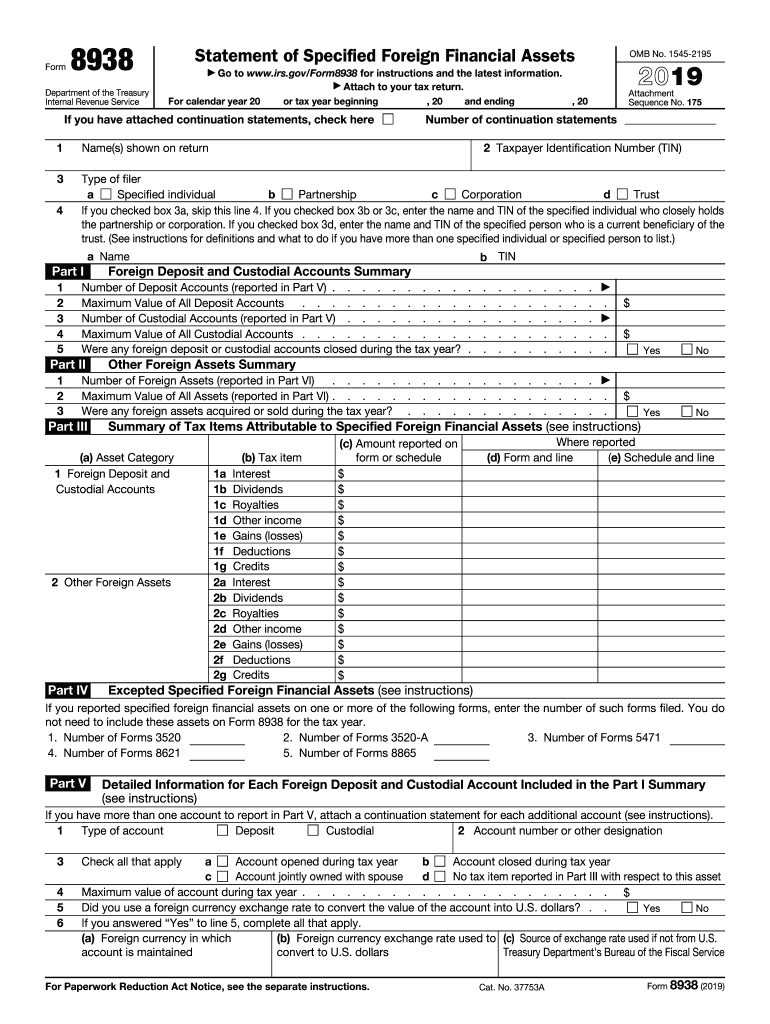
Form 8938, titled "Statement of Specified Foreign Financial Assets," is a crucial document used by U.S. taxpayers to report their specified foreign financial assets. Mandated by the Internal Revenue Service (IRS), it aims to combat tax evasion by U.S. citizens who hold foreign financial interests. These financial assets can include bank accounts, foreign stocks, and partnership interests, among others. Taxpayers must accurately disclose the maximum values of these assets on Form 8938, ensuring transparency with the IRS. This form is part of the U.S. government's efforts to implement the Foreign Account Tax Compliance Act (FATCA), which enhances tax compliance.
Steps to Complete Form 8938
-
Gather Required Information: Start by collecting detailed information on all specified foreign financial assets. This includes account numbers, names and addresses of financial institutions, and the maximum value of each asset during the tax year.
-
Fill Out Personal and Identification Sections: Complete the taxpayer identification section with your name, social security number, and relevant tax year details.
-
List Foreign Financial Assets: Specify each foreign financial asset in detail. Use separate sections for different types of assets, such as deposit accounts, custodial accounts, and securities.
-
Valuation of Assets: Accurately calculate and report the maximum fair market value of each asset in U.S. dollars. Use the official exchange rate at the year’s end for currency conversions.
-
Review and Sign: Double-check all entries for accuracy, sign the form, and attach it to your annual tax return.
-
Submit with Tax Return: Ensure Form 8938 is submitted alongside your tax return, either electronically or through mail, depending on your filing preference.
IRS Guidelines
The IRS has established specific guidelines for completing Form 8938, emphasizing full compliance to avoid penalties. Taxpayers must ensure all information is precise and matches their records. The IRS recommends maintaining thorough documentation of all specified assets and their valuations. Moreover, compliance extends beyond mere submission; taxpayers need to update any changes in their foreign assets annually. The IRS also provides guidance materials and webinars for taxpayers to understand FATCA requirements and the proper filing of Form 8938.
Who Uses Form 8938
U.S. Taxpayers with Foreign Assets
Individuals, including U.S. citizens, resident aliens, and certain nonresident aliens, who possess foreign financial assets above a certain threshold, are required to file Form 8938.
Business Entities
Certain business entities such as partnerships, corporations, and trusts that meet the reporting thresholds must also file this form, detailing their foreign financial assets.
Important Terms Related to Form 8938
- Specified Foreign Financial Assets: Financial accounts maintained by a foreign financial institution, plus other foreign investment assets.
- FATCA: The Foreign Account Tax Compliance Act, which requires individuals and business entities to report foreign financial accounts.
- Fair Market Value: The price that the assets would sell for on the open market, which must be converted into U.S. dollars.
Penalties for Non-Compliance
Failing to file Form 8938 or filing inaccurately can lead to severe penalties. The IRS imposes a penalty starting at $10,000 for failure to disclose and can increase this by up to $50,000 for continued non-compliance. Fraudulent reporting may lead to even stricter penalties and can include criminal charges. Therefore, it is crucial for taxpayers to understand their obligations and comply with reporting requirements to avoid these significant repercussions.
Filing Deadlines and Important Dates
Form 8938 must be filed by the same due date as your annual tax return, usually April 15. Extensions may apply if you have filed for an extension on your tax return, pushing the deadline to October 15. It's essential to keep these deadlines in mind to ensure timely compliance and avoid penalties related to late filing.
Form Submission Methods
U.S. taxpayers can submit Form 8938 along with their federal tax return through electronic filing if filing electronically, or they may include it in the package if sending their return by mail. Certain software programs, like TurboTax and QuickBooks, support the completion and submission of Form 8938, facilitating accurate reporting. If submitted by mail, ensure it is sent with adequate time for delivery before the deadline.