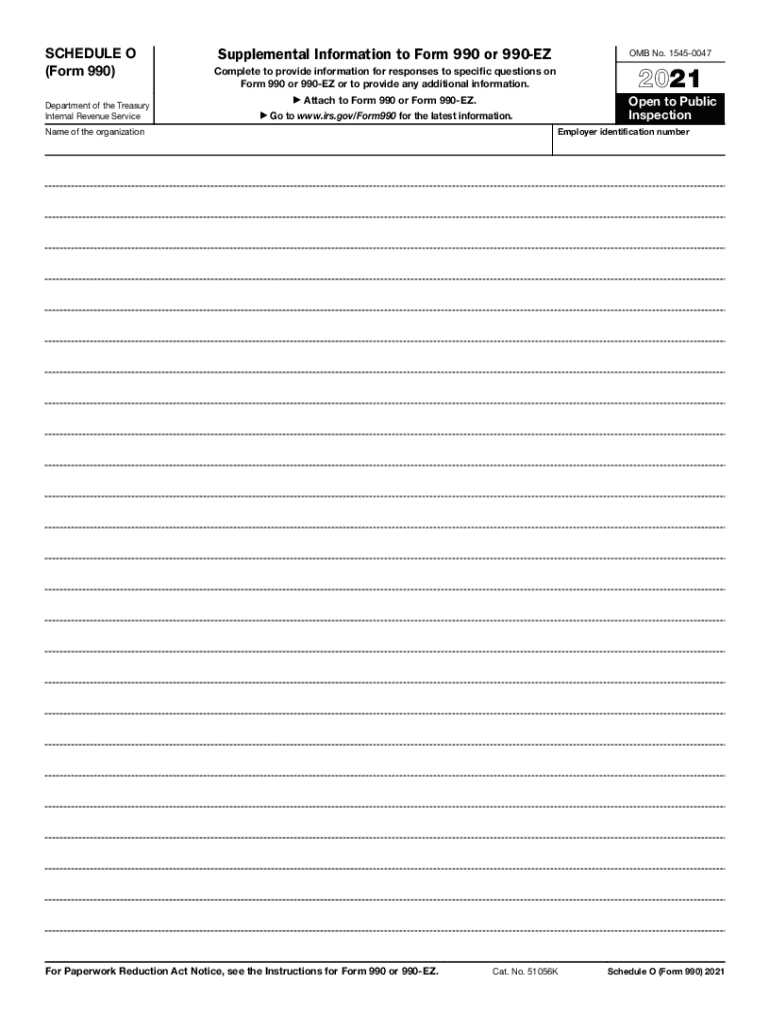







Definition and Meaning
An "IRS Form Schedule" refers to a supplementary schedule that taxpayers attach to their main tax form to provide additional information or computations. The IRS requires these schedules for various reasons, such as detailing income, deductions, or credits that cannot be reported directly on the main form. For example, Schedule A is used for itemized deductions, while Schedule C is for reporting income or loss from a business that you operated or a profession you practiced as a sole proprietor. Understanding each schedule's specific purpose is crucial to ensure accurate tax reporting and compliance.
Steps to Complete the IRS Form Schedule
- Gather Required Documents: Collect all necessary financial documents that pertain to the information requested by the schedule.
- Identify Relevant Schedules: Based on your income sources, deductions, and credits, determine which schedules apply to your situation.
- Fill Out Identifying Information: Include basic information, such as your name and taxpayer identification number, at the top of each schedule.
- Complete Each Schedule: Follow the instructions to fill in each section of the schedule accurately. Pay attention to specific lines that may require detailed calculations.
- Attach to Main Tax Return: Once completed, attach each schedule to your primary tax form, such as the Form 1040, before submission.
- Review for Accuracy: Double-check each entry to ensure correctness, which can prevent delays or issues with your tax return processing.
How to Obtain the IRS Form Schedule
Taxpayers can obtain IRS form schedules through a variety of means, ensuring accessibility based on personal preference and convenience. Here are ways to acquire them:
- IRS Website: The most direct method is to download forms from the official IRS website. The site provides schedules in PDF format, which can be filled out electronically or printed.
- Tax Preparation Software: Software products like TurboTax or H&R Block include schedules as part of their offerings, allowing users to complete and attach them digitally.
- Local IRS Offices: For those preferring paper forms, you can visit a local IRS office to pick up physical copies.
- Mail Order: Request schedules by calling the IRS directly, which can then be mailed to your home address.
Important Terms Related to IRS Form Schedule
Understanding specific terminology is essential for accurately completing IRS form schedules. Key terms include:
- Deductions: Expenses subtracted from gross income to determine taxable income, detailed in schedules like Schedule A for itemized deductions.
- Credits: Dollar-for-dollar reductions in tax liability that may require a schedule, like the Earned Income Credit Schedule.
- Adjusted Gross Income (AGI): A figure that sums all taxable income minus specific adjustments and is used to determine eligibility for some deductions and credits.
- Self-Employment Tax: A tax consisting of Social Security and Medicare taxes for individuals who work for themselves, often calculated using Schedule SE.
IRS Guidelines
The IRS provides guidelines to ensure taxpayers correctly complete and attach form schedules. These guidelines detail who must file specific schedules, how to perform required calculations, and they include definitions for unfamiliar terms. The IRS also provides examples and scenarios that illustrate typical use cases for each schedule, clarifying common points of confusion. It is crucial to consult these guidelines to ensure accurate and compliant form submission.
Filing Deadlines / Important Dates
Each form schedule adheres to the main tax form's filing deadline, typically April 15 for individual taxpayers, unless it falls on a weekend or holiday, pushing it to the next business day. Missed deadlines can result in penalties, so timely submission is important. Extensions may be requested using Form 4868, giving taxpayers until October 15, but this extends only the filing date, not the payment of any taxes owed.
Penalties for Non-Compliance
Failure to correctly file IRS form schedules or omitting them altogether can result in penalties, additional interest, or an audit. Specific penalties may include:
- Failure-to-File Penalty: A percentage of unpaid taxes accrued monthly, up to a maximum.
- Underpayment Interest: Interest on unpaid taxes relating to non-reported income.
- Accuracy-Related Penalty: Imposed for significant underreporting or negligence in preparing tax returns.
Taxpayer Scenarios
Different taxpayer scenarios dictate the use of specific schedules. For instance:
- Self-Employed Individuals: Use Schedule C to report business income and expenses.
- Retired Taxpayers: May require Schedule B for reporting interest and dividend income.
- Landlords: Use Schedule E to report rental income and expenditures.
These scenarios illustrate the diverse applicability of schedules based on the taxpayer's life circumstances and financial activities.