




Definition & Meaning
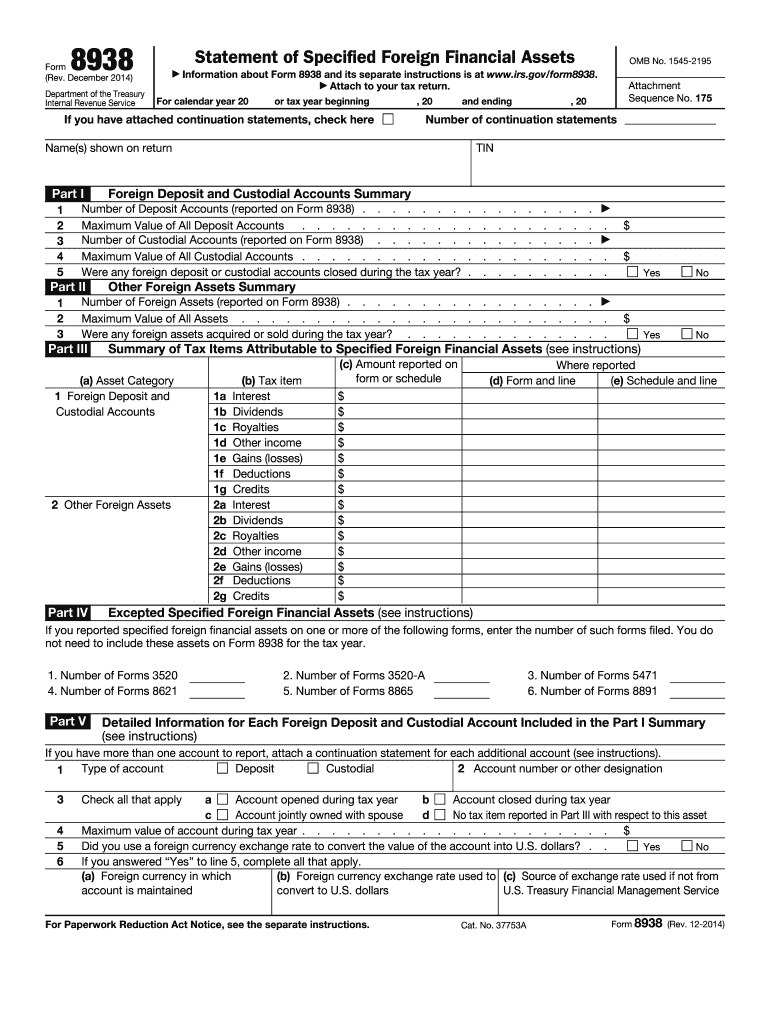
Form 8938, also known as "Statement of Specified Foreign Financial Assets," is a document used by U.S. taxpayers to report their foreign financial assets to the IRS. The form is required for individuals with substantial foreign investments, ensuring transparency and compliance with fiscal regulations. It captures details about various foreign assets, including bank accounts and financial instruments, urging taxpayers to declare these assets to avoid potential legal ramifications.
Key Components of Form 8938
- Foreign Deposit Accounts: Checking, savings, and any similar financial accounts held overseas.
- Custodial Accounts: Accounts maintained with a foreign financial institution acting as custodian.
- Other Financial Assets: Interest in a foreign entity, financial instruments held for investment purposes, or contracts or investments issued by non-U.S. persons.
How to Obtain the 2014 Form 8938
Form 8938 can be acquired via the official IRS website, where the form is available for download as a PDF. This accessibility ensures taxpayers can easily prepare for yearly tax submissions. For those preferring alternatives, various tax software programs like TurboTax and QuickBooks integrate the form, simplifying the tax-filing process.
Accessing the Form
- Via IRS Website: Download directly from the IRS in PDF format to print or fill electronically.
- Through Tax Software: Many platforms include it in their package—ideal for digital submission.
- Tax Professional Assistance: Obtain via a financial advisor or tax preparer for guided support.
Steps to Complete the 2014 Form 8938
Properly filling out Form 8938 requires attention to detail and understanding of required information. Below is a step-by-step guide:
- Gather Necessary Documents: Collect records of all foreign financial accounts, including account numbers and financial statements.
- Complete Part I: Provide detailed information about foreign deposit and custodial accounts, including the maximum value during the tax year.
- Fill Part II: Document other foreign financial assets, such as partnership interests or stock holdings in foreign corporations.
- Complete Part III: Report income generated from these foreign assets.
- Review and Submit: Double-check all entries for accuracy. Submit the form with your federal tax return.
Key Taxpayer Information
- Tax Year: Ensure the provided financial information corresponds to the correct tax year—2014 in this case.
- Signatures: Valid signature required before submission to the IRS.
Who Typically Uses the 2014 Form 8938
Form 8938 generally applies to specific categories of taxpayers with considerable foreign investments. Identifying if you must use this form involves assessing whether your financial situation meets the IRS's threshold for specified foreign assets.


Eligible Individuals
- U.S. Citizens and Residents: Required if foreign assets exceed reporting thresholds.
- Married Couples Filing Jointly: Thresholds differ, often higher than those for single filers.
- Qualified Entities: Certain domestic corporations and partnerships may also need to file if involved with specified foreign assets.
Legal Use of the 2014 Form 8938
Form 8938 serves as a compliance tool under the U.S. Foreign Account Tax Compliance Act (FATCA), ensuring U.S. taxpayers report their foreign financial assets. Fulfilling this legal requirement helps the U.S. government track offshore assets and unreported income.
Consequences of Non-Compliance
- Hefty Penalties: Failing to file can result in substantial fines—up to $10,000 per form.
- Criminal Charges: In extreme non-disclosure cases, potential for criminal prosecution.
IRS Guidelines
According to IRS guidelines, all taxpayers meeting specific conditions must file Form 8938. The form is critical for any taxpayer owning foreign assets exceeding the IRS-specified threshold, i.e., $50,000 for single filers living in the U.S.
Filing and Reporting Thresholds
- Single Filers: Over $50,000 on the last day of the tax year or $75,000 at any time during the year.
- Married Filing Jointly: Thresholds are higher, reflecting combined income and assets.
Required Documents
Completing Form 8938 requires precise documentation to ensure accuracy. Common required documents include:
- Bank Statements: Detailing the maximum account balance.
- Investment Account Summaries: For any stocks, bonds, or interests held overseas.
- Income Documentation: All income generated from foreign assets.
Suggested Organizational Tips
- Digital and Paper Copies: Maintain both for thorough records.
- Organized Filing: Sort documents by type and tax year for easy access.
Penalties for Non-Compliance
Failing to submit Form 8938 when required can result in severe consequences. It's imperative to adhere strictly to IRS deadlines and requirements to avoid such penalties.
Potential Penalties
- Fine per Failure: Initial fines can reach $10,000, with additional fines if issues aren't resolved promptly.
- Fraud Penalties: If intentional fraud is involved, penalties can escalate up to $50,000.
- Criminal Consequences: In certain egregious instances, facing legal actions, including possible imprisonment.
Taxpayer Scenarios
Understanding various scenarios under which Form 8938 filing is essential can aid taxpayers significantly. Examples include:

Common Scenarios
- New Foreign Investors: Individuals starting to invest abroad must initiate compliance rigorously.
- Inherited Overseas Assets: Must report even if assets were acquired through inheritance.
- Dual Citizenship: U.S. citizens living abroad with significant foreign bank holdings.
Considering these scenarios helps anticipate obligations, ensuring full compliance with IRS regulations and preventing unnecessary penalties.