
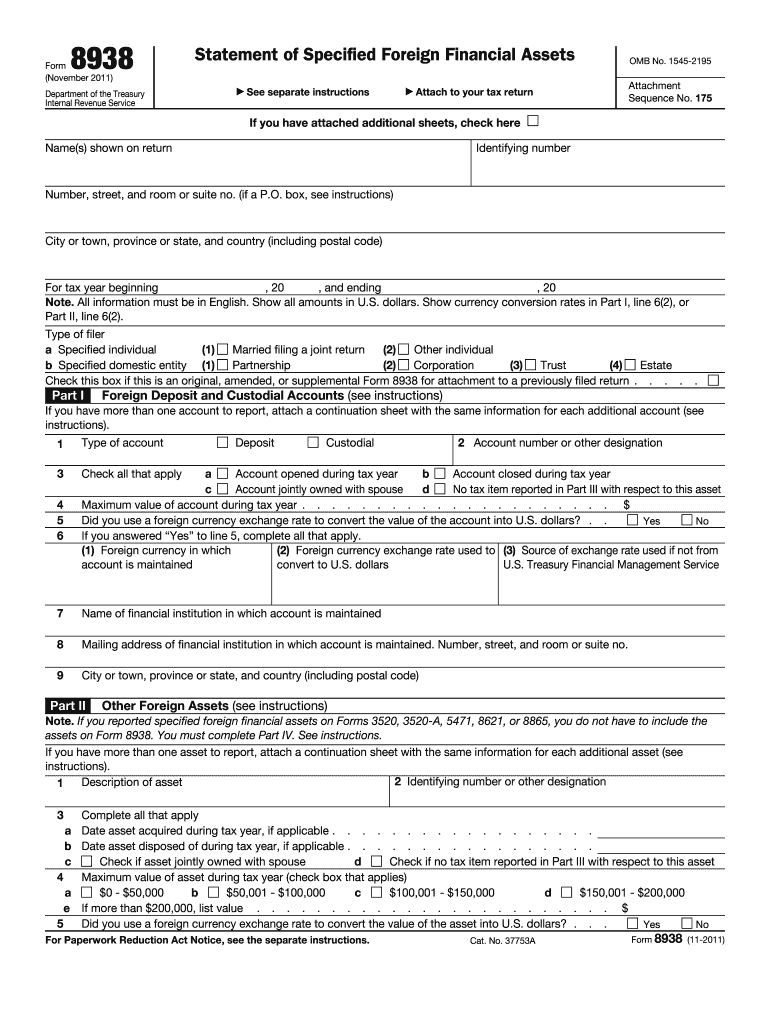







Definition & Purpose of IRS Form 8938
IRS Form 8938, commonly known as the "2 form," is designed to report specified foreign financial assets. This form is mandated by the Internal Revenue Service (IRS) as part of tax compliance efforts to ensure transparency regarding foreign financial interests. The form's primary function is to help prevent tax evasion by U.S. taxpayers with overseas financial assets. It is essential for individuals who hold significant foreign assets to comply, as failing to report can result in substantial penalties.
How to Use the 2 Form
Using the form involves detailing all specified foreign financial assets, which include various types of investments and holdings in foreign bank accounts or securities. The process generally involves listing each asset, its type, the value, and any related income. The form requires specifics like the asset name, identifying number, and the financial institution that holds the asset. Completing this form accurately ensures compliance with U.S. tax laws and helps avoid potential legal issues.
How to Obtain the 2 Form
The 2 form is readily available for download on the official IRS website. Taxpayers can print the form and fill it out manually or opt for digital solutions that allow electronic completion. Software programs like TurboTax and QuickBooks often provide digital access to the form as part of their tax filing services. Additionally, the form can be requested via phone through the IRS's official contact centers for those preferring paper formats.
Steps to Complete the 2 Form
- Gather Financial Information: Collect all details of your foreign financial assets, including account numbers and statements.
- Identify Specified Assets: Determine which assets qualify as "specified foreign financial assets."
- Calculate Asset Values: Calculate the highest value of each asset during the tax year.
- Fill in Personal Information: Provide your name, Social Security Number, and contact details.
- Report Financial Assets: Enter the required information about each asset, including its value and financial institution details.
- Complete Associated Tax Items: Ensure corresponding tax items are completed, reflecting any associated income.
- Review and Submit: Carefully review the form for accuracy before submitting it with your annual tax return.
Key Elements of the 2 Form
- Part I - Reporting International Accounts: Specifies accounts held at foreign financial institutions.
- Part II - Reporting Other Foreign Assets: Includes other financial assets like stocks, bonds, and investment interests.
- Asset Valuation: Requires the reporting of each asset’s maximum value during the tax year.
- Income Reporting: Details any income generated from these foreign assets during the tax year.
Who Typically Uses the 2 Form
This form is predominantly used by U.S. taxpayers who have significant foreign financial assets. Typical users include expatriates, dual citizens, and those receiving foreign income. Individuals with trust interests, foreign partnership interests, and similar investments must also file this form if their total foreign financial assets exceed certain thresholds set by the IRS. This form is an essential tool for ensuring their compliance with U.S. tax laws.


Legal Use and Compliance
Filing IRS Form 8938 is a legal requirement for eligible U.S. taxpayers. The form was introduced as part of the Foreign Account Tax Compliance Act (FATCA) to combat tax evasion through foreign earnings. Compliance with this form not only ensures adherence to tax regulations but also helps avoid severe financial penalties. Inaccurate reporting, underreporting, or failing to file can lead to criminal penalties and additional IRS scrutiny.
Penalties for Non-Compliance with Form 8938
Failure to file the 2 form can incur steep penalties, starting at $10,000 for non-compliance. Continued failure after IRS notification can result in additional penalties of up to $50,000. Accuracy-related penalties may also apply if foreign assets are underreported. These penalties underscore the importance of precise and timely filing of Form 8938 to maintain good standing with the IRS and avoid significant financial consequences.


