




01. Edit your burial permission letter online
Type text, add images, blackout confidential details, add comments, highlights and more.

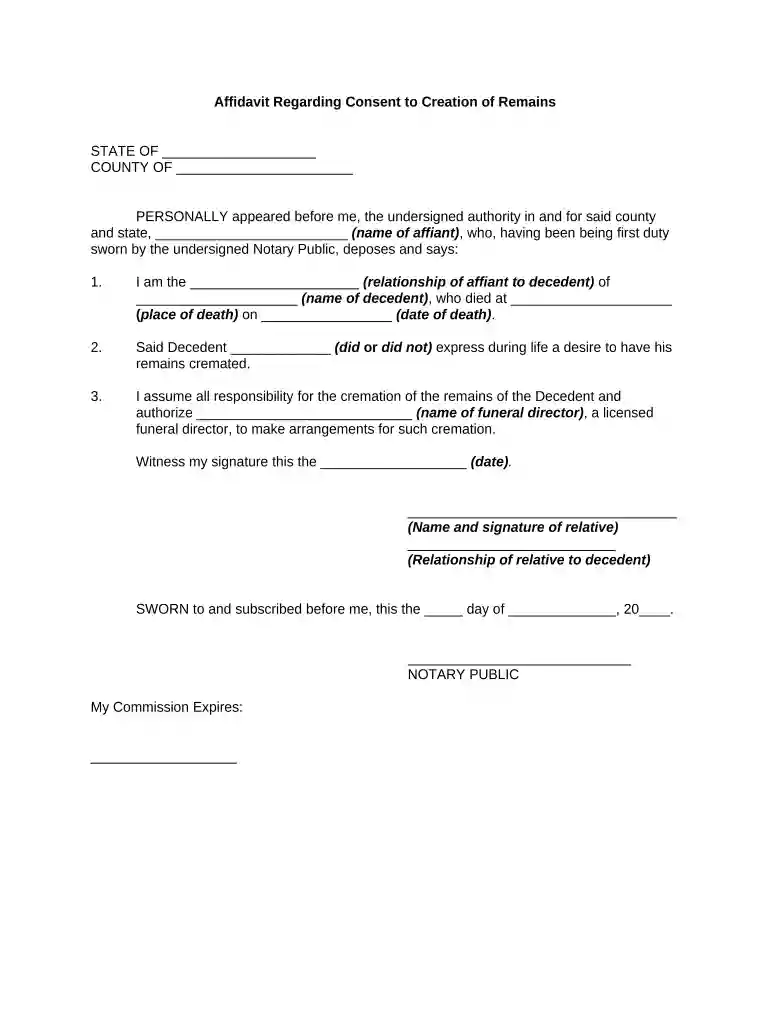
Type text, add images, blackout confidential details, add comments, highlights and more.

Draw your signature, type it, upload its image, or use your mobile device as a signature pad.

Send authorization letter for burial assistance via email, link, or fax. You can also download it, export it or print it out.
A sample letter of consent for cremation is a formal document expressing an individual's agreement to the cremation of a deceased person. This letter typically includes essential information such as the affiant's relationship to the deceased, their confirmation of the decedent's wishes regarding cremation, and authorization for a licensed funeral director to proceed with the arrangements. It serves as an important legal document that outlines the consent process, ensuring adherence to state regulations governing cremation practices.
In the context of the bereaved, this letter not only conveys legal permission for cremation but also addresses the emotional aspects involved. It helps family members confirm their understanding and agreement about the deceased's final wishes, offering a structured way to handle a difficult situation. Proper completion of this document is crucial, as inaccuracies or omissions could lead to delays in the cremation process or potentially violate legal requirements.
Completing a sample letter of consent for cremation involves several essential steps to ensure that it fulfills all necessary legal criteria:
Gather Necessary Information: Collect details about the deceased, such as their full name, date of birth, and Social Security number. Also, obtain information about yourself, including your full name, contact details, and relationship to the deceased.
Confirm the Deceased's Wishes: Before drafting the letter, it's vital to review any prior communications or documents that indicate whether the deceased expressed a desire for cremation. This may include a will, advance directive, or discussions with family members.
Draft the Letter: Begin by addressing the letter to the funeral director or crematory service. Clearly state your relationship to the deceased and confirm your authority to make decisions regarding their remains. Outline that you consent to cremation and indicate your understanding of the procedure.
Include Signature and Notary Information: After completing the letter, sign it to validate your consent. In some cases, a notary public may need to witness your signature to provide an additional layer of legal validation. Check the requirements in your state regarding notarization.
Deliver the Letter: Finally, provide the signed letter to the funeral home or crematory service. It may be beneficial to keep a copy for your records.
This structured approach ensures that the letter meets all necessary requirements, streamlining the cremation process during what can be a challenging time for family members.
A comprehensive sample letter of consent for cremation should contain specific elements to ensure clarity and legal compliance. The following key elements should be included:
Affiant's Information: Start with your full name, address, and contact number to establish the identity of the person giving consent.
Deceased's Information: Clearly mention the full name, date of birth, and Social Security number of the deceased. This information helps identify the individual unequivocally.
Relationship to the Deceased: Specify your relationship to the deceased, such as spouse, child, or sibling. This establishes your legal authority to give consent.
Confirmation of Wishes: State that you confirm the deceased's wishes regarding cremation. If the deceased expressed these wishes through a will or other documents, it is beneficial to reference them.
Authorization Statement: Include a statement authorizing the funeral director or crematory service to conduct the cremation. This provides explicit permission for the service to proceed.
Signature and Date: Conclude the letter with your signature and the date of signing. If notarization is required, leave space for the notary's signature and seal.
Having these elements in place ensures that the sample letter of consent for cremation serves its intended purpose, minimizing the risk of misunderstandings and delays.
The sample letter of consent for cremation is primarily utilized by individuals who are responsible for making arrangements following the death of a loved one. Key groups that typically use this document include:
Family Members: Spouses, children, siblings, or other close relatives often act as decision-makers when it comes to the final disposition of a deceased person’s remains. They ensure the wishes of the deceased are honored.
Legal Representatives: In situations where the deceased had appointed a power of attorney or similar authority, these individuals may use the consent letter to facilitate cremation arrangements.
Funeral Service Providers: Funeral directors and crematory service personnel may require this document to validate consent before proceeding with cremation. It serves as part of their legal compliance and ethical responsibilities.
Estate Executors: Those designated as executors of the deceased's estate may be called upon to manage various final arrangements, including securing permission for cremation.
Understanding who typically uses this letter can aid family members in preparing for the obligations they may face during a difficult time.
Cremation laws can vary significantly from state to state, making it essential to be aware of local regulations when drafting a sample letter of consent for cremation. Consider the following:
Required Signatures: Some states may require the signatures of multiple family members or even a notary public to validate consent. Research local requirements to ensure compliance.
Waiting Period: Certain jurisdictions have mandated waiting periods between the death and the commencement of cremation. Check whether this applies in your state.
Documentation: Different states may have specific documents that must accompany the letter of consent, such as a death certificate. Confirm what is needed in your area.
Dispute Resolution: In cases where family members cannot agree on cremation, some states provide legal procedures or mediation resources. Familiarize yourself with these processes to navigate potential disputes effectively.
Adhering to state-specific rules will help ensure that the consent letter is legally sound, reducing the risk of complications during the cremation process.
Using a sample letter of consent for cremation can vary based on individual circumstances. Here are some practical examples illustrating when and how this letter can be utilized:
Scenario of a Spouse’s Consent: A wife receives confirmation from her husband that he wishes to be cremated. After his passing, she drafts the consent letter, confirming his wishes and detailing her relationship, thus allowing the funeral home to proceed without delay.
Child Acting on Behalf of a Parent: An adult child needs to arrange cremation for their parent. They locate a sample letter of consent, fill it out with the necessary details, and submit it to the crematory service to facilitate the process.
Use by Estate Executor: An executor of an estate finds that the decedent did not leave clear instructions regarding cremation. They use a sample letter of consent to gain approval from surviving relatives, effectively moving forward in adhering to the decedent’s wishes.
Notarization Requirement Example: A family residing in a state that requires notarization has to seek the services of a notary public to validate their consent letter. They prepare the document accordingly, ensuring all necessary signatures are in place.
Handling Disputes: In a scenario where siblings disagree about cremation, one sibling consults legal resources about state guidelines to draft a consent letter that may be acceptable under local laws, including a request for mediation.
These examples illustrate how a sample letter of consent for cremation functions in various real-life situations, emphasizing its practicality and importance in the grieving process.
At DocHub, your data security is our priority. We follow HIPAA, SOC2, GDPR, and other standards, so you can work on your documents with confidence.




by JA Zealley 2020 As shown in Table 8 below, consent forms usually, but not always, indicate the method of disposition, sometimes request cremation authorization from theRead more
I, Kim Jones(authorizing agent), state that I have the right to authorize the cremation of. Jane Doe(decedent), and IRead more


