Non profit legacy Donation Forms

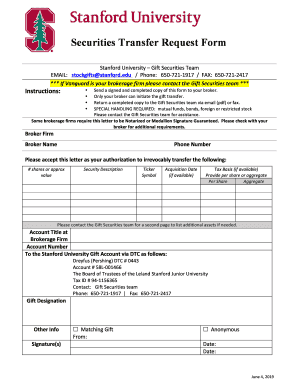
Streamline your document management with DocHub's Non profit legacy Donation Forms catalog. Easily adjust, collect information, and securely store completed documents in your profile.

Supercharge your efficiency with Non profit legacy Donation Forms

Papers management consumes to half of your office hours. With DocHub, you can reclaim your time and effort and enhance your team's efficiency. Access Non profit legacy Donation Forms online library and check out all form templates relevant to your day-to-day workflows.

Effortlessly use Non profit legacy Donation Forms:

  1. Open Non profit legacy Donation Forms and employ Preview to obtain the relevant form.
  2. Click on Get Form to begin working on it.
  3. Wait for your form to open in our online editor and start modifying it.
  4. Add new fillable fields, symbols, and pictures, adjust pages, etc.
  5. Fill out your document or prepare it for other contributors.
  6. Download or share the form by link, email attachment, or invite.

Speed up your day-to-day file management with our Non profit legacy Donation Forms. Get your free DocHub account right now to explore all templates.


Video Guide on Non profit legacy Donation Forms management

video background

Commonly Asked Questions about Non profit legacy Donation Forms

Planned or legacy gifts can be a tax-efficient and impactful way to support the charitable cause of your choice. Heres a basic definition for each type of gift: Planned gifts: any charitable contribution planned now to be made later. Legacy gifts: donations granted after the donor has passed away.
Any individual or family may create a legacy fund as part of a will, through a bequest, or through a letter of agreement with the Community Foundation, a nonprofit 501c(3) public charity. The Community Foundation can work with a familys attorney or wealth advisor to design the fund and desired language.
This is sometimes referred to as a bequest or a planned gift. Legacy giving is when individuals contribute to charitable organizations through their wills or estate plans. Legacy giving can be in the form of a bequest, proceeds from life insurance, a trust, an annuity, a life estate or even a retirement fund.
Bequests are by far the most common type of legacy gift. Theyre also simple to createa donor simply makes an addition to their will naming a nonprofit as the recipient of a flat amount, a percentage of their estate, or the remainder of their estate.
Planned giving, also referred to as gift planning or legacy giving, is a donors intention to contribute a planned gift to an organization beyond their lifetime. This is often a continuation of the donations an individual or couple has made while living, but on a much larger scale.
Your Board Is Critical. Build an Advisory Committee. Establish a Legacy Society and Give it a Memorable Name. Develop a Planned Giving Section on Your Website. Establish Gift Acceptance Policies. Produce Basic Marketing Materials. Formalize the Program. Learn Prospect Identification.
To craft a compelling legacy fundraising strategy, start by defining a clear and engaging proposition that resonates deeply with potential donors. For example, your legacy proposition might be, Leave a legacy of hope and change for future generations, if your charity focuses on long-term societal impact.