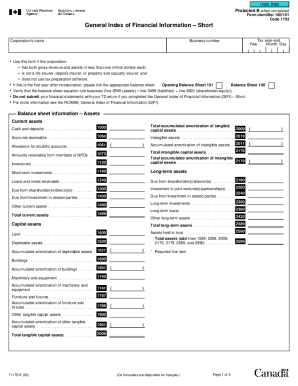
Supercharge your output with Two common Balance Sheet Templates

Record administration takes up to half of your business hours. With DocHub, it is simple to reclaim your time and effort and boost your team's efficiency. Access Two common Balance Sheet Templates category and check out all document templates related to your day-to-day workflows.

The best way to use Two common Balance Sheet Templates:

  1. Open Two common Balance Sheet Templates and apply Preview to get the relevant form.
  2. Click Get Form to begin working on it.
  3. Wait for your form to open in our online editor and start editing it.
  4. Add new fillable fields, symbols, and images, adjust pages, etc.
  5. Fill your form or prepare it for other contributors.
  6. Download or deliver the form by link, email attachment, or invite.

Accelerate your day-to-day file administration using our Two common Balance Sheet Templates. Get your free DocHub profile today to discover all forms.


Video Guide on Two common Balance Sheet Templates management

video background

Commonly Asked Questions about Two common Balance Sheet Templates

Vertical Balance Sheet Format This is the most common balance sheet format in accounting. In this, there is a single column of numbers. It begins with assets, then liabilities, and ends with shareholders equity. Items under each of these categories are listed in decreasing order of liquidity.
Standard accounting conventions present the balance sheet in one of two formats: the account form (horizontal presentation) and the report form (vertical presentation).
Format of the statement of financial position However, there are two general formats: account format and report format. Account format is of two columns displaying assets on the left column and liabilities and equity on the right column while the report format (often called traditional format) has only one column. Statement of Financial Position: Importance and Format - Medium Medium Medium
Alternative Balance Sheet Presentation Formats US GAAP uses the title Balance Sheet, while IFRS uses the title Statement of Financial Position. This difference in name notwithstanding, both statements report on the three basic elements i.e. assets, liabilities, and equity.
It shows the balance between the companys assets against the sum of its liabilities and shareholders equity what it owns versus what it owes. The balance sheet gives useful insights into a companys finances.
Balance sheets also have two format types- report form and account form. Report Form: In this format, the assets are listed first, then the liabilities, and then equity. Balance Sheet: Meaning, Types, Components Example Happay blog balance-sheet Happay blog balance-sheet