




Here's how it works
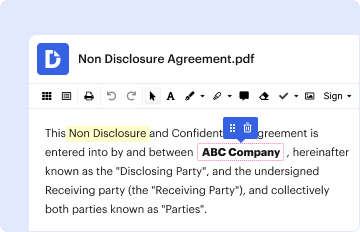
01. Edit your hazardous waste determination form online
Type text, add images, blackout confidential details, add comments, highlights and more.
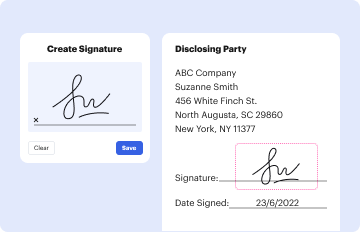
02. Sign it in a few clicks
Draw your signature, type it, upload its image, or use your mobile device as a signature pad.

03. Share your form with others
Send waste determination form via email, link, or fax. You can also download it, export it or print it out.
How to use or fill out hazardous waste determination form with our platform

- Click ‘Get Form’ to open the hazardous waste determination form in the editor.
- Begin by filling out Section A, which requires a detailed description of the waste. Include the generation process and location to provide context.
- In Section B, specify the total quantity and/or estimated generation rate of the waste. This information is crucial for proper assessment.
- Next, assess the waste properties in Section B. Indicate the physical state (solid, liquid, gas) and fill in relevant characteristics such as pH and flashpoint.
- Complete the characteristics section by checking applicable boxes for hazardous properties like corrosive, ignitable, or reactive materials.
- List all hazardous constituents in Section C along with their volume percentages. This ensures comprehensive documentation of potential hazards.
- Finally, provide any remarks or attach necessary documentation in Section D to support your determination before submitting.
Start using our platform today to streamline your hazardous waste determination process for free!
Fill out hazardous waste determination form online
It's free
It's free
See more hazardous waste determination form versions
We've got more versions of the hazardous waste determination form form. Select the right hazardous waste determination form version from the list and start editing it straight away!
Got questions?
We have answers to the most popular questions from our customers. If you can't find an answer to your question, please contact us.
Contact us
When must a hazardous determination be made?
(a) The hazardous waste determination for each solid waste must be made at the point of waste generation, before any dilution, mixing, or other alteration of the waste occurs, and at any time in the course of its management that it has, or may have, changed its properties as a result of exposure to the environment or
How to create a hazardous waste profile?
These are the steps youll need to follow when creating an EPA waste profile for each type of regulated or hazardous waste in your facility. Identify the Hazardous Waste. Determine if the Waste is Excluded. Determine the Monthly Quantity of Generated Waste. Ensure All Required Information is Documented.
What does it mean that a hazardous waste generator has cradle to grave responsibility over their hazardous waste?
To apply for a temporary federal EPA ID number, you will need to fill out and submit US EPA Form 8700-12 RCRA Subtitle C Site Identification Form.
What is EPA Form 8700-12?
The Site Identification Form (EPA Form 8700-12) includes information such as facilitys name and address, contact information and a description of hazardous waste activities conducted at the site.
How to obtain a temporary EPA ID number?
An ID number identifies each handler of hazardous waste on hazardous waste manifests and enables regulators to track the waste from its origin to final disposal, a process also referred to as cradle to grave. With a few exceptions (See Exemptions to a Hazardous Waste EPA ID Number), hazardous waste generators must
Security and compliance
At DocHub, your data security is our priority. We follow HIPAA, SOC2, GDPR, and other standards, so you can work on your documents with confidence.
Learn more


People also ask
What is a 8700 12 form?
Federal regulations require large and small quantity generators of hazardous waste to obtain an EPA Identification (EPA ID) number using the Subtitle C Site ID Form (EPA Form 8700-12) and to submit the completed form to the authorized state agency or EPA regional office if the state is not authorized to implement the
What are the 4 steps of waste determination?
If the waste is not listed, you must determine if it exhibits any of the four characteristics of a hazardous waste: ignitability, corrosivity, reactivity, and toxicity. This evaluation involves testing the waste or using knowledge of the process or materials used to produce the waste.