




Definition & Meaning
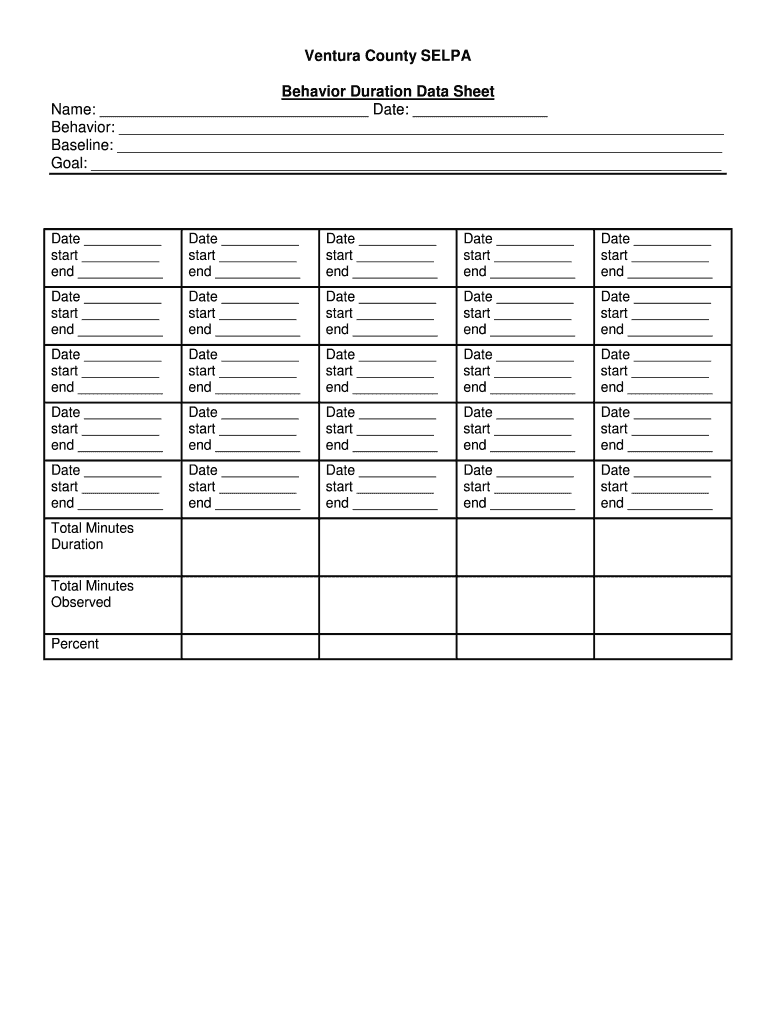
The duration data sheet is a tool used primarily in the context of Applied Behavior Analysis (ABA) to record and analyze the length of time specific behaviors occur. It enables practitioners, such as therapists and educators, to collect data over a defined period, which is essential for measuring progress and making informed decisions about interventions. The sheet typically includes sections to note the individual's name, date of data collection, types of behaviors being observed, as well as structured fields for recording start and end times. The cumulative data allows for thorough analysis of behavior patterns, facilitating evidence-based practice.
Understanding behaviors through duration data sheets necessitates clarity on key components. These sheets include:
- Behavior Description: A clear definition of the behaviors being tracked.
- Baseline Data: Initial observations that establish behavior frequency and length prior to intervention.
- Goals: Desired outcomes related to reducing or increasing specific behaviors.
How to Use the Duration Data Sheet
Using a duration data sheet requires a systematic approach to ensure accurate data collection. Follow these steps for effective usage:
- Prepare the Sheet: Have the duration data sheet ready, whether in digital form or printed, ensuring it is accessible to the observer.
- Identify the Behavior: Clearly define the target behavior(s) to be recorded. This may include behaviors like tantrums, hand-flapping, or task completion time.
- Record Observations: During the observation period, note the start time when the behavior occurs and the end time when it ceases. Each instance of the behavior should be logged clearly and promptly.
- Calculate Duration: After collecting data, calculate the duration for each instance by subtracting the start time from the end time. This helps in examining trends across multiple observations.
- Analyze the Data: After sufficient data has been collected, analyze the results to assess the frequency and duration trends over time, which aids in modifying treatment plans.
Regular use of the duration data sheet enhances reliability and validity in behavior assessment, leading to improved outcomes.
Key Elements of the Duration Data Sheet
A duration data sheet comprises several critical components necessary for effective data collection. Understanding these elements ensures that users can maximize the utility of the form:
- Identification Information: Includes the subject's name, date, and the specific behavior being documented.
- Observation Period: Sections reserved for time stamps that detail when the behavior starts and ends.
- Total Time Calculated: A space for indicating the total duration of behavior, which may also include percentages for behavior frequency.
- Goal Sections: Areas where practitioners can outline baseline observations and goals for intervention, ensuring clarity around desired behavioral changes.
Integration of these elements allows practitioners to fully harness the power of duration recording, facilitating better decision-making and targeted strategies.
Important Terms Related to Duration Data Sheet
Understanding specific terminology related to the duration data sheet can aid in comprehensive data interpretation. Key terms include:
- Baseline Data: Initial behavioral benchmarks that provide reference points for future comparisons.
- Data Collection: The systematic gathering of information essential for analysis.
- Duration: The total time spent engaged in a particular behavior, which is crucial for evaluating intervention effectiveness.
- Intervention: Strategies or programs implemented to influence behavior positively.
Familiarity with these terms will enhance clarity as practitioners and stakeholders engage with duration data sheets in their analyses.
Examples of Using the Duration Data Sheet
When employing a duration data sheet, practitioners can encounter various applications that illustrate its utility. For instance:
- Educational Settings: A teacher may use a duration data sheet to track how long a student remains on task during independent work periods. This duration data can inform classroom management strategies.
- Therapeutic Contexts: A behavioral therapist may record the duration of self-injurious behavior in a client to establish a baseline and measure changes in response to intervention strategies.
- Home Use: Parents can utilize the data sheet to log how long a child engages in specific behaviors, such as screen time or tantrums, to assess the need for behavioral interventions at home.
These practical examples highlight the versatility of the duration data sheet across various contexts, underlining its importance in measuring behavior accurately and effectively.
Steps to Complete the Duration Data Sheet
Completing a duration data sheet involves several critical steps that help ensure data integrity and usefulness. The following detailed process outlines these steps:
- Select the Behavior: Choose the specific behavior to be monitored, making sure everyone involved understands the definition applied.
- Set Observation Parameters: Determine the timescale for observation—how long will the data be collected, and under what conditions?
- Start Observations: Begin observing and recording the behavior. Note the initial start time as soon as the behavior is exhibited.
- Documenting End Times: Immediately upon behavior cessation, record the end time. Continue this process for multiple instances.
- Calculate Summary Statistics: At the end of the observation period, aggregate the data to calculate total durations and average times for a comprehensive view.
Following these steps diligently will facilitate effective tracking and analysis of behaviors, promoting better outcomes in interventions.
Who Typically Uses the Duration Data Sheet
The duration data sheet is utilized by various professionals and caregivers involved in behavioral tracking and analysis. Key demographics include:
- Behavior Analysts: Professionals who specialize in analyzing behavior to create evidence-based interventions.
- Educators: Teachers and school staff who monitor student behaviors to enhance classroom management and educational achievement.
- Parents: Caregivers seeking to understand and modify their children's behaviors in home settings.
- Healthcare Providers: Clinicians tracking patient behaviors for diagnosis and treatment planning.
Identifying the primary users highlights the relevance of the duration data sheet across multiple disciplines and settings, reinforcing its importance in behavioral assessment.