




01. Edit your sf86 form online
Type text, add images, blackout confidential details, add comments, highlights and more.

Type text, add images, blackout confidential details, add comments, highlights and more.

Draw your signature, type it, upload its image, or use your mobile device as a signature pad.

Send sf86 via email, link, or fax. You can also download it, export it or print it out.
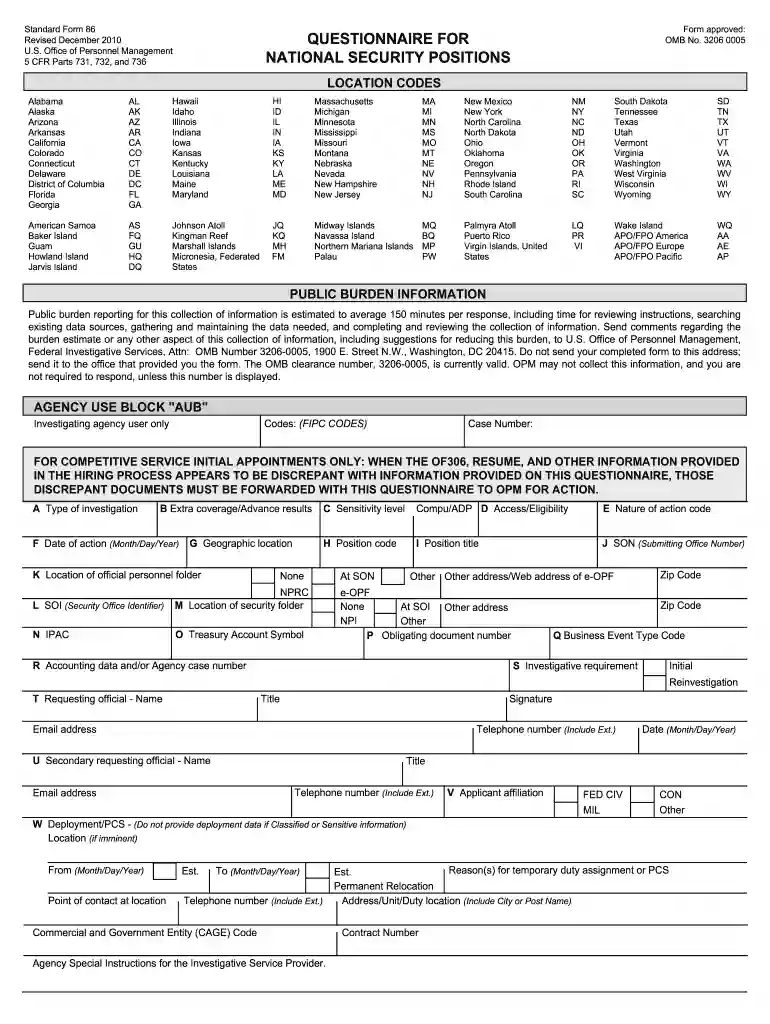
The SF 86 2010 form, officially known as the Standard Form 86, is a vital document used by the U.S. government to conduct background investigations for individuals applying for national security positions, which may involve access to classified information. This form collects extensive personal data necessary to assess an individual's suitability for such positions.
The SF 86 2010 form includes various sections that target crucial aspects of an individual's life. Areas covered include:
Providing accurate and complete information on the SF 86 2010 form is critical, as inaccuracies can have severe consequences, including job loss or denial of security clearance.
Completing the SF 86 2010 form requires careful attention to detail and thoroughness. Follow these essential steps to ensure an accurate submission:
Each step is essential for ensuring the form is filled out correctly and submitted in a timely manner to avoid delays in the background investigation process.
The SF 86 2010 form comprises various critical sections that require specific information from applicants. Some of these sections include:
This section requests basic personal details, such as:
Correctly completing this section is foundational for identifying the individual during the investigation.
Applicants must provide a detailed employment history, including:
This information helps assess the stability and reliability of the applicant.
In this section, applicants disclose financial information, such as:
Financial history can indicate the applicant's reliability and integrity, important factors for national security roles.
The SF 86 2010 form is primarily used by individuals applying for positions that require a security clearance within the federal government or related agencies. Typical users include:
Understanding the target audience helps clarify the form's necessity in safeguarding national security interests.


The completion of the SF 86 2010 form involves legal responsibilities and implications. Key legal considerations include:
Awareness of these legal implications is essential for applicants during the completion and submission of the SF 86 2010 form.
We've got more versions of the sf86 form form. Select the right sf86 form version from the list and start editing it straight away!
At DocHub, your data security is our priority. We follow HIPAA, SOC2, GDPR, and other standards, so you can work on your documents with confidence.




Do not abbreviate the names of cities or foreign countries. QUESTIONNAIRE FOR. NATIONAL SECURITY POSITIONS. Standard Form 86. Revised December 2010. U.S. OfficeRead more
Dec 22, 2023 The beginnings of CMMC start with the November 2010, Executive Order (E.O.) is initiated using the Standard Form (SF) 86. These positions areRead more


